
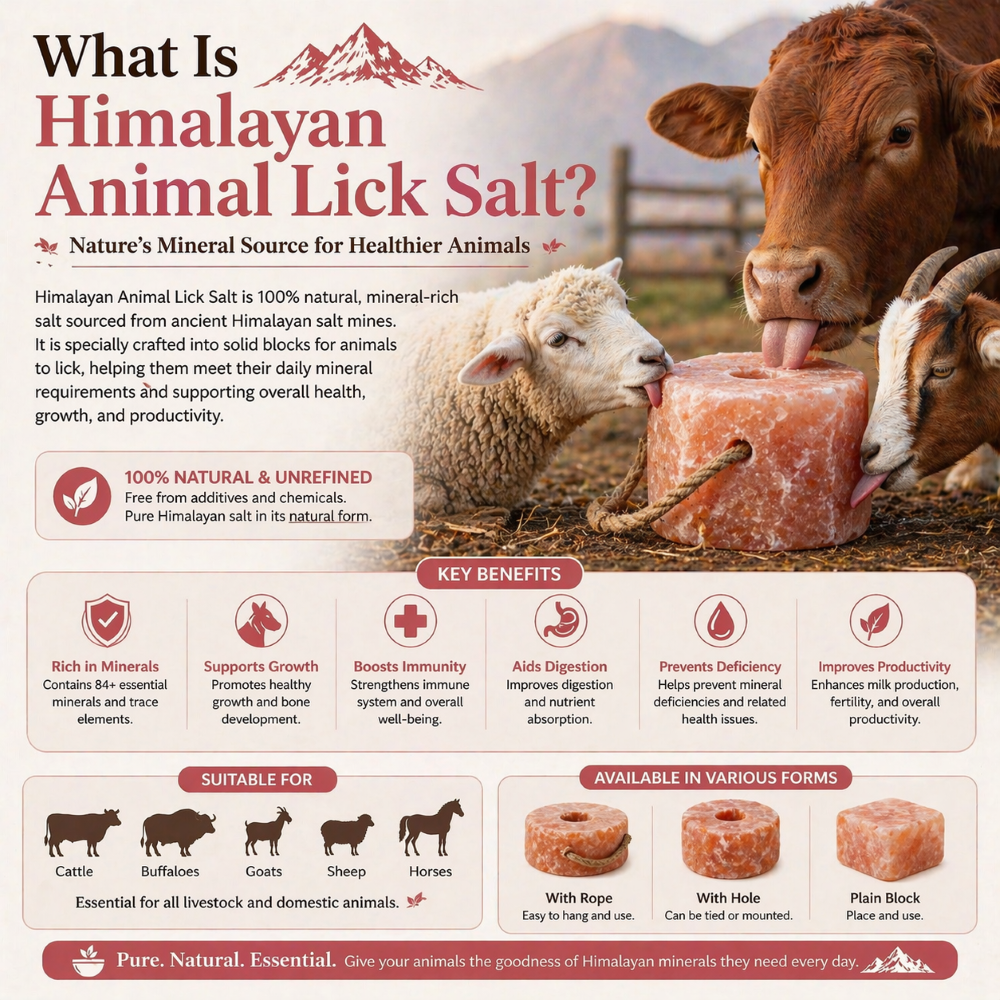
Himalayan animal lick salt is a natural mineral supplement made from pure Himalayan rock salt, traditionally used to support the health and nutrition of livestock and grazing animals. Unlike refined mineral blocks, Himalayan animal lick salt is minimally processed, preserving its natural mineral composition. Farmers and animal caretakers use these salt licks to help animals regulate their mineral intake naturally. Animals instinctively lick the salt according to their nutritional needs, making it an effective and self-regulating supplement. Widely used for cattle, goats, sheep, horses, camels, and wildlife, Himalayan animal lick salt has gained popularity due to its purity, durability, and trace mineral content. This guide explains what Himalayan animal lick salt is, how it is made, why it is used, and how it benefits animal health in agricultural and farming environments.
Understanding animal lick salt and its purpose
Animal lick salt is designed to provide essential minerals that grazing animals may not receive sufficiently from grass, forage, or feed alone. Livestock require sodium and trace minerals to support digestion, muscle function, hydration, and overall metabolic health. Himalayan animal lick salt serves this purpose naturally by offering animals a slow-release mineral source that they can access freely. Unlike loose salt or powdered supplements, lick salt is consumed gradually, reducing the risk of overconsumption. Animals instinctively lick the salt based on their physiological needs, making it an efficient supplementation method. Farmers prefer lick salt because it reduces waste, requires minimal management, and supports herd health consistently. Himalayan animal lick salt stands out because it contains naturally occurring minerals rather than artificial additives, making it suitable for long-term use in traditional and organic farming systems.
What Himalayan animal lick salt is made of?
Himalayan animal lick salt is made from solid blocks of Himalayan rock salt extracted from ancient salt deposits in Pakistan. These deposits are millions of years old and formed through natural geological processes. The salt is mined, cut, and shaped into blocks without undergoing chemical refinement. This minimal processing preserves the salt’s natural mineral composition, including sodium chloride and trace elements such as calcium, magnesium, potassium, and iron. The characteristic pink or reddish color of Himalayan salt comes from its natural mineral content, not from additives. Because the salt remains in its solid rock form, it dissolves slowly when licked, allowing animals to consume minerals gradually. This natural structure makes Himalayan animal lick salt durable, long-lasting, and resistant to weather conditions, which is especially beneficial for outdoor use in farms and grazing fields.
How Himalayan animal lick salt is different from regular salt licks.
Himalayan animal lick salt differs significantly from conventional salt licks made using refined salt and synthetic mineral blends. Traditional salt licks are often compressed from refined sodium chloride and fortified with artificial minerals, binders, and coloring agents. In contrast, Himalayan animal lick salt is a single-ingredient product with no chemical additives. Its minerals occur naturally and are present in balanced trace amounts. The solid rock structure ensures slow consumption, reducing the likelihood of excessive intake. Many farmers observe that animals prefer Himalayan salt licks over standard blocks due to taste and texture. Additionally, Himalayan salt licks tend to last longer outdoors and do not break down easily in rain or humidity. This durability and purity make them a preferred choice for farmers seeking natural, low-maintenance mineral supplementation.
Benefits of Himalayan animal lick salt for livestock
Himalayan animal lick salt supports overall animal health by providing essential minerals necessary for daily physiological functions. Sodium helps regulate fluid balance, nerve signaling, and muscle movement, while trace minerals contribute to bone strength, digestion, and immune support. Regular access to Himalayan animal lick salt can improve feed utilization, appetite, and hydration, especially during hot weather. Farmers often report improved coat condition, increased milk yield, and better overall vitality in animals with consistent access to salt licks. Because animals control their own intake, supplementation remains balanced and safe. The natural mineral composition supports long-term health without the risks associated with over-fortified supplements. These benefits make Himalayan animal lick salt a practical and reliable nutritional addition for livestock management.
Animals commonly using Himalayan lick salt
Himalayan animal lick salt is suitable for a wide range of domesticated and wild animals. It is commonly used for cattle, buffalo, goats, sheep, horses, camels, and deer. Poultry and wildlife reserves also use Himalayan salt licks in controlled settings. Grazing animals particularly benefit because natural forage often lacks sufficient sodium and trace minerals. Horses benefit from salt licks for hydration and muscle function, especially during training or in hot climates. Goats and sheep rely on mineral supplementation to support digestion and reproductive health. Even wildlife conservation programs use Himalayan salt licks to support natural feeding behaviors without artificial supplementation. Its versatility makes it an ideal solution for farms of all sizes. Different species have varying mineral requirements, and Himalayan salt licks accommodate these differences through instinctive consumption. This adaptability reduces the need for species-specific supplements while still supporting health across mixed-animal farms and grazing environments.
Shapes and sizes of Himalayan animal salt licks
Himalayan animal lick salt is available in various shapes and sizes to suit different farming needs. Common formats include square blocks, round cylinders, and irregular natural shapes. Block sizes range from small 2–3 kg pieces for individual animals to large 10–20 kg blocks for herd use. Larger blocks are ideal for open grazing areas, as they last longer and require less frequent replacement. Smaller blocks are suitable for stalls, barns, or controlled feeding areas. The hardness of Himalayan salt ensures slow consumption regardless of size. Farmers choose block size based on herd size, animal type, and feeding environment. Custom sizes are also available for commercial buyers and exporters. Shape selection can also affect placement stability and usage rate. Flat-sided blocks are easier to secure in holders, while rounded shapes may encourage natural licking motion. Choosing the right size and shape improves efficiency and reduces unnecessary breakage or wastage.
How Himalayan animal lick salt is used on farms
Using Himalayan animal lick salt is simple and requires minimal setup across different farming systems and livestock environments. Blocks are placed in feeding areas, near water sources, barns, or grazing fields where animals can access them freely throughout the day. Some farmers use holders, racks, or stands to prevent contamination from soil, manure, or moisture buildup. Outdoor placement is common, as Himalayan salt blocks withstand weather conditions better than compressed salt licks and dissolve more slowly in rain. Monitoring consumption helps farmers assess herd health, hydration patterns, and mineral needs over time. While animals naturally self-regulate intake, consistent availability ensures continuous supplementation, supports appetite balance, and reduces nutritional deficiencies. Himalayan animal lick salt fits easily into traditional farming practices without requiring additional labor, equipment investment, or changes to existing feeding routines.
Safety and consumption considerations
Himalayan animal lick salt is safe when used as intended, provided animals always have constant access to clean, fresh drinking water. Like all salt supplements, excessive intake without adequate hydration can cause dehydration or imbalance. However, the solid structure of the lick encourages slow, controlled consumption, minimizing this risk under normal conditions. Farmers should ensure that animals are not solely dependent on salt licks for nutrition but use them as a supplement alongside balanced feed, forage, and proper mineral programs. Regular observation helps detect abnormal licking behavior, which may indicate mineral deficiencies, stress, or underlying health issues. Proper placement, storage, and hygiene further enhance safety, effectiveness, and long-term usability in diverse livestock management environments.
Why farmers prefer Himalayan animal lick salt
Farmers prefer Himalayan animal lick salt because it combines natural composition, durability, and ease of use. It eliminates the need for frequent supplementation adjustments and reduces waste compared to loose minerals. Its natural mineral balance aligns with organic and traditional farming principles. The long-lasting nature of the blocks lowers replacement costs and labor. Additionally, consumer demand for naturally raised livestock has increased interest in mineral supplements that are free from artificial additives. Himalayan animal lick salt supports these values while delivering consistent nutritional benefits. Many farmers also appreciate the visual durability and minimal breakage of Himalayan blocks. This reliability reduces replacement frequency, making it a cost-effective option for both small-scale farms and large commercial livestock operations.
Conclusion:
Himalayan animal lick salt is a natural, effective mineral supplement that supports livestock health through controlled, instinctive consumption. Made from pure Himalayan rock salt, it provides essential sodium and trace minerals without chemical processing. Its durability, safety, and versatility make it suitable for various animals and farming environments. By integrating Himalayan animal lick salt into daily farm management, farmers support hydration, digestion, and overall animal well-being. Its growing popularity reflects a shift toward natural, sustainable livestock nutrition solutions that benefit both animals and producers. As farming practices continue to evolve toward sustainability and transparency, Himalayan animal lick salt stands out as a practical solution that meets nutritional needs while aligning with ethical and natural livestock management philosophies. As farming practices continue to evolve toward sustainability and transparency, Himalayan animal lick salt stands out as a practical solution that meets nutritional needs while aligning with ethical and natural livestock management philosophies.