
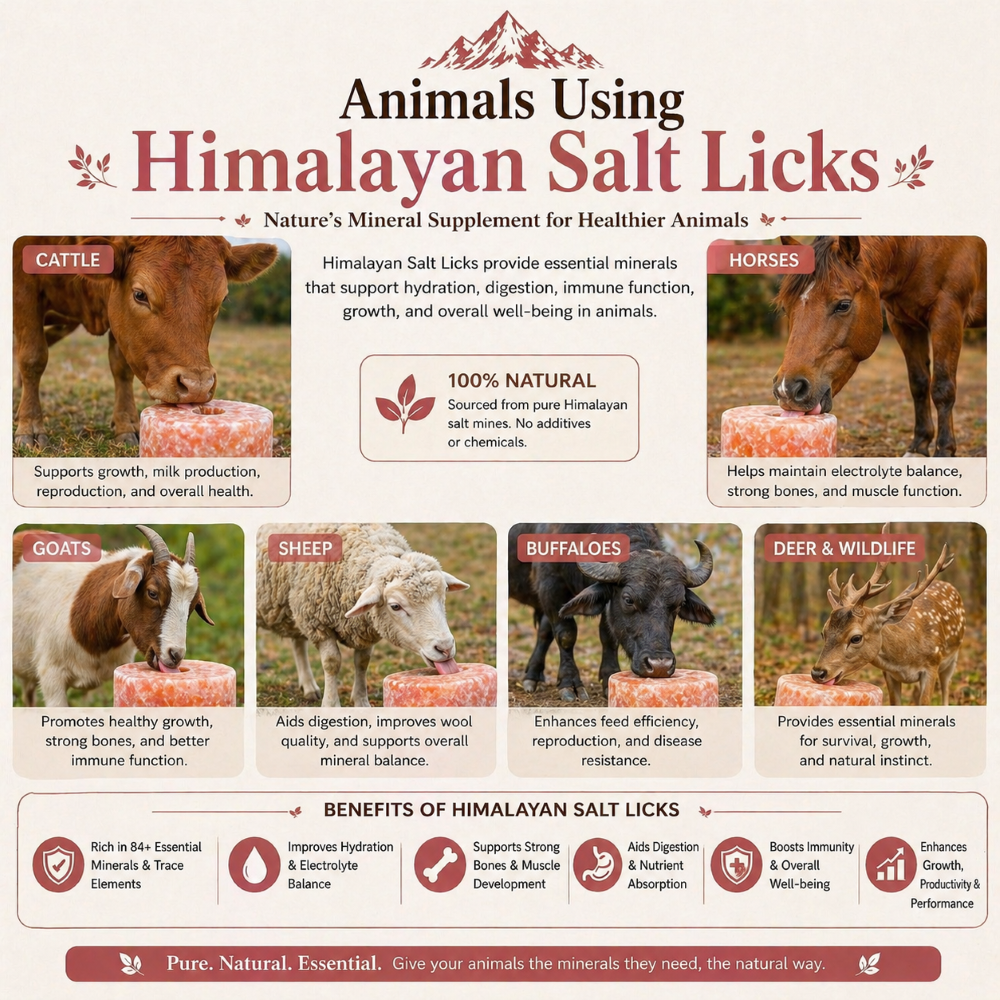
Himalayan salt licks are widely used across livestock farming and animal management systems due to their natural mineral composition and slow-release structure. Animals instinctively require salt to maintain hydration, digestion, muscle movement, and metabolic stability. Himalayan salt licks provide sodium and trace minerals in a form that allows animals to self-regulate intake based on physiological need. Unlike processed mineral blocks, Himalayan salt licks remain close to their natural state, making them suitable for long-term use across different species. From large grazing animals to wildlife and working animals, these salt licks support health without forcing consumption or disrupting natural feeding behaviors. Understanding which animals use Himalayan salt licks helps farmers, breeders, and caretakers improve nutrition strategies while maintaining sustainable and humane animal care practices.
Cattle and buffalo using Himalayan salt licks
Cattle and buffalo are among the most common users of Himalayan salt licks due to their high mineral requirements and grazing-based diets. These large ruminants rely heavily on forage, which often lacks adequate sodium and trace minerals. Himalayan salt licks provide a consistent mineral source that supports digestion, rumen function, and hydration. Cattle instinctively lick salt blocks when their bodies require sodium, making supplementation self-regulated and efficient. Improved mineral intake contributes to better feed utilization, weight gain, and milk production. In dairy herds, salt licks support electrolyte balance, especially during lactation when mineral demand increases. Buffaloes, which often work in hot and humid environments, benefit from improved hydration and reduced heat stress. Himalayan salt licks also help reduce abnormal behaviors such as soil licking or fence chewing, which often indicate mineral deficiency. Their durability makes them ideal for outdoor pasture use, lasting longer than compressed salt blocks and reducing the frequency of replacement for farmers managing large herds.
Sheep and goats using Himalayan salt licks
Sheep and goats have distinct nutritional sensitivities that make controlled mineral supplementation especially important. Himalayan salt licks provide essential sodium and trace minerals that support digestion, coat or wool quality, reproductive health, and immune strength. Goats, known for their browsing habits, often experience inconsistent mineral intake from natural forage, making salt licks a stabilizing nutritional source. Sheep benefit from the slow-release nature of Himalayan salt, as excessive loose salt intake can be harmful. The solid structure of salt licks encourages gradual consumption, allowing animals to self-regulate intake safely. Farmers frequently observe improved appetite, steadier weight maintenance, and reduced digestive disorders when flocks have continuous access to salt licks. Pregnant and lactating animals show better energy balance and hydration, which supports healthier offspring. In addition to physical benefits, consistent mineral access reduces stress and improves flock behavior, making management easier. Himalayan salt licks also align well with organic and traditional farming practices due to their natural, additive-free composition.
Horses and equines using Himalayan salt licks
Horses and other equines require regular salt intake to maintain hydration, muscle coordination, and nerve signaling, especially because they lose significant electrolytes through sweat. Himalayan salt licks offer a natural solution that allows horses to replenish minerals instinctively without forced supplementation. Working horses, sport horses, and leisure horses all benefit from improved electrolyte balance, which supports muscle recovery and reduces fatigue. Salt licks also help prevent cramping and dehydration during hot weather or intense physical activity. The hardness of Himalayan salt ensures slow licking, preventing excessive intake while maintaining consistent mineral availability. Stable managers often prefer Himalayan salt licks because they are clean, durable, and free from additives that may irritate sensitive animals. Behavioral benefits are also observed, as horses with access to salt licks tend to be calmer and more settled. Over time, consistent salt access contributes to improved performance, better coat condition, and overall physical resilience in equines.
Camels and desert animals using Himalayan salt licks
Camels and desert-adapted animals depend heavily on efficient mineral and water regulation to survive extreme climates. Himalayan salt licks provide essential sodium and trace minerals that help regulate hydration, blood volume, and metabolic efficiency. Camels lose salt through sweating and require regular replenishment to maintain stamina and strength. Salt licks support water retention, allowing camels to maximize limited water intake and endure long periods of heat and physical exertion. Herders often place salt licks near watering points or resting areas to encourage regular use. The natural hardness and weather resistance of Himalayan salt make it ideal for desert environments where conventional supplements degrade quickly. Consistent mineral intake helps reduce stress, maintain body condition, and support endurance. Over time, salt licks contribute to healthier, more resilient desert animals capable of sustained work and travel.
Deer and wild ruminants using Himalayan salt licks
Wild ruminants such as deer instinctively seek salt sources to meet their mineral needs, particularly in regions where natural availability is low. Himalayan salt licks are commonly used in wildlife management and conservation programs to support balanced nutrition without disrupting natural feeding behaviors. Deer benefit from salt licks during periods of antler growth, pregnancy, and seasonal transitions when mineral demands increase. The slow dissolution of Himalayan salt ensures controlled intake while minimizing environmental impact. Wildlife managers also use salt licks to monitor animal activity and population health. Unlike processed mineral blocks, Himalayan salt licks contain no artificial additives, making them safer for long-term use in natural habitats. Their natural appearance blends into outdoor environments, reducing disturbance. Consistent mineral access supports stronger skeletal development, improved reproductive outcomes, and overall population stability.
Poultry and birds using Himalayan salt licks
Although poultry require much smaller mineral quantities, salt still plays a vital role in maintaining hydration and metabolic balance. Himalayan salt licks are sometimes used in controlled poultry environments as a supplementary mineral source. Birds instinctively peck at salt when needed, regulating their intake naturally. Proper sodium levels support nerve function, digestion, and egg production. Salt supplementation must be carefully managed in poultry systems, making slow-release Himalayan salt licks a safer option than loose salt. Farmers using natural or free-range systems often prefer Himalayan salt due to its purity and trace mineral content. When used responsibly, salt licks contribute to healthier birds, improved shell quality, and more consistent egg-laying performance over time.
Farm animals during pregnancy and lactation
Pregnant and lactating animals experience increased mineral demands due to fetal development and milk production. Himalayan salt licks support electrolyte balance, hydration, and energy metabolism during these critical stages. Adequate salt intake reduces stress, supports appetite, and improves nutrient absorption. Animals with consistent salt access often experience smoother pregnancies and stronger offspring. Lactating animals benefit from improved milk yield and quality, as hydration plays a key role in milk synthesis. Himalayan salt licks provide a steady mineral supply without the risk of overconsumption. Farmers value salt licks during breeding seasons as a simple yet effective nutritional support tool that promotes long-term herd health and reproductive success.
Working and transporting animals using Himalayan salt licks
Animals involved in labor, transport, or performance require additional mineral support due to physical exertion. Himalayan salt licks help replenish electrolytes lost through sweat and stress. Working animals such as oxen, horses, and pack animals benefit from improved endurance and muscle recovery. Salt licks support nerve function and reduce fatigue, allowing animals to perform tasks efficiently. Their natural composition ensures safe, long-term use without chemicals. buildup. By maintaining hydration and electrolyte balance, salt licks help reduce injury risk and improve animal welfare in demanding working conditions. This makes them especially valuable in regions where animals play a central role in daily agricultural and transport activities.
Why Himalayan salt licks suit multiple animal species
Himalayan salt licks are versatile because they align naturally with animals’ instinctive mineral-seeking behaviors and self-regulation patterns. Their solid structure ensures slow, controlled consumption, making them suitable for species with varying nutritional needs and feeding habits. Unlike formulated supplements that require precise dosing, salt licks adapt automatically to individual intake requirements. Their purity, mineral integrity, and durability make them suitable for both indoor and outdoor use across diverse climates and production systems. This adaptability allows farmers to use one mineral solution across multiple animal types, including cattle, goats, sheep, horses, and wildlife. Himalayan salt licks simplify livestock management while supporting consistent health outcomes, reducing the need for complex feeding programs, minimizing supplementation errors, and improving overall farm efficiency and animal welfare.
Conclusion
Himalayan salt licks serve a broad range of animals, from livestock and working animals to wildlife, horses, and poultry. Their natural mineral composition, durability, and self-regulating consumption make them an effective, versatile, and convenient nutritional supplement across diverse farming systems and production environments. By supporting hydration, digestion, mineral balance, immune function, and stress management, salt licks enhance overall animal health naturally. Their widespread use reflects a growing preference for simple, sustainable, and environmentally responsible animal nutrition solutions that respect natural behaviors while improving productivity, performance, and welfare outcomes. For farmers, breeders, and buyers, Himalayan salt licks represent a reliable, long-term investment in animal well-being, herd quality, operational efficiency, and profitable, sustainable farm management strategies.