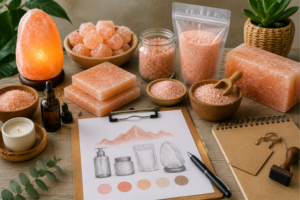
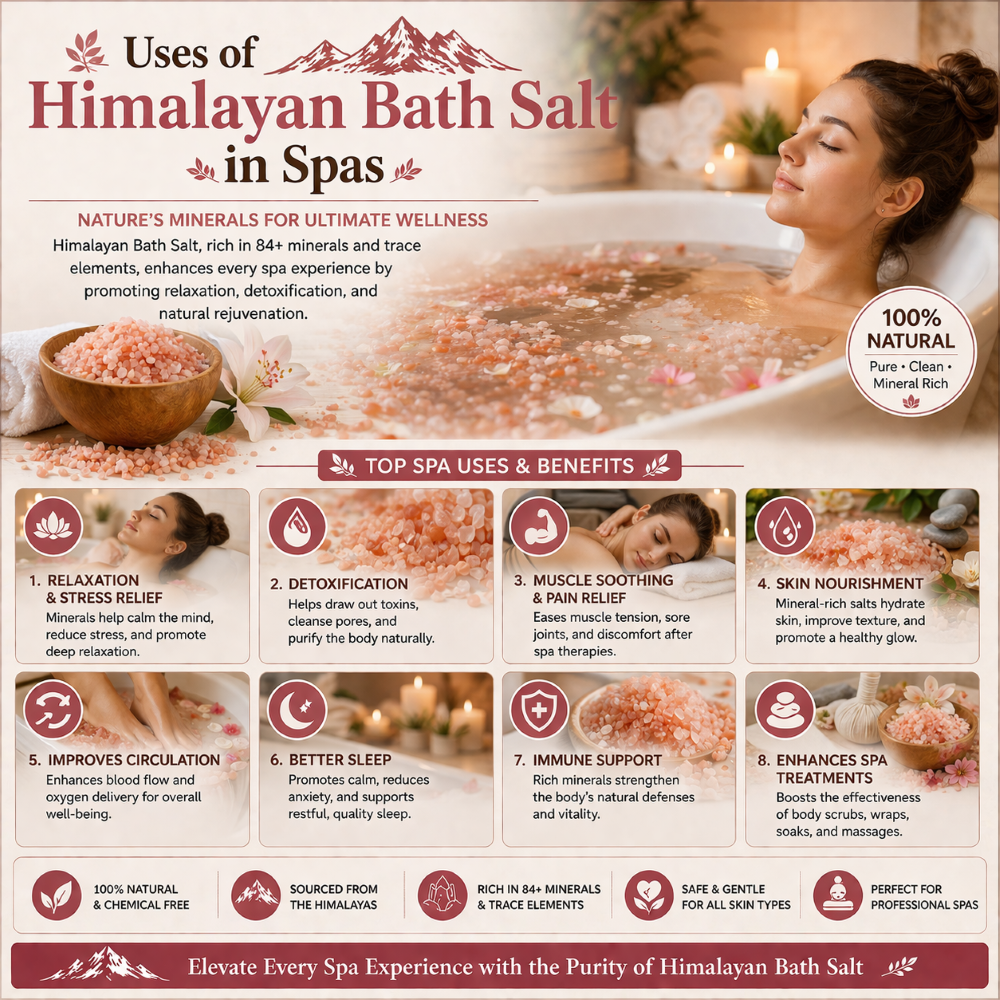
Himalayan bath salt has become a staple ingredient in modern spa environments due to its natural origin, mineral-rich composition, and calming sensory appeal. Spas across the world increasingly rely on Himalayan bath salt to enhance their wellness treatments, offering guests a more holistic and natural experience. Unlike synthetic bath additives, Himalayan bath salt aligns with the growing demand for clean-label, eco-conscious wellness services. Its soft pink color, mineral content, and versatility make it suitable for a wide range of spa therapies, from full-body immersion baths to targeted foot soaks and exfoliation rituals. For spa operators, Himalayan bath salt is more than a bath additive; it is a tool for creating memorable, premium experiences that promote relaxation, comfort, and perceived therapeutic value. Its adaptability allows spas to customize treatments while maintaining a natural and authentic wellness narrative.
Mineral bath therapy using Himalayan bath salt
Mineral bath therapy is one of the most common spa applications of Himalayan bath salt. When dissolved in warm water, the salt releases naturally occurring minerals such as magnesium, calcium, and potassium, creating a mineral-rich bathing environment. Spa guests often experience a sense of deep relaxation during mineral baths, making them ideal for stress relief treatments. The warmth of the water combined with the mineral content helps create a calming sensory effect that encourages muscle relaxation and mental clarity. Spas frequently offer mineral baths as standalone services or as part of longer wellness packages. Himalayan bath salt enhances the visual appeal of these baths with its natural pink hue, reinforcing the perception of purity and luxury. This therapy is particularly popular in wellness retreats, luxury hotels, and holistic spas seeking to provide immersive relaxation experiences without relying on artificial additives.
Use in detox and cleansing spa treatments.
Himalayan bath salt is widely used in spa detox and cleansing treatments due to its natural composition and gentle exfoliating properties. Spas often incorporate it into warm soaking baths designed to help guests unwind and feel refreshed. The mineral-rich water creates a soothing environment that supports relaxation, which is a key objective of detox-focused spa services. In many spa settings, Himalayan bath salt baths are paired with guided breathing or aromatherapy sessions to enhance the overall experience. The salt’s natural texture and mineral content make it suitable for guests seeking a more organic detox alternative. Unlike harsh chemical detox products, Himalayan bath salt aligns with holistic wellness philosophies. For spa businesses, offering detox treatments with Himalayan bath salt helps attract clients who prefer natural, minimally processed wellness solutions while enhancing service credibility and perceived effectiveness.
Himalayan bath salt in spa foot soak rituals
Foot soak rituals are a popular spa service, and Himalayan bath salt plays an important role in enhancing this experience. Spas use warm water infused with Himalayan bath salt to create relaxing foot soak treatments that prepare guests for massages, pedicures, or reflexology sessions. The minerals released during the soak contribute to a calming sensation that helps clients feel grounded and relaxed. The coarse or medium grain texture of the salt is ideal for foot treatments, offering a tactile experience without discomfort. Many spas customize foot soak rituals by adding essential oils or herbal infusions alongside Himalayan bath salt. This combination enhances sensory appeal while maintaining a natural wellness focus. Foot soak rituals using Himalayan bath salt are particularly popular in day spas and wellness lounges, as they provide immediate relaxation and set a positive tone for the overall spa experience.
Role in exfoliation and body scrub treatments
Himalayan bath salt is frequently used in exfoliation and body scrub treatments within spa environments. When combined with carrier oils or botanical extracts, the salt creates a natural exfoliant that gently removes dead skin cells. The mineral content adds perceived therapeutic value, while the salt’s texture can be adjusted based on grain size to suit different skin sensitivities. Spas favor Himalayan bath salt scrubs because they avoid synthetic microbeads and harsh abrasives. The pink crystals also add visual appeal to treatment rooms, reinforcing a premium, natural aesthetic. During body scrub sessions, therapists use controlled pressure to ensure comfort while delivering effective exfoliation. These treatments are often followed by moisturizing wraps or massages, making Himalayan bath salt an integral part of multi-step spa rituals designed to refresh the skin and enhance relaxation.
Use in aromatherapy bath experiences
Aromatherapy baths are a cornerstone of luxury spa services, and Himalayan bath salt enhances these experiences through its neutral, natural base. Spas dissolve the salt in warm water and blend it with carefully selected essential oils to create customized aromatherapy baths. The salt helps evenly distribute oils throughout the water, ensuring a consistent sensory experience. Its natural minerals complement aromatherapy by promoting relaxation and creating a spa-like ambiance. The soft pink color of Himalayan bath salt also contributes to visual tranquility, which is essential in sensory-focused treatments. Aromatherapy baths using Himalayan bath salt are often marketed as premium services for stress relief, emotional balance, and relaxation. For spas, this application allows creative flexibility while maintaining a natural, wellness-centered product offering.
Himalayan bath salt in luxury spa aesthetics
Beyond functional use, Himalayan bath salt contributes significantly to spa aesthetics. Its natural pink tones enhance the visual appeal of spa spaces, making treatment rooms feel warm and inviting. Many spas use Himalayan bath salt in decorative glass containers, open displays, or transparent soaking tubs to emphasize authenticity and luxury. This visual presentation supports branding efforts by reinforcing a natural and premium wellness image. Clients often associate visually appealing elements with higher-quality experiences, making Himalayan bath salt an effective tool for perceived value enhancement. In luxury spas and wellness resorts, aesthetic considerations are as important as functionality. By integrating Himalayan bath salt into both treatments and decor, spas create cohesive environments that align with holistic wellness principles and elevate the guest experience.
Custom spa treatments using Himalayan bath salt
One of the key advantages of Himalayan bath salt in spa settings is its versatility for customized treatments. Spas can tailor bath salt experiences based on client preferences, wellness goals, or seasonal offerings. Grain size, salt concentration, and complementary ingredients such as herbs or oils can be adjusted to create unique treatments. This flexibility allows spas to differentiate their services and offer personalized wellness experiences. Custom treatments using Himalayan bath salt are particularly appealing to repeat clients seeking variety and exclusivity. From calming evening baths to energizing morning rituals, the salt adapts to different treatment themes. For spa operators, this adaptability supports innovation without requiring entirely new product investments, making Himalayan bath salt both cost-effective and creatively valuable.
Benefits for spa businesses and wellness brands
For wellness brands, Himalayan bath salt offers multiple operational and marketing advantages. Its long shelf life and minimal processing requirements make it easy to store and handle. The salt’s natural origin supports clean-label marketing, which resonates with modern wellness consumers. Additionally, Himalayan bath salt can be sourced in bulk for B2B operations, reducing costs while maintaining quality. Its compatibility with various treatments allows spas to standardize ingredients across multiple services, simplifying inventory management. From a branding perspective, Himalayan bath salt enhances authenticity and aligns with sustainability-focused narratives. These benefits make it a reliable and profitable ingredient for spas aiming to deliver consistent, high-quality wellness experiences.
How spas market Himalayan bath salt treatments to clients
Spas actively use Himalayan bath salt as a storytelling and branding element to enhance the perceived value of their treatments. Marketing materials often highlight the salt’s ancient origin, mineral richness, and natural purity to attract wellness-focused clients. Many spas incorporate visual cues such as pink salt displays, transparent soaking tubs, or descriptive treatment menus to reinforce authenticity. Himalayan bath salt treatments are commonly positioned as premium or signature services, helping spas differentiate themselves from competitors offering standard bath experiences. Digital marketing also plays a role, with spas showcasing Himalayan bath salt rituals through social media, website content, and wellness blogs. This educational approach builds trust and helps clients understand why these treatments are unique. By combining experiential marketing with informative messaging, spas successfully transform Himalayan bath salt from a simple ingredient into a complete wellness experience that clients are willing to pay more for and recommend to others.
Conclusion
Himalayan bath salt has become an essential component of spa treatments due to its natural composition, versatility, and sensory appeal. From mineral baths and detox treatments to exfoliation rituals and aromatherapy experiences, it supports a wide range of spa services. Its aesthetic value further enhances the ambiance of wellness spaces, contributing to memorable guest experiences. For spas and wellness brands, Himalayan bath salt represents a balance between tradition and modern wellness expectations. As demand for natural and holistic spa treatments continues to grow, Himalayan bath salt remains a trusted and valuable ingredient that supports both client satisfaction and business success.