
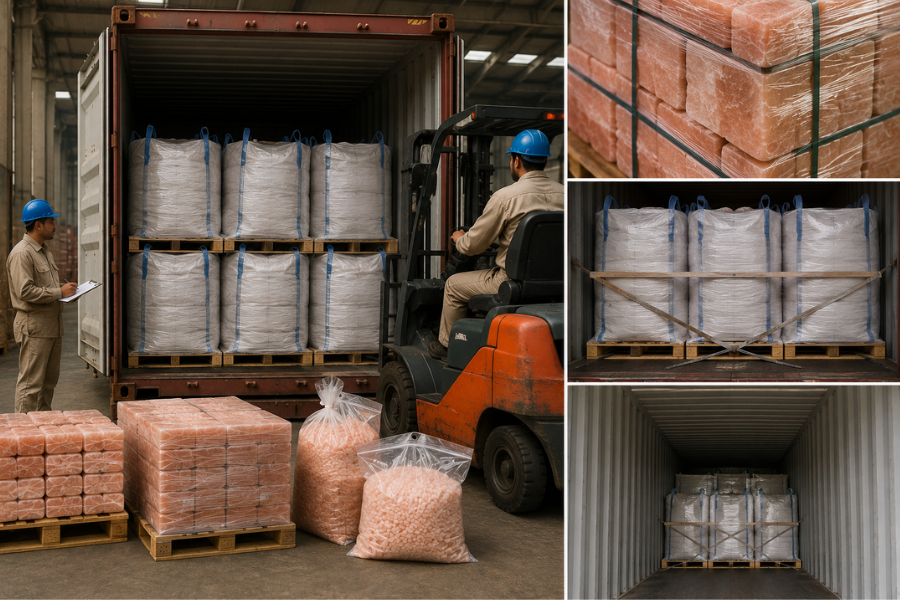
Manufacturing high-quality Himalayan salt products are only one part of a successful export operation. Once production, inspection, and packaging are complete, products must still travel safely across long international shipping routes before reaching distributors, retailers, or wholesalers. One of the most important but often overlooked stages of the export process is container loading. The way products are arranged, secured, and protected inside a shipping container directly affects their condition when they arrive at their destination. Improper loading can lead to broken salt lamps, cracked cooking slabs, damaged salt tiles, torn packaging, moisture exposure, and unnecessary financial losses. Proper loading techniques help protect edible Himalayan pink salt, bath salts, decorative products, animal salt licks, and architectural salt products throughout transportation. This guide explains how professional container loading improves product safety, reduces shipping risks, and supports successful international deliveries while helping exporters maintain customer satisfaction and protect their reputation in global markets.
Why Container Loading Is So Important
Many people assume that once Himalayan salt products have been packaged correctly, they are fully protected throughout transportation. In reality, packaging alone cannot prevent damage if products are loaded carelessly inside the shipping container. During international transportation, containers are lifted by cranes, transported by trucks, stacked on cargo ships, transferred through ports, and delivered by local logistics providers. Throughout this journey, containers experience vibration, movement, sudden stops, changing weather conditions, and continuous handling. If cargo is not loaded correctly, heavy products may shift, fragile items may collide, and cartons may collapse under excessive pressure. Proper container loading minimizes these risks by distributing weight evenly, stabilizing pallets, and preventing unnecessary movement throughout transit. Good loading practices work together with quality packaging to create a complete transportation system that protects Himalayan salt products from the manufacturing facility to the customer’s warehouse. This careful approach reduces product damage while improving delivery reliability and customer confidence.
Understanding the Weight of Himalayan Salt Products
One of the biggest challenges in container loading is managing the significant weight of Himalayan salt products. Salt is naturally dense, meaning even relatively small products can become surprisingly heavy when shipped in large commercial quantities. Cooking slabs, architectural salt bricks, tiles, animal salt licks, and bulk bags of edible Himalayan pink salt all contribute substantial weight to export shipments. If heavy products are loaded incorrectly, they may place excessive pressure on cartons beneath them or create uneven weight distribution inside the shipping container. This imbalance can increase transportation risks and make cargo handling more difficult throughout the shipping process. Professional loading teams calculate product weights carefully before arranging pallets and cartons inside containers. Understanding weight distribution allows exporters to maximize available container space while protecting products from unnecessary pressure or shifting. Careful weight management forms the foundation of safe container loading and contributes directly to successful Himalayan salt exports.
Proper Weight Distribution Throughout the Container
Even weight distribution is one of the most important principles of professional container loading because it helps maintain cargo stability throughout international transportation. Heavy Himalayan salt products should never be concentrated entirely at one end of the container or stacked unevenly from one side to the other. Instead, loading teams carefully position products to distribute weight across the entire container floor while maintaining balance during handling and transportation. Proper weight distribution reduces stress on shipping containers and decreases the likelihood of cargo movement during sudden braking, rough sea conditions, or loading operations. Heavy pallets should also remain stable without placing excessive pressure on lighter products nearby. Exporters who carefully plan cargo placement improve transportation safety while helping freight companies handle shipments more efficiently. Balanced loading protects both the products and the container itself, creating safer transportation conditions from the factory to the international destination.
The Role of Strong Export Pallets
Pallets play an essential role in container loading because they provide stable platforms that support Himalayan salt products throughout transportation. Well-constructed export pallets allow forklifts to move cargo efficiently while maintaining product stability during loading and unloading operations. Heavy products such as salt bricks, cooking slabs, decorative panels, and animal salt licks require strong pallets capable of supporting significant weight without bending or breaking. Exporters should also ensure cartons are arranged evenly across the pallet surface before securing them with stretch film, protective corner boards, and strapping materials. Stable pallets reduce the risk of shifting inside containers while making warehouse handling more efficient after arrival. Buyers also benefit because properly palletized shipments simplify unloading, inventory management, and warehouse organization. Investing in quality pallets supports safer transportation while reducing product damage caused by unstable cargo throughout international logistics operations.
Moisture Control Inside Shipping Containers
Moisture management is one of the most important aspects of container loading because Himalayan salt naturally absorbs moisture from humid environments. During international sea freight, containers often travel for several weeks through regions with different temperatures and humidity levels. As temperatures fluctuate between daytime and nighttime, condensation may develop inside the container, sometimes referred to as container rain. Without proper precautions, this moisture can affect packaging materials, damage retail labels, weaken cartons, and reduce the presentation quality of Himalayan Salt products after arrival. Professional exporters minimize these risks by ensuring products are completely dry before loading, using moisture-resistant packaging, and placing desiccants or container moisture absorbers inside the shipment when appropriate. Proper ventilation and careful container preparation also help reduce excess humidity throughout transportation. Moisture control protects edible Himalayan pink salt, decorative salt lamps, cooking slabs, bath salts, tiles, and other products from unnecessary exposure while preserving both product quality and packaging appearance until they reach the customer’s warehouse.
Securing Cargo to Prevent Movement
Even when products are packaged correctly and pallets are prepared carefully, cargo must still be secured properly inside the shipping container. During transportation, trucks accelerate, brake, and turn while cargo ships experience rolling movements caused by waves and changing sea conditions. Without proper securing methods, heavy Himalayan salt products may shift, slide, or collide with neighboring pallets, increasing the possibility of damaged cartons or broken products. Exporters commonly use stretch film, polyester strapping, corner protectors, blocking materials, wooden braces, and load-securing systems to keep pallets stable throughout transportation. Empty spaces inside containers are minimized whenever possible because large gaps allow cargo to move during transit. Professional loading teams evaluate each shipment individually and choose securing methods based on product weight, pallet configuration, and transportation route. Proper cargo securing is one of the most effective ways to reduce transportation damage while ensuring Himalayan salt products remain stable from departure until final delivery.
Special Care for Fragile Himalayan Salt Products
Not all Himalayan salt products respond to transportation in the same way. While bulk edible salt and animal salt licks are generally more resistant to impact, decorative products require much greater protection during container loading. Salt lamps, candle holders, carved decorative pieces, polished bowls, cooking slabs, and architectural salt panels can develop cracks or chipped edges if subjected to excessive pressure or sudden movement. These products should be positioned carefully within the container to avoid direct contact with heavier cargo. Additional protective materials, reinforced cartons, foam inserts, corrugated separators, and secure pallet placement all contribute to safer transportation. Professional loading teams also avoid stacking excessive weight on fragile products, even when cartons appear structurally strong. Giving special attention to delicate Himalayan salt products helps preserve their appearance, functionality, and overall value. Buyers appreciate receiving products in excellent condition, and careful loading practices significantly reduce replacement costs and customer complaints following international shipments.
Inspecting the Container Before Loading
Successful container loading begins long before the first pallet enters the shipping container. Professional exporters always inspect containers thoroughly to ensure they are suitable for transporting Himalayan salt products. The interior should be clean, dry, free from strong odors, and structurally sound without holes, cracks, rust damage, or water leaks. The container floor should also be examined to confirm it can safely support the planned cargo weight. Any signs of moisture or previous contamination should be addressed before loading begins because these conditions may affect product quality during transportation. Doors should close securely, locking mechanisms should function properly, and ventilation openings should remain unobstructed where applicable. This inspection process takes relatively little time but provides valuable protection against avoidable shipping problems. Starting with a clean and well-maintained container allows exporters to preserve the quality of their Himalayan salt products while reducing unnecessary transportation risks before the shipment even leaves the factory.
Planning the Loading Sequence
An effective loading sequence is another important element of safe container management. Professional loading teams rarely place products inside containers randomly. Instead, they develop a loading plan that considers product weight, pallet size, unloading requirements, and shipment stability. Heavy Himalayan salt products are usually loaded first and positioned to create a balanced foundation for the remaining cargo. Lighter or more fragile products are then arranged carefully without placing them under excessive pressure. If a shipment contains several different product categories, loaders may organize pallets according to the customer’s unloading preferences, making warehouse receiving more efficient after arrival. A well-planned loading sequence also minimizes unnecessary handling during loading, reducing opportunities for accidental product damage. Careful planning allows exporters to maximize container space while maintaining excellent cargo stability. Organized loading improves both transportation safety and operational efficiency throughout the international logistics process.
Common Container Loading Mistakes
Even experienced exporters can encounter transportation problems when basic loading principles are overlooked. One common mistake is concentrating too much weight in one section of the container, creating an unbalanced load that may shift during transportation. Another frequent problem involves leaving large empty spaces between pallets, allowing cargo to move unexpectedly during truck or sea transport. Some shipments suffer because fragile decorative products are placed beneath heavier pallets, resulting in cracked or broken items upon arrival. Insufficient cargo securing, poor pallet stability, weak export cartons, or failure to inspect containers before loading also contribute to preventable damage. Moisture control is another area sometimes underestimated, particularly during long sea voyages through humid climates. Establishing loading checklists and conducting final inspections before sealing containers helps eliminate many of these common mistakes. Careful preparation protects products, reduces insurance claims, and improves customer satisfaction by ensuring shipments arrive in excellent condition.
Technology Is Improving Container Loading
Modern logistics technology is making container loading more efficient and accurate than ever before. Many manufacturers and freight companies now use specialized software to calculate optimal pallet placement, weight distribution, and container utilization before loading begins. Digital inventory systems help identify pallet locations quickly, while barcode scanning improves shipment accuracy and traceability throughout transportation. Some businesses also use moisture monitoring devices that track humidity conditions during international shipping, providing valuable information about environmental conditions inside containers. Forklift equipment, pallet wrapping machines, and cargo securing technologies continue improving operational efficiency while reducing manual handling risks. Although experienced workers remain essential for successful loading operations, technology provides additional support by improving planning, reducing errors, and enhancing cargo protection. Businesses that combine skilled loading teams with modern logistics systems are better positioned to deliver Himalayan salt products safely, efficiently, and consistently to customers around the world.
How Professional Loading Benefits Buyers
Carefully loaded containers provide important advantages not only for exporters but also for international buyers. Shipments that arrive with stable pallets, undamaged cartons, and well-protected products reduce warehouse receiving time and simplify inventory management. Buyers experience fewer product losses, lower replacement costs, and fewer customer complaints when goods arrive exactly as expected. Consistent loading standards also improve planning because distributors and retailers can rely on receiving products in excellent condition with minimal transportation damage. This reliability strengthens long-term business relationships between manufacturers and importers while creating greater confidence in future transactions. Buyers often continue working with suppliers who consistently demonstrate professional packaging, loading, and export practices because dependable logistics contribute directly to business success. Professional container loading therefore becomes much more than a transportation procedure—it becomes an important part of customer service and long-term partnership development within the international Himalayan salt industry.
Conclusion
Container loading is one of the most important yet often overlooked stages of the Himalayan salt export process. Even the highest-quality products can suffer damage if weight distribution, pallet placement, cargo securing, moisture control, and loading procedures are not managed correctly. Professional loading practices help protect edible Himalayan pink salt, salt lamps, cooking slabs, architectural tiles, bath salts, candle holders, animal salt licks, and many other Himalayan salt products throughout long international shipping journeys. Careful container inspections, organized loading plans, balanced weight distribution, strong pallets, moisture protection, and secure cargo restraint systems all work together to minimize transportation risks and preserve product quality. Modern logistics technology further improves loading accuracy while supporting efficient warehouse operations and reliable international deliveries. Businesses that invest in proper container loading experience fewer damaged shipments, lower transportation costs, stronger customer satisfaction, and improved long-term relationships with global buyers. As international demand for Himalayan salt products continues to grow, professional container loading remains an essential part of delivering products safely, protecting business reputation, and achieving long-term success in global export markets.