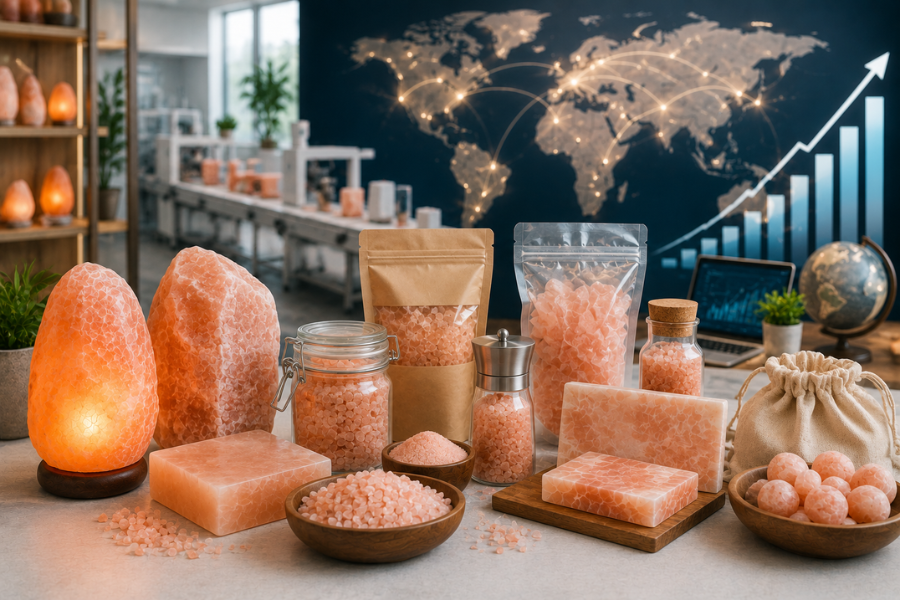
The Himalayan salt industry has changed significantly over the past decade as manufacturers, exporters, wholesalers, retailers, and commercial buyers respond to evolving global market demands. What was once a market focused primarily on edible Himalayan pink salt and decorative salt lamps has expanded into a diverse industry serving hospitality, architecture, wellness, agriculture, luxury interiors, gourmet food, and private-label retail sectors. This transformation has encouraged manufacturers to invest in product innovation, precision manufacturing, sustainable production methods, customized solutions, and advanced packaging technologies that better meet customer expectations. Innovation today extends beyond creating entirely new products because it also includes improving existing designs, enhancing production efficiency, increasing product consistency, and developing flexible manufacturing capabilities that support specialized commercial applications. At the same time, digital commerce, artificial intelligence, and global trade have made international buyers more informed than ever before, increasing demand for premium quality, transparency, and customized manufacturing services. Understanding the market trends driving Himalayan salt product innovation allows businesses to identify emerging opportunities while preparing for future developments that will continue shaping this expanding global industry.
Why Are Consumer Preferences Driving Product Innovation?
Consumer expectations have become one of the strongest influences on Himalayan salt product innovation because modern buyers increasingly seek products that combine authenticity, premium quality, customization, and long-term value. Rather than purchasing standard products available through multiple suppliers, customers now prefer collections that reflect contemporary lifestyles, individual preferences, and commercial applications. Retailers, hospitality businesses, wellness brands, and homeowners all expect manufacturers to introduce improved designs, attractive finishes, and products suited to changing market demands. Decorative lamps have evolved into numerous shapes and styles, edible Himalayan pink salt is available in multiple grain sizes and retail packaging formats, while architectural salt bricks and customized decorative installations continue expanding into luxury commercial projects. Manufacturers who carefully monitor customer feedback can identify new opportunities for innovation while strengthening relationships with long-term buyers. As purchasing decisions become increasingly influenced by design, branding, convenience, and personalization, consumer preferences will remain one of the primary forces encouraging continuous innovation throughout the global Himalayan salt industry.
How Is Custom Manufacturing Transforming the Industry?
Custom manufacturing has become one of the most important innovations within the Himalayan salt industry because businesses increasingly require products designed specifically for their brands, projects, and customer expectations. Instead of relying solely on standardized product dimensions, manufacturers now produce custom-cut salt bricks, personalized decorative lamps, engraved candle holders, bespoke cooking slabs, architectural panels, and private-label product collections according to precise customer specifications. This flexibility enables architects, retailers, hospitality companies, distributors, and wellness brands to differentiate themselves while offering unique products unavailable through competing suppliers. Advances in manufacturing technology have improved cutting accuracy, finishing quality, and production efficiency, making customized production more accessible than ever before. Businesses also appreciate the opportunity to personalize packaging, branding, labeling, and product presentation while maintaining consistent manufacturing quality across large commercial orders. As demand for exclusive products continues increasing, manufacturers investing in flexible production capabilities will remain better positioned to satisfy evolving customer expectations while supporting innovation across multiple international market segments.
Why Is Technology Improving Himalayan Salt Manufacturing?
Modern manufacturing technology has transformed Himalayan salt production by improving efficiency, consistency, precision, and product quality across every stage of the manufacturing process. Advanced cutting equipment enables manufacturers to produce accurately sized architectural bricks, cooking slabs, tiles, and decorative products while minimizing unnecessary raw material waste. Improved polishing techniques create smoother finishes that enhance product appearance without compromising the natural beauty of the salt itself. Digital production planning systems also allow manufacturers to coordinate customized orders more effectively while maintaining consistent production schedules for international customers. Quality control technology has similarly advanced, helping manufacturers inspect dimensions, structural integrity, and finishing standards before products proceed to packaging and export. These technological improvements support higher production capacity while reducing manufacturing errors and strengthening customer confidence. Rather than replacing traditional craftsmanship, technology complements skilled workers by improving accuracy and efficiency, allowing manufacturers to produce increasingly sophisticated Himalayan salt products suitable for modern architectural, hospitality, retail, and wellness applications worldwide.
How Is Sustainability Encouraging New Product Development?
Sustainability has become a major catalyst for innovation because manufacturers increasingly recognize the importance of maximizing resource efficiency while meeting customer expectations for environmentally responsible production. Rather than allowing smaller salt fragments generated during manufacturing to become waste, producers now transform these materials into bath salts, crushed decorative crystals, animal salt licks, culinary products, and specialty wellness collections. Improved production planning also reduces unnecessary material loss while increasing overall manufacturing efficiency. Businesses increasingly request recyclable packaging, moisture-resistant shipping materials, and environmentally conscious branding that reflect growing consumer awareness regarding sustainability. Manufacturers investing in responsible production methods strengthen their competitive position while appealing to retailers, hospitality businesses, and commercial buyers seeking suppliers aligned with long-term environmental objectives. As sustainability continues influencing purchasing decisions worldwide, product innovation will increasingly focus on efficient manufacturing processes, versatile product development, and packaging solutions that support responsible international trade without compromising premium quality or commercial performance.
How Is Private Label Manufacturing Encouraging Product Innovation?
Private label manufacturing has become one of the strongest drivers of innovation because businesses increasingly want products that reflect their own brand identity instead of offering standard collections available through multiple suppliers. Retailers, hospitality companies, wellness brands, gourmet food businesses, and distributors now collaborate directly with manufacturers to develop exclusive Himalayan salt products featuring customized packaging, unique finishes, personalized branding, and specialized product specifications. This growing demand encourages manufacturers to invest in flexible production systems capable of producing a wide variety of customized lamps, bath salts, edible salt collections, candle holders, cooking slabs, architectural products, and decorative accessories. Rather than manufacturing identical products in large volumes, production increasingly focuses on meeting individual customer requirements while maintaining consistent quality across every order. This collaborative approach also promotes continuous product development because manufacturers regularly receive customer feedback that inspires design improvements and entirely new product concepts. As global competition continues increasing, private label manufacturing will remain an important source of innovation that helps businesses strengthen brand recognition while expanding the variety of Himalayan salt products available worldwide.
How Are Digital Commerce and AI Influencing Product Development?
The rapid growth of digital commerce and artificial intelligence has significantly changed how Himalayan salt manufacturers develop products and interact with international buyers. Customers now research suppliers online, compare manufacturing capabilities, review product specifications, and evaluate customization options before making purchasing decisions. This increased transparency encourages manufacturers to improve product presentation while introducing innovations that address customer questions and commercial requirements. Businesses also use digital analytics to identify popular product categories, emerging design trends, and regional buying preferences, allowing manufacturers to prioritize future product development more effectively. Artificial intelligence further supports innovation by helping businesses analyze customer behavior, optimize marketing strategies, and create educational content that explains product applications across hospitality, architecture, wellness, retail, and food industries. Manufacturers that embrace digital transformation gain valuable market insights while improving communication with distributors, wholesalers, and retailers around the world. As AI technology continues evolving, it will increasingly influence product planning, customization, customer engagement, and innovation throughout the Himalayan salt industry.
Why Are Luxury Design Trends Inspiring New Himalayan Salt Products?
Luxury interior design continues creating exciting opportunities for Himalayan salt manufacturers because architects and designers increasingly request distinctive natural materials capable of enhancing premium commercial and residential environments. This demand has inspired manufacturers to develop innovative architectural products, including illuminated wall panels, decorative columns, precision-cut salt bricks, custom sculptures, reception installations, room dividers, and integrated lighting features that extend far beyond traditional decorative lamps. Hospitality businesses, luxury residences, restaurants, spas, and executive office developments all seek customized solutions that combine exceptional craftsmanship with authentic natural beauty. Manufacturers therefore continue refining production techniques that enable increasingly complex product designs while preserving the unique mineral patterns and natural color variations that make Himalayan salt distinctive. The close collaboration between architects, designers, and manufacturers encourages continuous experimentation with new forms, finishes, dimensions, and installation methods. As luxury construction continues expanding globally, design-driven innovation will remain an important factor shaping the future of Himalayan salt product development.
How Are Global Export Markets Driving Innovation?
International trade has become a significant source of product innovation because manufacturers now serve customers with diverse commercial requirements across multiple regions and industries. Buyers in different countries often request unique packaging formats, customized branding, product sizes, labeling standards, and specialized collections designed specifically for local markets. These varying requirements encourage manufacturers to develop flexible production systems capable of adapting quickly without sacrificing quality or efficiency. Exporters also improve shipping methods by introducing stronger packaging materials, optimized pallet configurations, moisture-resistant protection, and better container loading techniques that reduce transportation risks. As manufacturers gain experience serving international distributors, hospitality companies, retailers, and wellness brands, they continuously improve their products to satisfy changing customer expectations. Exposure to global markets also introduces new design influences and commercial ideas that inspire future product development. By responding to international demand with innovation and adaptability, Himalayan Salt manufacturers strengthen their competitiveness while creating products suitable for an increasingly diverse worldwide customer base.
What Future Innovations Can the Himalayan Salt Industry Expect?
The future of Himalayan salt product innovation will likely focus on greater customization, precision manufacturing, digital integration, sustainable production, and expanded commercial applications across multiple industries. Manufacturers are expected to continue investing in advanced cutting equipment, automated finishing systems, and precision quality control technologies that improve efficiency while maintaining the authentic appearance of natural Himalayan salt. New architectural products, modular wall systems, designer lighting features, premium hospitality collections, customized wellness products, and private-label retail solutions will continue expanding opportunities for both manufacturers and commercial buyers. Digital visualization technology may also enable architects and designers to preview customized Himalayan salt installations before production begins, improving project planning and customer satisfaction. Sustainability will remain central to innovation as manufacturers develop more efficient production methods, reduce waste, and adopt environmentally responsible packaging solutions. Companies that combine technological advancement with skilled craftsmanship, flexible manufacturing, and strong customer collaboration will be best positioned to lead the next generation of Himalayan salt product development.
Why Is Collaboration Between Manufacturers and Buyers So Important?
One of the most valuable sources of innovation within the Himalayan salt industry comes from close collaboration between manufacturers and commercial buyers. Retailers, architects, hospitality companies, wellness businesses, distributors, and designers frequently identify emerging customer needs before manufacturers recognize broader market trends. By maintaining open communication throughout product development, manufacturers receive practical feedback regarding packaging improvements, design modifications, product dimensions, branding preferences, and installation requirements that inspire future innovation. Collaborative relationships also encourage the development of customized products specifically designed for individual industries or commercial projects rather than relying solely on standard wholesale collections. Manufacturers benefit by gaining a deeper understanding of changing market expectations, while customers receive products better suited to their business objectives and target audiences. Long-term partnerships built on transparency, flexibility, and continuous improvement therefore contribute significantly to product innovation while strengthening customer satisfaction. As market demands continue evolving, collaborative product development will remain an essential driver of growth across the global Himalayan salt industry.
Conclusion
Market trends continue reshaping the Himalayan salt industry by encouraging manufacturers to innovate across product design, production technology, sustainability, customization, packaging, and international trade. Consumer expectations for premium quality, authentic natural materials, personalized branding, and versatile commercial applications have transformed Himalayan salt from a relatively simple product category into a highly diversified global industry serving hospitality, architecture, wellness, retail, food, agriculture, and luxury interior design. Technological advancements have improved manufacturing precision and production efficiency, while private label partnerships and digital commerce continue expanding opportunities for customized product development. At the same time, sustainability initiatives and growing international demand encourage manufacturers to maximize resource utilization while introducing environmentally responsible production practices. Businesses that remain attentive to changing customer preferences, invest in innovation, and build strong relationships with commercial buyers will be better positioned to succeed within this competitive marketplace. As global demand for high-quality Himalayan salt products continues growing, innovation will remain the key factor driving long-term industry development, creating new opportunities for manufacturers, exporters, wholesalers, distributors, retailers, and designers around the world.