
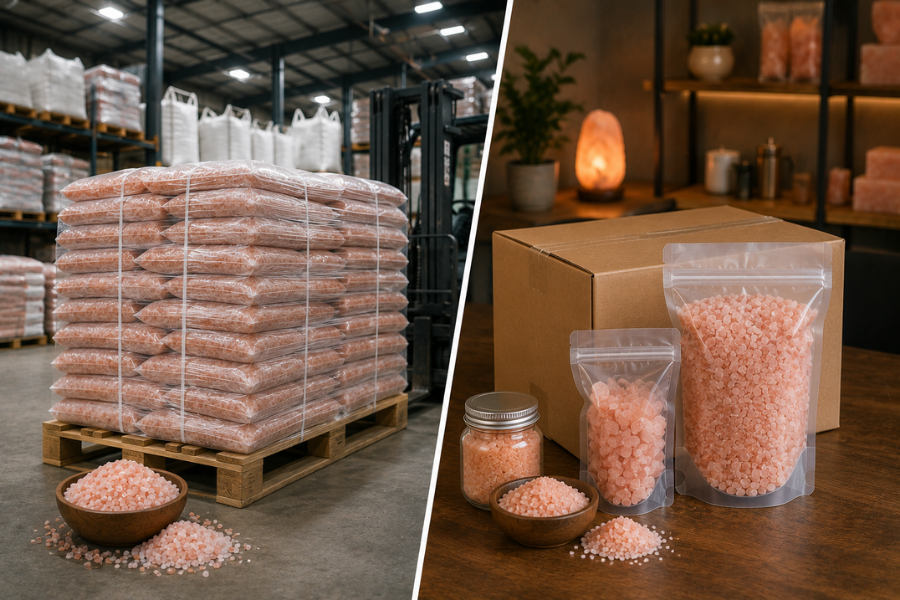
Every business purchasing Himalayan salt eventually faces an important question: should you buy in bulk or place smaller, more frequent orders? The answer depends on several factors, including your business model, inventory capacity, customer demand, available budget, storage facilities, and long-term growth plans. Some businesses benefit from purchasing full container loads because larger volumes often reduce shipping costs, improve pricing, and provide greater flexibility for private label production. Others prefer smaller orders that minimize inventory investment while allowing them to test new products or respond quickly to changing customer preferences. There is no universal solution because every importer, wholesaler, retailer, distributor, hospitality business, and wellness company operate under different commercial conditions. Rather than focusing only on order size, experienced buyers evaluate the complete purchasing strategy by considering product quality, supplier relationships, logistics, customization opportunities, and future expansion plans. Understanding the advantages and limitations of both bulk buying and smaller orders helps businesses make informed decisions that support profitability, operational efficiency, and sustainable long-term growth within the expanding global Himalayan salt industry.
Why Do Many Businesses Prefer Buying Himalayan Salt in Bulk?
Bulk purchasing remains one of the most common strategies among established Himalayan salt importers because it offers several commercial advantages beyond simply ordering larger quantities. Businesses purchasing full containers or high-volume shipments often benefit from lower unit costs, improved shipping efficiency, and stronger negotiating opportunities with manufacturers. Fixed export expenses such as documentation, freight handling, and customs-related costs are distributed across more products, reducing the average cost per item. Bulk purchasing also allows companies to maintain stable inventory levels, reducing the likelihood of stock shortages that could interrupt sales or delay customer deliveries. Retailers, wholesalers, hospitality suppliers, and distributors often appreciate having products readily available to satisfy customer demand without waiting for additional manufacturing cycles. Larger orders may also qualify for expanded customization options, including private-label packaging, branded cartons, personalized product dimensions, and exclusive product collections. As businesses grow, bulk purchasing frequently becomes an effective strategy for improving operational efficiency while supporting long-term commercial expansion.
What Are the Advantages of Placing Smaller Orders?
Although bulk purchasing offers many benefits, smaller orders remain an excellent option for many businesses, particularly those entering the Himalayan salt industry for the first time or expanding into new product categories. Smaller shipments reduce the initial financial investment, allowing businesses to preserve cash flow while evaluating market demand before committing to larger inventory purchases. Importers introducing new products such as decorative salt lamps, bath salts, cooking slabs, architectural bricks, or edible Himalayan pink salt can gather valuable customer feedback before significantly increasing inventory levels. Smaller orders also provide greater flexibility because businesses can adjust product selections, packaging styles, or branding strategies more frequently in response to changing customer preferences. Companies operating with limited warehouse space often find smaller shipments easier to manage while avoiding excessive inventory storage costs. This purchasing approach allows buyers to build supplier relationships gradually while gaining experience with international logistics, documentation, and product quality. For many growing businesses, smaller orders provide a practical foundation for future expansion without exposing the company to unnecessary financial risk.
How Does Order Size Affect Overall Product Cost?
One of the most important considerations when comparing bulk purchases with smaller orders is the total cost of ownership rather than simply the product price itself. Larger orders generally reduce the cost per unit because manufacturing efficiency improves and shipping expenses are spread across a greater number of products. Container utilization becomes more efficient, freight costs decrease proportionally, and manufacturers often achieve better production planning when processing larger commercial orders. However, businesses must also consider warehouse expenses, inventory financing, insurance, and storage management because these costs increase as inventory levels grow. Smaller orders may carry a higher unit price, but they reduce inventory investment and lower storage requirements, making them attractive for businesses with limited operating capital. Experienced buyers therefore evaluate both direct purchasing costs and indirect operational expenses before determining the most economical purchasing strategy. The ideal order size balances competitive pricing with efficient inventory management, allowing businesses to maximize profitability while maintaining sufficient product availability to meet customer demand.
How Does Inventory Management Influence Buying Decisions?
Inventory management plays a central role in determining whether bulk purchasing or smaller orders provide the greatest commercial advantage. Businesses with accurate sales forecasting, established customer bases, and reliable warehouse facilities often benefit from maintaining larger inventories because products remain readily available for immediate distribution. This approach helps avoid stock shortages, improves customer service, and reduces the frequency of international shipments. However, companies experiencing fluctuating demand or introducing new Himalayan salt products may prefer smaller inventory levels until purchasing patterns become more predictable. Overstocking products that move slowly can tie up valuable financial resources and increase warehouse costs without generating immediate returns. Buyers should therefore evaluate sales history, seasonal demand, available storage capacity, and future business growth before determining appropriate inventory levels. Manufacturers capable of offering flexible production schedules and dependable lead times further support effective inventory management because buyers can confidently reorder products when necessary without maintaining excessive stock throughout the year.
How Do Shipping Costs Change Between Bulk and Small Orders?
Shipping expenses often become one of the biggest factors influencing the overall cost of Himalayan salt products, making transportation an important consideration when deciding between bulk purchases and smaller shipments. Full container loads generally provide the most efficient use of freight space because transportation costs are distributed across a much larger quantity of products. This frequently results in a lower shipping cost per unit, allowing businesses to improve overall profit margins while offering more competitive prices to customers. Smaller shipments, particularly those using less-than-container-load services, may involve higher transportation costs per product because freight charges, documentation fees, customs handling, and cargo consolidation expenses are shared among fewer items. However, smaller shipments also reduce the financial commitment required for each purchase and allow businesses to replenish inventory more frequently. Buyers should carefully compare total landed costs rather than transportation charges alone because packaging, insurance, warehousing, and inventory turnover all contribute to the final cost of imported Himalayan salt products. Careful freight planning ultimately helps businesses identify the purchasing strategy that best supports long-term profitability.
Does Bulk Buying Offer More Customization Opportunities?
Many manufacturers provide greater customization options for businesses placing larger Himalayan salt orders because higher production volumes make specialized manufacturing more practical and efficient. Bulk buyers often have access to private-label packaging, custom product dimensions, engraved branding, personalized retail cartons, multilingual labels, exclusive product collections, and tailored packaging designs that may not be economically feasible for smaller production runs. Hotels, wholesalers, wellness companies, retailers, and distributors frequently use these customization opportunities to strengthen their brand identity while offering products that stand apart from competitors. Manufacturers also benefit because longer production runs improve efficiency and simplify manufacturing planning. Smaller orders can still include customization, but available options may be more limited depending on production requirements, setup costs, and order volume. Buyers planning long-term brand development should therefore discuss customization capabilities with manufacturers before placing an order. Understanding these opportunities allows businesses to balance production costs with branding objectives while creating unique Himalayan salt product collections that better serve their target markets and strengthen long-term customer loyalty.
How Does Cash Flow Influence the Right Purchasing Strategy?
Cash flow remains one of the most important factors influencing purchasing decisions because inventory represents a significant financial investment for every business. Bulk purchases typically require higher upfront payments, which may reduce available working capital for marketing, staffing, product development, or future expansion. Established businesses with consistent sales and predictable revenue often manage these larger investments effectively because inventory moves steadily through established distribution channels. Smaller companies or businesses entering the Himalayan salt market for the first time may prefer smaller orders that preserve financial flexibility while allowing gradual inventory growth. This approach reduces financial pressure and enables businesses to respond more easily to unexpected market changes or new commercial opportunities. Buyers should evaluate their available capital, expected inventory turnover, customer payment schedules, and future purchasing plans before deciding on order size. A purchasing strategy that supports healthy cash flow often contributes more to long-term business success than simply obtaining the lowest possible product price through larger volume purchases.
Why Are Long-Term Supplier Relationships Important Regardless of Order Size?
Whether purchasing full containers or relatively small commercial shipments, developing a strong relationship with a reliable Himalayan salt manufacturer provides lasting benefits that extend well beyond individual transactions. Manufacturers who understand a customer’s preferred specifications, packaging requirements, quality expectations, and production schedules can deliver more consistent service while reducing the likelihood of misunderstandings. Long-term partnerships often improve communication, simplify repeat ordering, and create opportunities for customized product development as businesses continue growing. Suppliers also become more familiar with seasonal demand patterns, allowing them to prepare production schedules that better support customer requirements. Buyers who maintain transparent communication and consistent purchasing relationships frequently receive greater operational flexibility because manufacturers understand the importance of supporting reliable long-term customers. Rather than viewing each order independently, successful businesses focus on establishing partnerships built on trust, professionalism, and mutual growth. Strong supplier relationships remain valuable regardless of whether businesses initially begin with smaller shipments or immediately invest in larger bulk purchases.
Which Businesses Benefit Most from Bulk Orders and Which Should Start Small?
The most appropriate purchasing strategy depends largely on the stage of business development, available resources, and long-term commercial objectives. Large wholesalers, distributors, supermarket chains, hospitality suppliers, and established retailers often benefit from bulk purchasing because they maintain consistent sales volumes, possess sufficient warehouse capacity, and can distribute inventory efficiently across multiple customers or locations. Their predictable demand allows them to maximize freight efficiency and lower overall purchasing costs. In contrast, startups, specialty retailers, boutique wellness brands, online businesses, and companies introducing new Himalayan salt product categories frequently benefit from smaller orders that minimize financial exposure while providing greater flexibility. These businesses can evaluate customer preferences, refine product selections, and adjust marketing strategies before significantly expanding inventory. Neither approach is universally superior because each serves different business circumstances. Experienced manufacturers understand these differences and often provide flexible production solutions that accommodate both growing companies and established international buyers according to their individual operational needs.
How Can Buyers Decide Which Option Is Best?
Choosing between bulk purchasing and smaller orders requires careful evaluation of several interconnected business factors rather than relying on a single consideration such as product price. Buyers should analyze current customer demand, warehouse capacity, available working capital, projected sales growth, shipping costs, supplier reliability, customization requirements, and inventory turnover before making purchasing decisions. Businesses expecting rapid expansion may benefit from gradually increasing order sizes as customer demand becomes more predictable, while companies operating within established markets may already possess the infrastructure needed to support larger shipments efficiently. Open discussions with experienced manufacturers can also provide valuable guidance because suppliers understand production planning, export logistics, and inventory management across different commercial situations. Reviewing purchasing strategies regularly allows businesses to adapt as market conditions change and customer requirements evolve. The most successful buyers recognize that purchasing decisions should support broader business objectives rather than focusing solely on immediate cost savings. A balanced strategy often provides the greatest long-term commercial advantage.
Conclusion
The decision between bulk buying and smaller Himalayan salt orders ultimately depends on each business’s unique operational requirements, financial resources, inventory capacity, and long-term growth strategy. Bulk purchasing offers significant advantages through lower unit costs, improved shipping efficiency, expanded customization opportunities, and stronger inventory availability, making it an excellent option for established wholesalers, distributors, hospitality suppliers, and large retailers. Smaller orders, however, provide flexibility, lower financial risk, easier inventory management, and valuable opportunities to test new products or markets before committing to larger investments. Neither approach is inherently better because both support different stages of business development and different commercial objectives. Successful buyers evaluate the complete purchasing process by considering logistics, cash flow, supplier relationships, customer demand, storage capacity, and future expansion rather than focusing exclusively on purchase price. Building strong partnerships with experienced Himalayan Salt manufacturers further strengthens purchasing decisions regardless of order size by ensuring reliable quality, professional communication, consistent production, and dependable export support. By selecting the purchasing strategy that best aligns with business goals, companies can improve operational efficiency, strengthen profitability, and establish sustainable long-term success within the growing global Himalayan salt industry.