
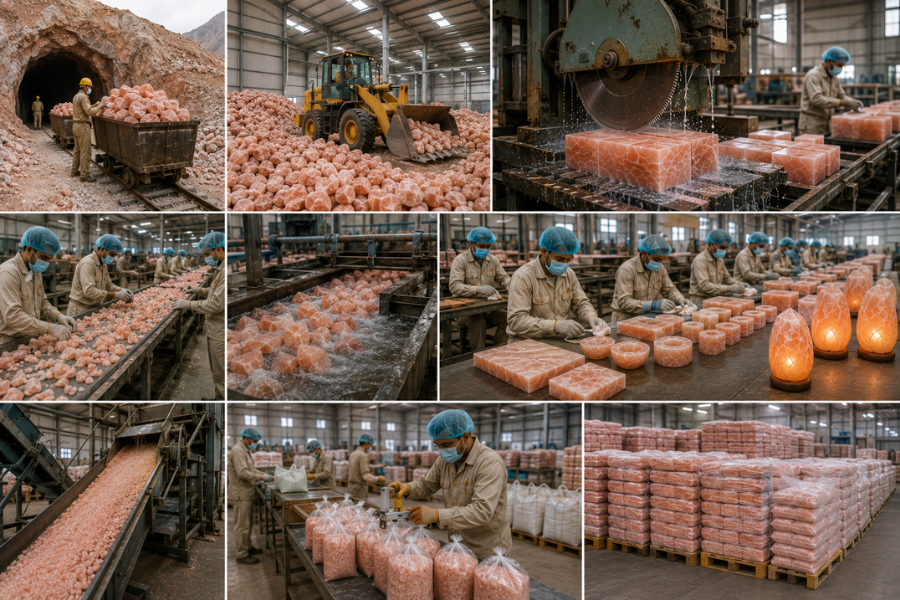
Himalayan salt products are admired across the world for their natural appearance, versatility, and wide range of applications. Whether used as edible salt, decorative lamps, cooking slabs, bath salts, architectural tiles, or animal salt licks, every product begins its journey inside a professional Himalayan salt processing facility. While many people are familiar with the finished products displayed in stores or used in homes, far fewer understand the careful manufacturing processes that take place before those products reach international markets. A modern processing facility combines skilled craftsmanship, advanced machinery, strict quality control, and efficient production planning to transform raw salt blocks into premium commercial products. Every stage is carefully managed to preserve the natural beauty of Himalayan salt while meeting customer specifications and export standards. From receiving freshly mined salt to packaging finished products for worldwide shipment, each department plays an important role in maintaining quality and efficiency. Taking a closer look behind the scenes reveals the expertise, dedication, and precision that define today’s Himalayan salt manufacturing industry.
Receiving Raw Himalayan Salt from the Mines
The production journey begins when raw Himalayan salt arrives at the processing facility from the salt mines. Large crystal blocks are transported carefully because maintaining their structural integrity is essential for manufacturing premium products. Upon arrival, trained personnel inspect every shipment to ensure the salt meets production requirements before it enters the factory. Workers examine crystal quality, color variation, density, size, and overall condition while separating the material according to future product applications. Large solid blocks suitable for decorative lamps, cooking slabs, and architectural products are stored separately from smaller pieces intended for edible salt, bath salts, or crushed salt production. Proper handling at this early stage reduces unnecessary damage while improving manufacturing efficiency throughout the facility. Storage areas are designed to protect the salt from excessive moisture and contamination before processing begins. Organizing raw materials according to quality and intended use allows manufacturers to maximize resource utilization while ensuring every salt block is directed toward the most suitable production process.
Sorting and Grading the Salt Before Production
Once the raw Himalayan salt has been received, the next important step is sorting and grading. Although every salt block comes from the same natural source, no two pieces are exactly alike. Variations in color, crystal clarity, size, and structural characteristics determine how each block will be used during manufacturing. Skilled workers carefully inspect every piece before assigning it to a specific production category. Premium crystal blocks with attractive natural patterns may be reserved for decorative salt lamps or luxury interior products, while uniform blocks are often selected for cooking slabs, tiles, and architectural panels. Smaller fragments are directed toward edible salt processing, bath salt production, or crushed decorative salt. This grading process helps manufacturers improve production efficiency while maintaining consistent quality standards across different product categories. Careful sorting also reduces waste because each piece of Himalayan salt is matched with the application that makes the best use of its natural characteristics. Accurate grading forms the foundation for successful manufacturing throughout the processing facility.
Cutting and Shaping Raw Salt Blocks
After grading has been completed, selected Himalayan salt blocks move to the cutting and shaping department, where they begin their transformation into finished products. This area of the processing facility combines advanced cutting machinery with experienced operators who understand the unique characteristics of natural Himalayan salt. Large crystal blocks are measured carefully before precision cutting begins according to customer specifications and production plans. Depending on the final product, salt may be cut into slabs, bricks, tiles, decorative shapes, candle holders, cooking plates, or custom-sized components. Precision cutting helps preserve the natural strength of the crystal while reducing unnecessary waste and ensuring accurate dimensions. Skilled technicians continuously monitor the equipment and inspect products throughout production to identify any imperfections before they move to the next manufacturing stage. Efficient cutting not only improves product quality but also increases material utilization by allowing manufacturers to obtain the maximum number of finished products from every natural salt block extracted from the mines.
Specialized Processing for Different Product Categories
One of the most interesting aspects of a Himalayan salt processing facility is that different products require completely different manufacturing techniques after the initial cutting stage. Edible Himalayan Salt follows food-grade processing procedures that include crushing, screening, grading, and hygienic packaging according to customer specifications. Decorative salt lamps require drilling, shaping, polishing, electrical assembly, and base installation before final inspection. Cooking slabs receive additional surface finishing to create smooth cooking surfaces, while architectural bricks and tiles undergo careful dimension verification for construction projects. Bath salts are processed into various grain sizes and may be blended with additional natural ingredients depending on customer requirements. Animal salt licks are shaped and prepared according to agricultural market specifications. Each production department operates with specialized equipment, trained personnel, and dedicated quality control procedures designed specifically for that product category. This organized workflow allows manufacturers to produce a wide variety of Himalayan salt products efficiently while maintaining consistent quality across domestic and international orders.
Quality Control Throughout the Processing Facility
Quality control is one of the most important departments inside a Himalayan salt processing facility because it ensures that every product meets customer expectations before leaving the factory. Rather than inspecting products only at the end of production, experienced manufacturers perform quality checks at multiple stages throughout the manufacturing process. Raw salt is inspected before cutting, products are measured during shaping, and finished items receive detailed visual and dimensional inspections before packaging. Quality control teams carefully examine products for cracks, chips, uneven surfaces, color consistency, and structural strength depending on the product category. Edible Himalayan salt also undergoes additional inspections to verify cleanliness, grain size, and packaging accuracy according to food-grade requirements. Decorative products are checked for appearance, craftsmanship, and finishing quality before being approved for shipment. These continuous inspections help identify potential issues early, reducing waste and improving production efficiency. Strong quality control procedures build customer confidence by ensuring that every Himalayan salt product reflects the manufacturer’s commitment to consistent quality and professional production standards.
Skilled Workers Are the Heart of the Facility
Although modern machinery plays an important role in today’s Himalayan salt industry, skilled workers remain the driving force behind every successful processing facility. Experienced craftsmen and production specialists understand the unique characteristics of Himalayan salt and know how to work with its natural crystal structure without causing unnecessary damage. Machine operators carefully monitor cutting equipment, while artisans shape decorative products, polish surfaces, and perform detailed finishing work that requires human expertise. Quality inspectors evaluate every product according to customer specifications, and packaging teams prepare shipments for safe transportation to international markets. Continuous training helps employees improve production techniques while maintaining workplace safety and manufacturing efficiency. Many facilities also encourage teamwork between different departments so production flows smoothly from raw material receiving to final packaging. The knowledge and experience of skilled workers allow manufacturers to handle both standard production and customized customer requests with confidence. Their dedication ensures that authentic Himalayan salt products consistently meet the high standards expected by buyers around the world.
Packaging Products for Domestic and International Markets
After products successfully pass quality inspection, they move to the packaging department, where they are prepared for storage, transportation, and export. Packaging is much more than simply placing products into boxes because Himalayan salt requires protection against moisture, impact, and handling during shipping. Different products require different packaging methods based on their size, weight, and intended destination. Edible Himalayan salt is packed in food-grade moisture-resistant bags or containers, while decorative products such as salt lamps receive protective foam, sturdy cartons, and secure internal supports to prevent breakage. Cooking slabs, tiles, and architectural panels are carefully stacked and reinforced using durable packaging materials suitable for international freight. Manufacturers also prepare customized retail packaging, private-label designs, and branded cartons according to customer requirements. Every package is labeled accurately with product information before shipment. Professional packaging protects product quality throughout transportation while helping businesses present their Himalayan salt products attractively to distributors, retailers, wholesalers, and end customers across global markets.
Preparing Orders for International Export
One of the busiest areas inside a Himalayan salt processing facility is the export preparation department, where finished products are organized for shipment to customers around the world. Before products are loaded into shipping containers, every order is verified carefully to ensure quantities, packaging specifications, labeling requirements, and customer instructions have been completed accurately. Export teams coordinate closely with production managers, logistics providers, and quality control personnel to maintain efficient order fulfillment. Products are arranged strategically inside containers to maximize space while reducing the risk of movement or damage during transportation. Documentation, packing lists, invoices, and shipping records are prepared according to destination country requirements before goods leave the factory. Manufacturers exporting Himalayan salt understand that reliable delivery is just as important as product quality because international buyers depend on timely shipments to support their own businesses. Efficient export preparation reflects the professionalism of the manufacturer and helps strengthen long-term relationships with customers across international markets.
Sustainability Practices Inside Modern Processing Facilities
Many Himalayan salt processing facilities are continuously improving their manufacturing practices by adopting sustainable production methods that reduce waste and improve resource efficiency. Responsible manufacturers carefully plan production to maximize the use of every extracted salt block, ensuring that leftover materials are reused in edible salt, bath salts, crushed decorative salt, animal salt licks, or industrial applications whenever possible. Production equipment is maintained regularly to improve efficiency while reducing unnecessary material losses. Many facilities also invest in improved storage systems that protect raw materials from moisture, reducing damage before manufacturing begins. Environmentally responsible packaging materials are becoming increasingly popular as international buyers seek suppliers committed to sustainable business practices. Clean working environments, efficient production planning, and responsible material management all contribute to lower environmental impact while supporting long-term profitability. Sustainability has become an important competitive advantage because customers increasingly appreciate manufacturers who combine premium product quality with responsible production methods. Modern Himalayan salt processing facilities continue evolving to meet these growing environmental expectations.
Technology Continues Improving Manufacturing Efficiency
Technology has transformed many areas of Himalayan salt processing while preserving the craftsmanship that makes these products unique. Modern facilities use precision cutting machines, advanced polishing equipment, automated measuring systems, moisture-control technologies, and digital production planning to improve efficiency and consistency. Computer-assisted manufacturing helps reduce errors by ensuring products meet exact customer specifications throughout production. Inventory management systems allow manufacturers to track raw materials and finished goods more accurately, while modern packaging equipment increases production capacity for export orders. Despite these technological improvements, experienced workers remain essential because Himalayan salt is a natural material that requires careful handling and professional judgment during manufacturing. Technology supports human expertise rather than replacing it completely. By combining advanced equipment with traditional craftsmanship, processing facilities can produce high-quality Himalayan salt products more efficiently while preserving their natural beauty and authenticity. Continued investment in technology helps manufacturers remain competitive as global demand for Himalayan salt products continues growing across multiple industries.
Final Inspection Before Products Leave the Factory
Before any Himalayan Salt product is approved for shipment, it undergoes one final inspection to confirm that every aspect of the order meets customer requirements. Inspectors review product dimensions, surface finish, packaging quality, labeling accuracy, and overall presentation before authorizing shipment. Decorative products receive careful visual examination, while food-grade products are checked to ensure packaging integrity and proper labeling. Export orders may also be reviewed against customer purchase specifications to verify that quantities, product grades, and packaging details are correct. This final inspection serves as the manufacturer’s last opportunity to identify any issues before products reach international buyers. Reliable manufacturers understand that consistent quality helps reduce customer complaints, prevent returns, and strengthen long-term business relationships. Once inspection is complete, products are carefully loaded into containers or transport vehicles and begin their journey to distributors, retailers, wholesalers, restaurants, hotels, wellness centers, and consumers worldwide. The final inspection represents the culmination of every stage completed inside the Himalayan salt processing facility.
Conclusion
A Himalayan salt processing facility is much more than a manufacturing factory. It is a carefully organized operation where natural Himalayan salt is transformed into premium products through skilled craftsmanship, modern technology, quality control, and efficient production management. Every department, from raw material receiving and grading to cutting, shaping, packaging, and export preparation, plays an essential role in preserving the natural beauty and quality of the salt. Careful planning, experienced workers, precision manufacturing, and sustainable production practices allow manufacturers to create a diverse range of products, including edible salt, salt lamps, bath salts, cooking slabs, decorative items, architectural materials, and animal salt licks. Behind every finished Himalayan salt product is a dedicated team committed to maintaining international quality standards while maximizing the value of this remarkable natural resource. As worldwide demand continues expanding, modern processing facilities will remain at the heart of the Himalayan salt industry, combining innovation with traditional expertise to deliver authentic, high-quality products that customers around the world can trust.