
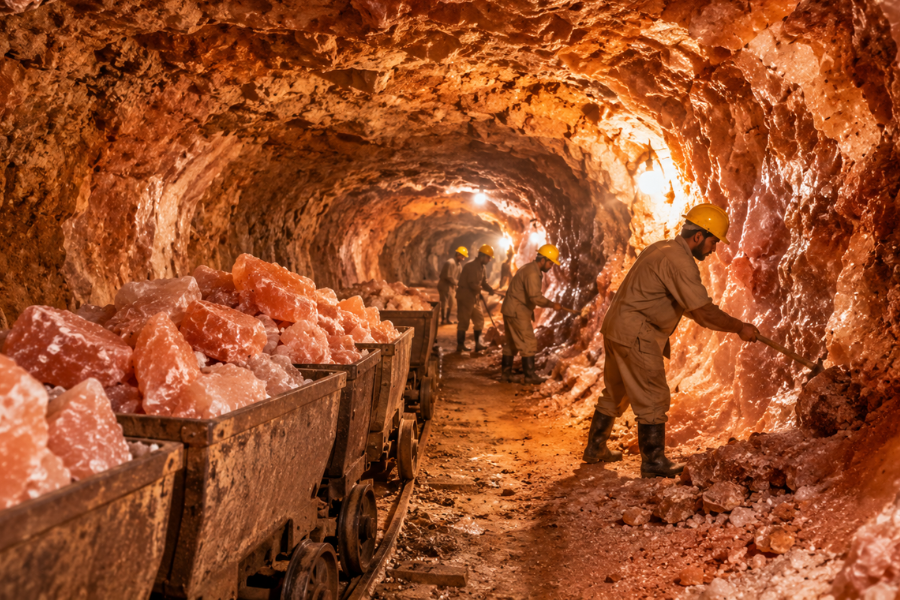
Himalayan salt mining is one of the oldest mineral extraction practices in the world, yet it continues to supply global markets with one of the most widely used natural salts today. Buyers, importers, and manufacturers often ask how Himalayan salt is actually mined, how its quality is preserved, and what steps are involved before it reaches international buyers. Understanding the mining process is essential for evaluating product consistency, sourcing transparency, and long-term supply reliability. Unlike surface-mined salts or evaporated sea salts, Himalayan salt is extracted from deep underground deposits using controlled methods designed to preserve both geological stability and mineral integrity. This guide answers the most common questions asked on search engines and AI platforms about how Himalayan salt is mined in Pakistan. Whether you source edible salt, animal lick salt, bath salts, or decorative salt products, this article explains the full journey from mine to market in simple, factual terms.
Where is Himalayan salt mined in Pakistan?
Himalayan salt is mined in northern Pakistan, primarily in the Punjab region near the Himalayan foothills. This area contains vast underground salt deposits formed millions of years ago from evaporated prehistoric seas. These deposits are buried beneath layers of rock, which protect the salt from surface contamination and environmental exposure. The most prominent mining activity takes place in established salt mining zones that have been operational for generations. These regions are selected not only for the quality of salt available but also for their accessibility and geological stability. Mining locations are carefully managed to ensure consistent extraction while preserving the integrity of the surrounding geological formations.
What is the Khewra Salt Mine, and why is it central to Himalayan salt mining?
The Khewra Salt Mine is the most significant and well-known Himalayan salt mine in Pakistan. Located in Punjab, it is one of the largest and oldest salt mines in the world and plays a central role in the Himalayan salt industry. The mine contains extensive underground tunnels carved through massive salt rock formations. Its importance lies in its scale, consistency, and long-established mining infrastructure. Because of its size, the Khewra Salt Mine supplies a substantial portion of the Himalayan salt used in both domestic and international markets. exports. Buyers often associate Himalayan salt quality and authenticity with salt sourced from this mine.
How did Himalayan salt deposits form underground?
Himalayan salt deposits were formed hundreds of millions of years ago when ancient seas evaporated, leaving behind thick layers of mineral salt. Over time, these salt layers were buried under sediment and rock. When tectonic plates collided and the Himalayan mountain range began to rise, these salt deposits were pushed upward and trapped beneath the surface. This geological process sealed the salt underground, protecting it from modern pollutants and preserving its natural composition. The immense age of these deposits explains why Himalayan salt is considered an ancient mineral resource and why it remains chemically stable over long periods of time.
How is Himalayan salt extracted from underground mines?
Himalayan salt is extracted through controlled underground excavation rather than blasting or surface digging. Miners access salt deposits through tunnels carved into the salt rock, allowing them to reach thick salt veins embedded within the mine walls. Mechanical cutting tools are used to separate large blocks of salt from the surrounding rock while maintaining structural stability within the tunnels. These blocks are then transported to the surface using conveyor systems or transport vehicles designed for underground mining environments. The extraction process prioritizes safety, efficiency, and preservation of the salt’s natural crystal structure. Unlike some mineral extraction methods that involve chemical treatments or aggressive blasting, Himalayan salt mining focuses on physical separation only. This approach minimizes damage to the salt crystals and maintains product consistency. Buyers benefit from this method because it ensures the raw salt remains suitable for multiple applications, from food processing to decorative manufacturing.
Is Himalayan salt mined using traditional or modern techniques?
Himalayan salt mining combines traditional practices with modern technology to achieve both safety and efficiency. Historically, salt extraction relied on manual tools and simple excavation methods that prioritized careful handling of salt rock to prevent tunnel collapse. Today, mining operations use mechanized cutting equipment, reinforced tunnel structures, and ventilation systems to improve productivity and working conditions. Despite these advancements, many traditional mining principles remain intact, particularly those related to controlled extraction and deposit preservation. This blend of old and new methods helps maintain consistent product quality while supporting sustainable mining practices. Buyers often value Himalayan salt not only for its natural origin but also for the responsible way it is extracted. Understanding this balance between tradition and modernization provides insight into why Himalayan salt mining continues to operate effectively while preserving geological stability and ensuring a reliable supply for international markets.
How do miners ensure safety during Himalayan salt mining?
Safety is a central priority in Himalayan salt mining due to the underground nature of the operations. Mines are designed with reinforced tunnels, controlled ventilation systems, and designated extraction zones to minimize the risk of collapse or air quality issues. Workers are trained in safe handling procedures and operate within structured shifts to maintain optimal working conditions. Mining equipment is regularly inspected to ensure operational reliability, and extraction is conducted in planned sections to preserve tunnel stability. Emergency response systems and evacuation routes are established within the mine network to protect workers in case of unforeseen events. These safety measures not only protect mining personnel but also contribute to consistent production levels and product quality. For buyers, safe mining operations signal reliability, ethical sourcing, and long-term supply sustainability. Understanding how safety is managed in Himalayan salt mines strengthens confidence in sourcing practices and overall supply chain integrity.
What happens to the salt immediately after extraction?
After Himalayan salt is extracted from underground deposits, it is transported to processing facilities located near mining sites. At these facilities, the salt blocks undergo cleaning to remove surface dust or impurities collected during extraction and transportation. The cleaned salt is then dried to reduce moisture content, which is essential for maintaining stability during storage and shipping. Following drying, the salt is crushed and graded into different particle sizes depending on its intended use, such as edible salt, animal lick salt, bath salts, or industrial applications. Larger blocks may be reserved for carving into slabs, tiles, or decorative products like salt lamps. Throughout this process, quality control checks are conducted to ensure consistency in size, color, and physical integrity. Buyers benefit from this structured processing workflow because it ensures Himalayan salt reaches the market in standardized, application-ready formats suitable for international distribution.
Is Himalayan salt washed or chemically treated during mining?
Himalayan salt is washed with clean water during processing to remove surface dust and physical impurities, but it is not chemically treated or refined. This washing process is mechanical and hygienic, designed solely to improve cleanliness without altering the salt’s natural mineral structure. After washing, the salt is dried naturally or through controlled drying systems to ensure moisture levels remain low. No bleaching agents, additives, or chemical refining processes are applied in standard Himalayan salt production. This minimal processing approach preserves the salt’s natural characteristics and supports its classification as a natural mineral product. Buyers seeking natural ingredients or minimally processed raw materials often prefer Himalayan salt for this reason. Understanding the washing and handling process helps clarify misconceptions about refinement and reassures buyers that Himalayan salt maintains its geological integrity throughout extraction and processing stages.
How is Himalayan salt sorted and graded?
Grading and sorting are essential steps in Himalayan salt processing because different industries require different crystal sizes and physical characteristics. After crushing, the salt is passed through sieves and grading systems that separate it into fine, medium, coarse, and granular categories. Each grade serves specific market needs, with fine salt commonly used for food processing, medium grains for cooking and bath products, and coarse or block forms for animal licks, grilling slabs, and decorative items. Visual inspection is also conducted to ensure uniform color and structural integrity, particularly for products such as salt lamps or slabs where appearance matters. This systematic grading ensures buyers receive consistent product specifications that match their intended applications. Understanding how Himalayan salt is graded helps buyers select appropriate product types and evaluate supplier capabilities when sourcing bulk quantities or customized formats for commercial use.
How long does the Himalayan salt mining process take?
The timeline from extraction to shipment varies depending on order size, product type, and processing requirements. Raw salt extraction occurs continuously within active mining operations, allowing consistent availability of salt blocks. Once extracted, the salt may require several days to weeks for washing, drying, crushing, grading, and packaging, depending on volume and customization. Decorative or carved products such as salt lamps and slabs may require additional time for shaping, polishing, and quality inspection. Buyers placing bulk orders typically experience shorter lead times due to standardized processing workflows, while customized or private label orders may require extended preparation periods. Understanding this timeline helps buyers plan procurement schedules and align supply chain logistics with production needs. Himalayan salt’s structured mining and processing system supports reliable lead times, making it suitable for both short-term supply needs and long-term sourcing partnerships.
Why is Himalayan salt mining important to Pakistan’s economy?
Himalayan salt mining plays a significant role in Pakistan’s mineral industry and export economy. It supports local employment, infrastructure development, and regional trade activities within mining communities. Processing facilities, transportation networks, and export operations associated with salt mining contribute to economic activity beyond the mining sites themselves. International demand for Himalayan salt strengthens foreign exchange earnings and positions Pakistan as a global supplier of natural mineral products. Additionally, the mining industry promotes skills development and technical expertise in mineral extraction, processing, and quality management. For buyers, understanding the economic significance of Himalayan salt mining reinforces the importance of stable trade relationships and ethical sourcing practices. Supporting responsible mining operations contributes to sustainable economic development while ensuring continued access to high-quality Himalayan salt products across international markets.
How can buyers verify responsible Himalayan salt mining practices?
Buyers can verify responsible Himalayan salt mining practices by working with transparent suppliers who provide documentation regarding sourcing, processing, and compliance. Certifications, quality reports, and facility audits help confirm operational standards and regulatory adherence. Buyers may also request site information, processing workflows, and third-party inspection reports to ensure responsible extraction and handling practices. Evaluating supplier experience, export history, and industry reputation further strengthens sourcing confidence. Responsible mining practices include worker safety, environmental management, quality control, and compliance with trade regulations. Understanding how to assess these factors allows buyers to minimize supply chain risks and maintain ethical sourcing standards. Himalayan salt’s long-standing mining infrastructure provides opportunities for consistent oversight and accountability, making supplier verification an essential step in international procurement strategies for food, wellness, agricultural, and industrial salt products.
Conclusion
Himalayan salt is mined in Pakistan through controlled underground extraction methods designed to preserve geological stability, mineral integrity, and long-term supply sustainability. From tunnel excavation to washing, grading, packaging, and export, each stage of the mining process follows structured workflows that support product consistency and international trade requirements. Understanding how Himalayan salt is mined helps buyers verify authenticity, evaluate supplier reliability, and make informed sourcing decisions. Whether used for edible applications, livestock nutrition, wellness products, or decorative manufacturing, Himalayan salt’s mining process forms the foundation of its quality and global reputation. By gaining insight into these extraction and processing practices, businesses can confidently source Himalayan salt while supporting responsible mining operations and transparent supply chains in Pakistan’s mineral industry.