Requesting product samples is one of the smartest steps buyers can take before placing a commercial Himalayan salt order. Whether you are importing edible Himalayan pink salt, decorative salt lamps, architectural bricks, cooking slabs, bath salts, animal salt licks, or customized private-label products, samples allow you to evaluate quality before committing to larger purchases. Experienced importers understand that photographs and product descriptions provide useful information, but they cannot fully replace physical inspection. A sample allows buyers to assess workmanship, color consistency, finishing quality, dimensions, packaging, and overall presentation while verifying whether the product matches commercial expectations. Sample evaluation also provides an opportunity to test communication with the supplier, review documentation, and better understand manufacturing capabilities before establishing a long-term partnership. Rather than viewing sample requests as an unnecessary expense, successful businesses consider them an investment that reduces purchasing risk and improves decision-making. Learning how to request, evaluate, and compare Himalayan salt samples helps buyers establish greater confidence while building strong relationships with reliable manufacturers capable of supporting future business growth.
Why Are Product Samples So Important Before Ordering?
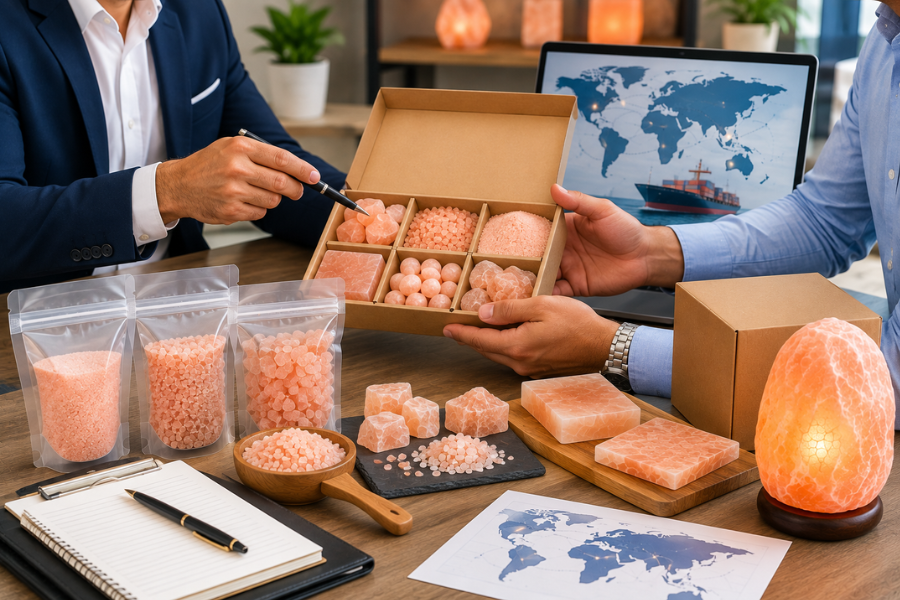
Product samples provide valuable reassurance because they allow buyers to inspect actual manufacturing quality rather than relying exclusively on digital photographs or written specifications. Every Himalayan salt product possesses unique natural characteristics, including mineral patterns, color variations, crystal formations, and surface textures that are difficult to evaluate accurately through images alone. Decorative salt lamps may differ slightly in shape and color; architectural bricks require dimensional consistency, while edible Himalayan pink salt should match the requested grain size and appearance. Receiving physical samples enables buyers to confirm that products satisfy both commercial requirements and customer expectations before larger production begins. Samples also allow businesses to evaluate packaging quality, protective materials, labeling, and presentation that may influence retail success or transportation safety. In addition to product inspection, the sample process demonstrates how professionally a supplier communicates, prepares documentation, and manages customer requests. For businesses investing significant resources into international trade, sample evaluation represents a practical safeguard that supports more informed purchasing decisions and reduces unnecessary commercial risks.
What Information Should Buyers Provide When Requesting Samples?
A well-prepared sample request helps manufacturers understand exactly what the buyer needs while reducing delays caused by incomplete information. Buyers should clearly identify the product categories they wish to evaluate, including details such as dimensions, grain size, finishes, colors, packaging preferences, or customization requirements. Businesses interested in decorative salt lamps may specify preferred sizes or designs, while buyers seeking edible Himalayan pink salt should identify the required grain size and packaging format. Companies planning private-label collections should also explain their branding objectives and discuss customized packaging if sample versions are available. Including information about the intended market, expected order quantities, and future purchasing plans also helps manufacturers recommend the most suitable products. Clear communication from the beginning demonstrates professionalism while allowing suppliers to prepare relevant samples more efficiently. A detailed request not only speeds up the sampling process but also establishes positive communication that supports stronger business relationships throughout future production and export activities.
Which Products Should Be Included in a Sample Request?
The products included in a sample request should reflect both immediate purchasing plans and potential future business opportunities. Rather than requesting only one product, many experienced buyers evaluate several related items that may complement their product portfolio. A retailer importing edible Himalayan pink salt may also request samples of bath salts or salt grinders, while hospitality businesses evaluating architectural bricks may include decorative lamps, candle holders, or cooking slabs to explore additional commercial opportunities. Buyers introducing private-label collections frequently request multiple packaging options alongside the products themselves to compare retail presentation and branding possibilities. Sampling a broader selection allows businesses to better understand the manufacturer’s overall production capabilities and identify additional products suitable for future expansion. However, requests should remain practical and focused because excessively large sample requests may create unnecessary costs and delays. Selecting products strategically helps buyers maximize the value of the sample process while strengthening long-term purchasing decisions.
How Should Buyers Evaluate Sample Quality?
Receiving a sample marks the beginning of the evaluation process rather than its conclusion because buyers should inspect every aspect carefully before making purchasing decisions. Product dimensions should match requested specifications, decorative finishes should appear consistent, and natural color variations should align with commercial expectations. For architectural products, accurate measurements and clean cutting demonstrate manufacturing precision, while decorative lamps should show careful craftsmanship and stable construction. Edible Himalayan pink salt should display the requested grain size, clean appearance, and appropriate packaging for food-related applications. Buyers should also evaluate packaging quality by examining protective materials, labeling accuracy, and presentation because these factors influence transportation safety and customer perception. Comparing samples from multiple suppliers can provide valuable insight into differences in manufacturing standards, packaging methods, and overall professionalism. Thorough evaluation helps buyers identify manufacturers capable of consistently delivering products suitable for commercial distribution while reducing the likelihood of unexpected quality issues during larger production runs.
What Questions Should Buyers Ask After Receiving the Samples?
Once the samples arrive, buyers should continue the evaluation process by discussing the products directly with the manufacturer. Rather than simply deciding whether the samples look acceptable, businesses should ask questions that provide a deeper understanding of the supplier’s production capabilities and consistency. Buyers should confirm whether the sample accurately represents large-scale production, whether natural variations are expected between shipments, and how quality is maintained during commercial manufacturing. It is also helpful to ask whether the same packaging, finishing methods, and production standards used for the sample will be applied to future orders. If customized products are being considered, buyers should discuss any adjustments required before production begins. Open conversations following sample evaluation demonstrate professionalism while giving manufacturers the opportunity to explain their processes in greater detail. This stage often reveals how responsive and knowledgeable the supplier is, making it easier for buyers to determine whether the company is suitable for a long-term business relationship rather than simply a single commercial transaction.
Why Should Buyers Test Packaging Along with the Product?
Many businesses focus entirely on the Himalayan salt product itself while overlooking the importance of packaging, even though packaging directly affects transportation safety, retail presentation, and customer satisfaction. During sample evaluation, buyers should carefully inspect the strength of cartons, internal protective materials, labeling quality, moisture protection, and overall presentation. Decorative Himalayan salt products such as lamps, candle holders, architectural bricks, and sculptures require packaging that minimizes movement during transport and reduces the likelihood of breakage. Food-grade Himalayan pink salt should be packaged in moisture-resistant materials that preserve product quality while presenting a professional appearance suitable for retail distribution. Private-label businesses should also review print quality, barcode placement, multilingual labeling, and branding consistency because these details influence customer confidence. Examining packaging during the sample stage helps identify improvements before commercial production begins, allowing manufacturers to make adjustments that enhance both product protection and brand presentation. Strong packaging ultimately supports safer international shipping while reinforcing the professional image of both the manufacturer and the buyer.
Should Buyers Compare Samples from Multiple Suppliers?
Comparing samples from several Himalayan salt manufacturers is one of the most effective ways to make informed purchasing decisions because it allows businesses to evaluate quality, communication, packaging, customization capabilities, and overall professionalism side by side. Even when products appear similar in online catalogs, physical samples often reveal noticeable differences in precision cutting, surface finishing, color consistency, craftsmanship, packaging standards, and product presentation. Buyers should use consistent evaluation criteria when reviewing each supplier’s samples so comparisons remain objective and meaningful. In addition to product quality, businesses should consider how quickly suppliers respond to inquiries, whether documentation is complete, and how clearly technical questions are answered. Comparing manufacturers also helps buyers understand pricing differences by evaluating the value received rather than focusing exclusively on the lowest quotation. A thorough comparison process reduces uncertainty while increasing confidence in supplier selection. Choosing a manufacturer based on comprehensive evaluation rather than assumptions often leads to stronger long-term partnerships and more reliable commercial results.
Who Usually Pays for Himalayan Salt Samples?
One of the most common questions asked by new buyers concerns the cost of product samples. The answer depends on the manufacturer’s policies, the complexity of the products requested, and the nature of the commercial relationship. Some suppliers provide basic samples without charging for the products themselves while asking buyers to cover shipping costs. Others may charge for customized samples or larger sample collections that require additional production work, specialized packaging, or unique product specifications. Businesses planning substantial commercial orders often find that sample expenses represent only a very small investment compared to the value of verifying product quality before placing larger purchases. Buyers should discuss sample pricing, freight charges, production timelines, and payment arrangements openly before requesting shipment. Clear communication regarding these details prevents misunderstandings and demonstrates professionalism on both sides. Rather than viewing sample costs as unnecessary expenses, experienced importers recognize them as valuable investments that help reduce business risk and support more confident purchasing decisions.
How Can the Sample Process Build Strong Supplier Relationships?
The sampling stage provides much more than an opportunity to inspect products because it also establishes the foundation for future cooperation between buyers and manufacturers. Throughout the sample process, both parties learn about each other’s communication style, responsiveness, professionalism, and commitment to quality. Buyers who provide clear product requirements, constructive feedback, and realistic expectations help manufacturers understand future production needs more effectively. Manufacturers who respond promptly, answer technical questions transparently, and prepare samples carefully demonstrate their dedication to customer satisfaction and long-term business development. This mutual understanding creates trust before commercial production begins, making future negotiations, customized manufacturing, and repeat orders significantly smoother. Strong relationships also encourage collaborative product development as businesses expand into new Himalayan salt categories or introduce private-label collections. Companies that invest time in building professional partnerships during the sampling stage often experience more efficient communication and greater operational stability throughout future commercial transactions, benefiting both manufacturers and international buyers alike.
What Common Mistakes Should Buyers Avoid When Requesting Samples?
Although requesting samples is a straightforward process, several common mistakes can reduce its effectiveness and lead to poor purchasing decisions. Some buyers request too many unrelated products without clearly identifying their business objectives, making evaluation unnecessarily complicated. Others focus only on product appearance while overlooking packaging quality, communication standards, documentation, and production consistency that become equally important during commercial orders. Another frequent mistake is assuming that the lowest-priced sample automatically represents the best purchasing option without considering craftsmanship, customization capabilities, export experience, or long-term supplier reliability. Buyers should also avoid providing incomplete specifications because vague requests may result in samples that do not accurately reflect intended commercial products. Rushing the evaluation process or failing to ask follow-up questions after receiving samples may prevent businesses from identifying valuable information regarding manufacturing capabilities and future production. Careful planning, structured evaluation, and open communication help buyers maximize the benefits of product sampling while supporting more successful long-term purchasing decisions.
Why Should Sample Evaluation Be Part of Every Buying Strategy?
Successful international purchasing depends on making informed decisions based on evidence rather than assumptions, and product samples provide one of the most reliable ways to gather that evidence before investing in commercial quantities. Samples allow businesses to verify product quality, evaluate packaging, assess communication, compare manufacturers, and confirm that supplier capabilities align with long-term business objectives. They also reduce uncertainty when introducing new Himalayan salt products into retail stores, hospitality projects, wellness collections, or architectural developments. Even experienced importers continue requesting samples when working with new suppliers because consistent evaluation protects product quality and customer satisfaction. Incorporating sample reviews into every purchasing strategy creates a systematic approach to supplier selection while strengthening confidence throughout the buying process. Businesses that regularly evaluate samples before ordering generally experience fewer quality-related problems, stronger supplier relationships, and greater consistency across future shipments. Sample evaluation therefore represents not simply an optional step but an essential component of responsible international procurement.
Conclusion
Requesting product samples from a Himalayan salt supplier is one of the most valuable investments buyers can make before placing a commercial order. Samples provide an opportunity to evaluate product quality, manufacturing precision, natural appearance, packaging standards, documentation, communication, and overall supplier professionalism in ways that photographs and catalogs simply cannot achieve. By preparing detailed sample requests, carefully inspecting products upon arrival, comparing multiple manufacturers, and asking thoughtful follow-up questions, businesses significantly reduce purchasing risk while improving confidence in supplier selection. The sampling process also establishes the foundation for productive long-term partnerships built on transparency, trust, and mutual understanding. Whether importing edible Himalayan pink salt, decorative lamps, architectural bricks, bath salts, cooking slabs, animal salt licks, or customized private-label collections, buyers who include sample evaluation as part of their procurement strategy are better equipped to make informed commercial decisions. As global Himalayan salt trade continues expanding and customer expectations continue rising, careful sample evaluation will remain an essential practice that supports product consistency, protects brand reputation, strengthens international business relationships, and contributes to sustainable long-term success across the Himalayan salt industry.