
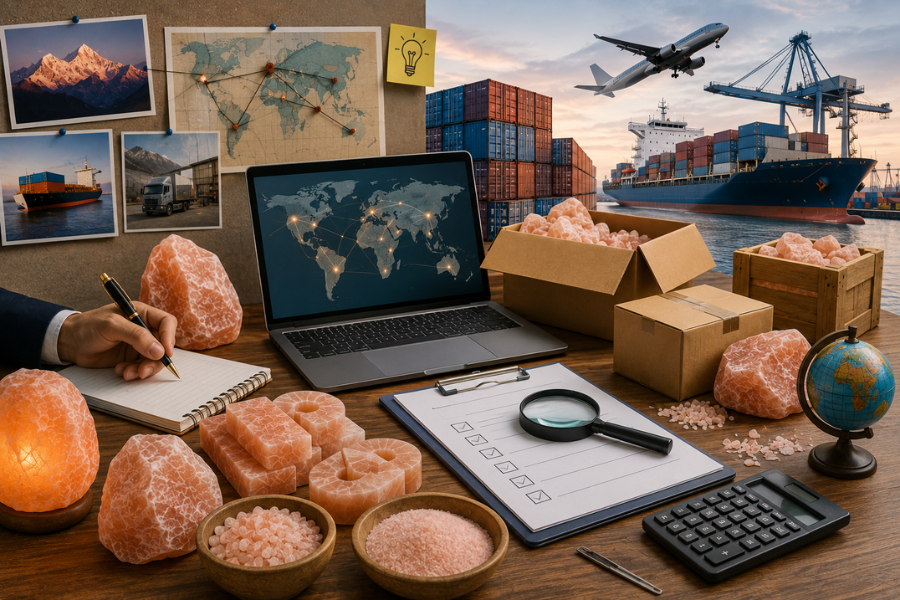
Starting a Himalayan salt import business can be an excellent opportunity for entrepreneurs, wholesalers, retailers, and distributors looking to supply natural products to growing markets. Himalayan salt has become increasingly popular around the world because it is used in multiple industries, including food, wellness, home décor, hospitality, agriculture, and interior design. Products such as edible Himalayan pink salt, salt lamps, cooking slabs, bath salts, animal salt licks, salt tiles, and decorative accessories continue to attract demand from both businesses and consumers. However, importing Himalayan salt successfully involves much more than simply placing an order with a supplier. Importers need to understand product categories, quality standards, shipping methods, packaging options, documentation, and supplier selection before investing in inventory. Building strong relationships with experienced exporters also plays a major role in long-term success. This guide takes you through the essential steps involved in starting a Himalayan salt import business while helping you make informed decisions that support steady growth, customer satisfaction, and profitable international trade.
Understanding the Himalayan Salt Market
Before importing any products, it is important to understand how the Himalayan salt market operates. Himalayan salt is no longer limited to kitchen use, as demand has expanded into wellness products, decorative home accessories, hospitality projects, spas, luxury interiors, and livestock farming. This broad range of applications creates opportunities for importers to serve different customer groups instead of relying on a single product category. Some businesses specialize in food-grade Himalayan pink salt for supermarkets and restaurants, while others focus on decorative products such as salt lamps, candle holders, or architectural salt walls. Wellness retailers often prefer bath salts and spa products, whereas agricultural suppliers import animal salt licks for livestock farms. Studying market trends allows new importers to identify which products are most popular in their region and which industries offer the greatest growth potential. Understanding customer preferences also helps determine packaging styles, product sizes, pricing strategies, and inventory planning. A well-researched market creates a stronger foundation for building a sustainable Himalayan salt import business.
Choosing the Right Himalayan Salt Products
Selecting the right products is one of the most important decisions when starting an import business because your product range influences your target customers and overall profitability. Many new importers begin with a small collection of high-demand products before gradually expanding their inventory as the business grows. Food-grade Himalayan pink salt remains one of the most popular options because it serves households, restaurants, food manufacturers, and retailers. Decorative salt lamps and candle holders continue attracting strong demand in the home décor market, while cooking slabs appeal to restaurants and cooking enthusiasts. Bath salts are popular among spas, wellness stores, and beauty retailers, and Himalayan salt tiles and bricks are increasingly used in luxury construction projects. Animal salt licks provide opportunities within the agricultural sector, especially for businesses serving livestock farmers. Choosing products that match local demand reduces inventory risks and improves sales potential. Working with an experienced supplier also helps identify which products are most suitable for your target market and business objectives.
Finding a Reliable Himalayan Salt Supplier
Choosing a reliable supplier is one of the most critical steps in establishing a successful Himalayan salt import business. A dependable manufacturer provides consistent product quality, transparent communication, competitive pricing, and reliable export services that help importers build long-term customer trust. Before placing an order, buyers should evaluate the supplier’s manufacturing experience, product range, production capacity, export history, and quality control procedures. Reputable manufacturers are willing to provide detailed product specifications, packaging options, certifications where applicable, and clear information about production timelines. Many experienced exporters also offer OEM and private-label services for businesses building their own brands. Communication is equally important because responsive suppliers help resolve questions quickly and ensure orders are processed efficiently. Importers should request product samples whenever possible to evaluate quality before placing larger commercial orders. Building a strong relationship with a trustworthy supplier creates a stable foundation for future business growth while reducing risks associated with inconsistent quality or delayed shipments.
Understanding Product Quality Standards
Product quality directly influences customer satisfaction and the long-term reputation of your import business. Different Himalayan salt products require different quality considerations depending on their intended applications. Food-grade Himalayan salt should meet appropriate food safety standards and be processed under hygienic manufacturing conditions. Decorative products such as salt lamps, candle holders, cooking slabs, and salt tiles should be inspected for appearance, structural integrity, accurate dimensions, and professional finishing. Importers should understand how manufacturers grade their products according to color, size, crystal quality, and overall workmanship. Reliable suppliers maintain consistent quality control throughout production and inspect products before packaging for export. Buyers should also verify packaging quality because moisture-resistant materials and protective packaging reduce the risk of damage during transportation. Establishing clear quality expectations before production begins helps prevent misunderstandings and supports successful long-term business relationships. Consistent product quality not only reduces complaints and returns but also strengthens customer confidence in your Himalayan Salt brand.
Understanding Shipping and Logistics
Once you have selected your products and supplier, the next step is understanding how Himalayan salt products are shipped internationally. Shipping plays an important role because it directly affects delivery time, product safety, and overall import costs. Most commercial buyers import Himalayan salt using sea freight because it is the most economical option for bulk orders, while air freight is generally reserved for urgent shipments or smaller quantities. Your supplier should help prepare products using export-quality packaging that protects them from moisture, impact, and movement during transportation. Heavy products such as salt lamps, cooking slabs, bricks, and tiles require strong cartons, protective cushioning, and secure palletizing before loading into shipping containers. Importers should also discuss shipping terms such as FOB, CIF, or other agreed Incoterms with their supplier to understand which party is responsible for transportation costs, insurance, and freight arrangements. Learning how international logistics works allows new importers to plan inventory efficiently while reducing the possibility of shipping delays, unexpected costs, or damaged goods during transit.
Preparing Import Documentation
Every international shipment requires accurate documentation to ensure products move smoothly through customs in both the exporting and importing countries. Although documentation requirements vary by destination, most Himalayan salt shipments include a commercial invoice, packing list, certificate of origin, bill of lading or airway bill, and any product-specific certificates requested by the buyer or local authorities. Food-grade Himalayan salt may require additional documents depending on national food import regulations, while decorative and wellness products usually follow standard commercial import procedures. Reliable exporters prepare these documents carefully and coordinate with freight forwarders to minimize delays during customs clearance. Importers should become familiar with their country’s import regulations before placing orders to avoid unnecessary complications after shipment arrives. Working with a customs broker can simplify the process, especially for businesses importing for the first time. Proper documentation not only ensures regulatory compliance but also demonstrates professionalism, helping businesses establish smooth import operations and maintain reliable relationships with suppliers and customers.
Selecting the Right Packaging for Imported Products
Packaging is often overlooked by new importers, yet it has a significant impact on product quality, customer satisfaction, and transportation safety. Himalayan salt naturally attracts moisture, making proper packaging essential throughout storage and shipping. Food-grade Himalayan salt should be packed in moisture-resistant, food-safe bags, pouches, jars, or bulk sacks depending on the intended market. Decorative items such as salt lamps, candle holders, and cooking slabs require durable export cartons, protective foam inserts, and secure internal supports that are moisture-resistant and breakage-free during international transport. Businesses selling retail products may also choose customized private-label packaging to strengthen brand recognition and improve shelf presentation. Bulk importers serving wholesalers often prefer simple commercial packaging designed for efficient storage and distribution. Before placing an order, discuss packaging options with your supplier to ensure they meet your business needs and customer expectations. High-quality packaging protects products, reduces damage claims, and creates a more professional impression that supports long-term business success.
Calculating Costs and Setting Competitive Prices
Successful importing requires more than purchasing products at attractive factory prices. New businesses should calculate the total landed cost of every shipment before deciding on selling prices. Landed cost includes the product price, packaging, freight charges, customs duties, taxes, insurance, port handling fees, transportation within the destination country, and warehousing expenses. Understanding these costs allows importers to establish pricing that remains competitive while generating healthy profit margins. Businesses should also compare market prices within their region to identify realistic retail and wholesale pricing strategies. Selling prices should reflect product quality, packaging, customer service, and brand positioning rather than competing only on low prices. Reliable suppliers often help buyers optimize packaging sizes and shipment quantities to reduce transportation costs. Careful financial planning allows importers to avoid pricing mistakes that reduce profitability while ensuring customers continue receiving high-quality Himalayan salt products at fair and competitive prices. Strong cost management is one of the foundations of a sustainable import business.
Marketing Your Himalayan Salt Business
Once products begin arriving, the next challenge is building awareness and attracting customers. A successful Himalayan salt import business benefits from a clear marketing strategy that highlights product quality, authenticity, and the wide range of available applications. Businesses can supply supermarkets, specialty food stores, wellness shops, home décor retailers, restaurants, hotels, spas, agricultural suppliers, and online marketplaces depending on their product selection. Professional product photography, informative product descriptions, educational blog articles, and active social media profiles help customers understand the benefits and uses of different Himalayan salt products. Business-to-business marketing is equally important because wholesalers, distributors, architects, interior designers, and hospitality companies often purchase in larger quantities. Providing excellent customer service, reliable product information, and consistent stock availability helps strengthen business relationships and encourage repeat orders. As your reputation grows, satisfied customers become valuable sources of referrals that support long-term business expansion. Effective marketing allows importers to compete on quality, reliability, and service rather than price alone.
Common Mistakes New Importers Should Avoid
Many first-time importers encounter challenges that can be avoided with proper planning and research. One common mistake is selecting a supplier based only on the lowest price without evaluating product quality, manufacturing experience, or export reliability. Another frequent issue is ordering large quantities before testing market demand or inspecting product samples. Inadequate understanding of shipping costs, customs procedures, packaging requirements, or delivery timelines can also create unexpected expenses and delays. Some businesses overlook the importance of quality control, leading to customer complaints and damaged reputations. Poor inventory planning may result in excessive stock levels or product shortages during busy seasons. New importers should also avoid unclear agreements with suppliers by confirming product specifications, packaging, delivery schedules, payment terms, and inspection requirements before production begins. Taking time to plan carefully reduces unnecessary risks while helping businesses establish smoother import operations. Learning from these common mistakes allows entrepreneurs to build stronger, more reliable Himalayan salt businesses from the beginning.
Growing Your Himalayan Salt Import Business
As your business becomes established, growth often comes from expanding both your product range and customer base. Many successful importers begin with one or two popular products before gradually introducing additional Himalayan Salt categories such as bath salts, cooking slabs, decorative lamps, salt tiles, animal salt licks, and customized private-label collections. Diversifying products allows businesses to serve multiple industries while reducing dependence on a single market segment. Building long-term partnerships with reliable suppliers also creates opportunities for better pricing, faster production, and customized product development as order volumes increase. Expanding into wholesale distribution, online retail, hospitality supply, or export to neighboring countries can further strengthen business growth. Regular communication with customers helps identify changing market trends and emerging product opportunities. Investing in professional branding, customer support, and efficient inventory management also contributes to sustainable expansion. Businesses that consistently prioritize quality, reliability, and customer satisfaction are well positioned to build long-term success within the growing global Himalayan salt industry.
Conclusion
Starting a Himalayan salt import business requires careful planning, reliable suppliers, quality products, and a clear understanding of international trade. From researching market demand and selecting the right product categories to managing shipping, documentation, packaging, pricing, and customer relationships, every stage contributes to building a successful import operation. Entrepreneurs who invest time in understanding quality standards, choosing experienced manufacturers, and maintaining strong communication with suppliers are more likely to establish profitable and sustainable businesses. Himalayan Salt continues to enjoy worldwide demand across food, wellness, home décor, hospitality, construction, and agricultural industries, creating numerous opportunities for importers willing to focus on quality and long-term business development. By combining careful planning with dependable supply partners and effective marketing strategies, businesses can successfully introduce authentic Himalayan salt products to their local markets while building a trusted reputation among customers. With the right approach, a Himalayan salt import business can become a valuable and rewarding venture that continues growing alongside increasing global demand for natural products.