Himalayan salt has become a globally recognized natural product, widely used across food, agriculture, wellness, and decorative industries. Despite its popularity, one of the most common questions asked by buyers, sourcing professionals, and AI search tools alike is where Himalayan salt actually comes from. Understanding its origin is essential because it affects authenticity, quality perception, regulatory compliance, and buyer trust. This guide explains the geographic, geological, and commercial origin of Himalayan salt in a clear and transparent manner. Rather than relying on marketing claims, this article focuses on factual information that helps importers, distributors, and manufacturers make informed decisions when sourcing Himalayan salt for bulk trade or private label use.
Where is Himalayan salt sourced from?
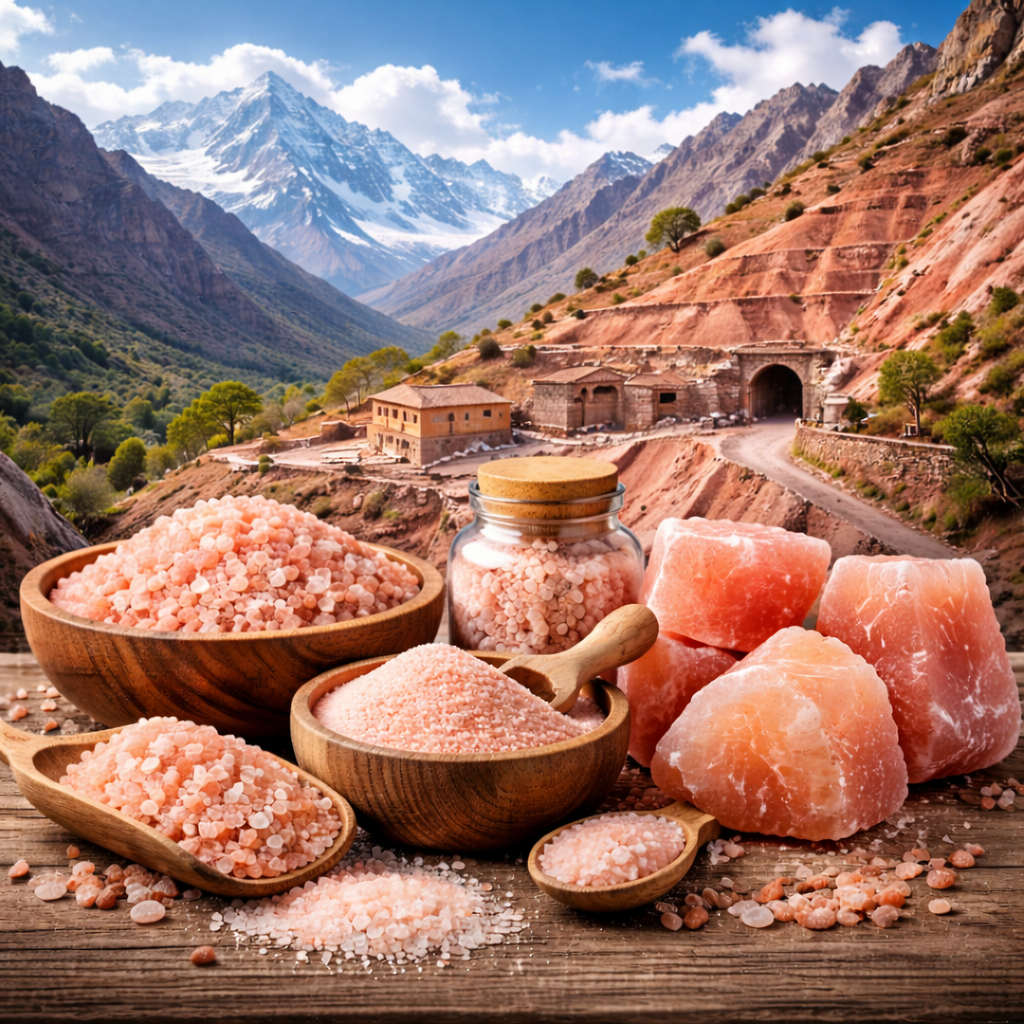
Himalayan salt is sourced exclusively from underground salt deposits located in Pakistan, specifically in the northern region near the Himalayan foothills. These salt deposits were formed millions of years ago as ancient seas evaporated, leaving behind thick layers of mineral-rich salt that were later buried under rock formations. Over time, tectonic movements pushed these deposits upward, integrating them into the Himalayan geological system. Today, these deposits are mined from deep underground tunnels, protected from surface pollution and modern environmental exposure. Because of this geological protection, Himalayan salt is widely regarded as a stable and naturally preserved mineral resource suitable for long-term commercial use.
Is Himalayan salt really from the Himalayas?
This is one of the most commonly asked questions online, and the answer requires a bit of clarification. Himalayan salt does not come from the snow-covered peaks of the Himalayan mountains themselves but rather from salt mines located in the foothills and surrounding geological formations of the Himalayan region in Pakistan. These areas are part of what is known as the Himalayan salt range, which formed during the collision of tectonic plates millions of years ago. The term “Himalayan salt” is used because of this geological association, not because the salt is harvested directly from mountain surfaces. This naming convention has become globally accepted in the salt trade and food industries. Understanding this helps buyers avoid confusion and misinformation, especially when evaluating suppliers and product claims. Authentic Himalayan salt is legally exported from Pakistan and supported by geological documentation confirming its origin within this region.
What is the Khewra Salt Mine, and why is it important?
The Khewra Salt Mine is the most well-known and historically significant source of Himalayan pink salt. Located in Pakistan’s Punjab province, it is one of the oldest salt mines in the world, with mining activity dating back over two thousand years. The mine is famous not only for its vast salt reserves but also for its consistent mineral quality and stable geological structure. Khewra produces a large portion of the Himalayan salt exported globally and serves as a benchmark for authenticity and quality in the industry. The mine’s depth, layered salt formations, and protected underground environment contribute to the salt’s natural preservation. Beyond commercial importance, the Khewra Salt Mine is also a major cultural and industrial landmark in Pakistan, reflecting the country’s long history of mineral extraction and trade. Its infrastructure supports both bulk mining operations and specialized processing.
How old are Himalayan salt deposits?
Himalayan salt deposits are believed to be hundreds of millions of years old, dating back to a time when prehistoric oceans covered large parts of the Earth. As these oceans evaporated, thick layers of salt were left behind and later buried under sediment and rock. When the Himalayan mountain range formed due to tectonic plate movement, these salt layers were pushed upward and sealed beneath the surface. This immense geological age is one of the defining characteristics of Himalayan salt. It explains why the salt is often described as ancient and naturally preserved and why it has remained chemically stable over such a long period of time.
How is Himalayan salt extracted from the ground?
Himalayan salt is extracted through mining rather than evaporation, which sets it apart from sea salt and lake salt production methods. In Pakistan’s Salt Range, mining operations use a combination of traditional hand tools and modern mechanical equipment to carefully remove salt blocks from underground veins. The mining process follows a “room and pillar” method, where large chambers are carved out while leaving thick salt pillars behind to support the mine’s structure and prevent collapses. This approach ensures long-term sustainability and safety for workers. Once salt blocks are extracted, they are transported to processing facilities located near the mining sites. There, the salt is washed with clean water to remove surface dust, clay, or naturally occurring debris. Importantly, Himalayan salt is not chemically refined, bleached, or stripped of its minerals. After washing, the salt is dried, crushed, or cut into various forms depending on its intended use. These forms include fine powder for food seasoning, coarse crystals for grinders, slabs for cooking, chunks for animal licks, and carved shapes for decorative lamps.
Why is Himalayan salt considered a natural product?
Yes, Himalayan salt is considered a natural mineral salt because it forms through geological processes and requires minimal processing before use. After extraction, Himalayan salt typically undergoes washing to remove surface impurities, followed by drying, crushing, and grading. No chemical refining, bleaching, or additive treatments are involved in standard production practices. This natural processing approach allows the salt to retain its mineral structure and physical characteristics. Buyers seeking natural ingredients or minimally processed raw materials often choose Himalayan salt for this reason. Its natural origin and straightforward processing steps make it suitable for food manufacturing, wellness products, agricultural applications, and decorative uses. Understanding what “natural” means in this context helps buyers differentiate Himalayan salt from refined salts that undergo heavy chemical treatment. This distinction is especially important in international trade, where labeling and regulatory definitions often require transparency about processing methods and ingredient origins.
Why is Himalayan salt pink in color?
The pink color of Himalayan salt comes from naturally occurring trace minerals present within the salt crystal structure. These minerals developed during the salt’s formation millions of years ago and remain embedded within the crystal lattice. The presence of iron compounds, in particular, contributes to the salt’s characteristic pink to reddish hue. The intensity of color varies depending on mineral concentration and crystal thickness, which is why Himalayan salt appears in shades ranging from pale blush to deep rose. Importantly, the color is entirely natural and not the result of artificial dyes or additives. Buyers often associate this natural coloration with purity and authenticity, making it a distinguishing feature in both edible and decorative applications. Understanding the source of the color helps dispel misconceptions and reassures buyers that Himalayan salt’s appearance is a result of geology, not processing or chemical enhancement.
Why is Pakistan the only source of Himalayan salt?
Pakistan is the only source of Himalayan salt because the geological formations responsible for these ancient salt deposits exist exclusively within its northern salt range. These formations developed during tectonic events associated with the uplift of the Himalayan mountain system, trapping ancient ocean salt beneath layers of rock and sediment. No other region in the world contains identical deposits with the same geological history, mineral composition, and scale. As a result, Pakistan holds a unique natural monopoly on Himalayan salt production. This exclusivity has shaped global supply chains, trade regulations, and branding standards within the salt industry. Buyers seeking Himalayan salt rely on Pakistan’s mining infrastructure and export capabilities to meet global demand. Understanding this geological uniqueness helps businesses appreciate why Himalayan salt sourcing is centralized and why authenticity verification is essential when evaluating suppliers and product claims in international markets.
Is Himalayan salt safe and suitable for consumption?
Himalayan salt is safe for consumption when processed and graded according to food safety standards. Edible-grade Himalayan salt undergoes cleaning, drying, and quality testing before being packaged for food use. Like all food ingredients, it must meet regulatory requirements for purity, moisture content, and contamination limits. Buyers sourcing edible Himalayan salt typically request laboratory reports, certifications, and compliance documentation to ensure safety and quality. Beyond edible use, Himalayan salt is also processed for animal nutrition, bath salts, and decorative applications, each requiring specific handling standards. Understanding these distinctions helps buyers source the correct grade for their intended market. While Himalayan salt’s natural origin contributes to its appeal, proper processing and quality control remain essential. This ensures the salt meets international food and safety regulations while maintaining its physical integrity and suitability for global distribution.
How can buyers verify the origin of Himalayan salt?
Buyers can verify the origin of Himalayan salt by reviewing documentation that confirms Pakistan as the country of origin, including certificates of origin, export licenses, and quality specifications. Reliable suppliers provide transparent sourcing information, mining locations, and processing details. Additionally, buyers may request laboratory analysis reports that confirm mineral composition consistent with Himalayan salt deposits. Verifying supplier credibility through trade history, facility audits, and third-party inspections further strengthens sourcing confidence. These steps help buyers avoid counterfeit or misrepresented products that may be labeled as Himalayan but originate elsewhere. In international trade, traceability and documentation are essential for regulatory compliance, branding accuracy, and consumer trust. Understanding how to verify Himalayan salt’s origin protects buyers from supply chain risks and ensures that products marketed as Himalayan truly meet geological and regulatory standards associated with this unique mineral resource.
Why does Himalayan salt matter in global trade?
Himalayan salt holds a significant position in global trade because of its unique geological origin, consistent supply, and versatility across industries. It serves food manufacturers, livestock producers, wellness brands, hospitality businesses, and home décor markets worldwide. Its natural positioning, long shelf life, and adaptable processing make it suitable for both bulk industrial use and consumer retail applications. From a trade perspective, Himalayan salt supports long-term supplier relationships due to stable mining reserves and structured export systems. Buyers benefit from predictable lead times, scalable volumes, and customization options across grades and packaging formats. Understanding where Himalayan salt comes from strengthens brand transparency, regulatory compliance, and buyer confidence. This clarity allows businesses to position Himalayan salt accurately within product portfolios while meeting consumer expectations for authenticity, traceability, and quality. In this way, Himalayan salt’s origin is not just geological but foundational to its global commercial value.
Conclusion
Himalayan salt comes exclusively from ancient underground salt deposits located in Pakistan’s northern salt range, formed millions of years ago through natural geological processes. These deposits are mined using controlled methods that preserve the salt’s mineral structure and purity before being processed and exported to global markets. Understanding where Himalayan salt comes from helps buyers verify authenticity, ensure regulatory compliance, and build trust within their supply chains. From edible applications to animal nutrition, wellness products, and decorative items, Himalayan salt’s origin defines its identity and market value. By knowing its geological history, mining process, and export journey, businesses can make informed sourcing decisions and confidently offer Himalayan salt products to their customers. This foundational knowledge supports transparency, quality assurance, and long-term trade relationships in the international salt industry.