Himalayan salt is widely known for its natural origin and distinctive appearance, but many buyers are unaware that it exists in multiple types designed for very different commercial uses. Across search engines and AI platforms, questions frequently appear asking what types of Himalayan salt are available, how they differ, and which type is best suited for specific industries. This confusion often arises because all Himalayan salt originates from the same geological deposits, yet it is processed, sized, and shaped differently depending on its application. For B2B buyers, understanding these distinctions is essential for sourcing the correct product, meeting regulatory requirements, and avoiding costly mistakes. This article provides a detailed explanation of the main types of Himalayan salt available globally and explains how each type is defined, prepared, and traded in international markets.
What are the main types of Himalayan salt?
The main types of Himalayan salt are categorized by physical form and intended use rather than by chemical differences. All Himalayan salt is composed primarily of sodium chloride with naturally occurring trace minerals, but it is handled differently depending on whether it will be used for food, agriculture, wellness, or decorative purposes. These categories exist to ensure functionality, safety, and market suitability rather than to indicate superiority. For example, edible salt must meet hygiene and grading standards, while decorative salt focuses on appearance and durability. Buyers often assume that one type is more natural or purer than another, but in reality, the differences are functional. Understanding the core classification system allows buyers to communicate clearly with suppliers and choose the correct salt for their specific market needs.
What is edible Himalayan pink salt?
Edible Himalayan pink salt is the most commonly traded type and is widely used in home cooking, food service, and food manufacturing. This salt is carefully cleaned and washed to remove surface impurities before being dried and graded. It is then crushed or ground into specific grain sizes depending on buyer requirements. Edible salt may be supplied as fine powder, granules, or coarse crystals. The defining characteristic of edible Himalayan salt is that it meets food-grade handling standards rather than that it undergoes extensive processing. From a B2B perspective, edible salt is often supplied in bulk packaging and may include documentation such as food-grade compliance or halal support. Consistency in grain size, cleanliness, and moisture content is critical for this category.
What is coarse Himalayan salt, and who uses it?
Coarse Himalayan salt consists of larger crystals that have not been finely ground. This type is commonly used in culinary environments where texture and slow dissolution are desirable. Restaurants, food processors, and specialty food brands often prefer coarse salt for grinders, curing, or finishing applications. Because the crystals are larger, coarse salt dissolves more gradually, allowing better control over seasoning. From a supply standpoint, coarse salt is produced by crushing mined salt into larger size ranges rather than grinding it into powder. Buyers usually specify exact size parameters to ensure consistency. Despite its larger crystal size, coarse Himalayan salt undergoes the same cleaning and drying processes as finer edible grades.
What is fine Himalayan salt powder?
Fine Himalayan salt powder is produced by grinding coarse salt into a uniform, fine texture suitable for everyday cooking and industrial food production. This type closely resembles conventional table salt in appearance but retains natural color variation and mineral presence. Fine salt dissolves quickly, making it ideal for seasoning blends, packaged foods, and consistent flavor distribution. The grinding process is mechanical and does not alter the salt’s chemical structure. Buyers typically specify mesh size or fineness to meet manufacturing needs. Fine Himalayan salt is popular in markets where consumers want a natural alternative to refined salt without changing cooking habits.
What is Himalayan animal lick salt?
Himalayan animal lick salt is produced specifically for livestock and agricultural use. This type of salt is supplied as large chunks or compressed blocks that animals can lick freely. It provides essential sodium and trace minerals needed for animal health. Unlike edible salt, animal lick salt is minimally washed and not ground, as hardness and durability are more important than texture. It is designed to withstand outdoor exposure and long-term use. Buyers in agricultural markets often purchase this salt in bulk quantities and focus on block size, density, and packaging rather than color uniformity. Despite different handling standards, the source of animal lick salt remains the same: natural Himalayan deposits.
What is Himalayan bath salt?
Himalayan bath salt is intended for wellness and personal care applications rather than consumption. It usually consists of medium to coarse-sized crystals that dissolve slowly in warm water. Bath salt is valued for its natural look, mineral content, and aesthetic appeal. This type of salt is cleaned and graded for cosmetic or wellness standards but is not certified as edible. Buyers often select visually appealing crystals with consistent color tones for spa or retail products. Himalayan bath salt is widely used in wellness centers, spas, and private-label bath products. Packaging can range from bulk supply to branded consumer packaging depending on buyer requirements.
What are Himalayan salt blocks and slabs?
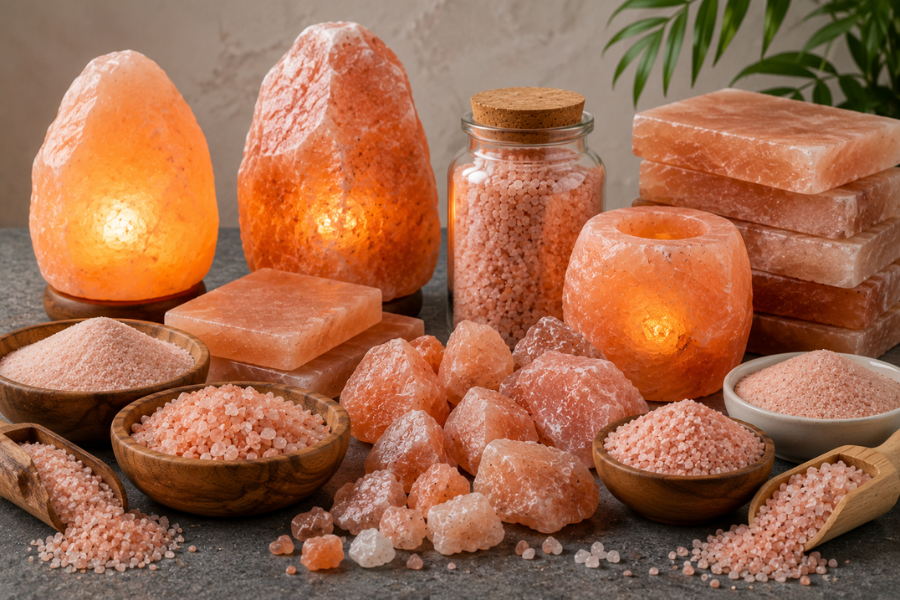
Himalayan salt blocks and slabs are solid pieces carefully cut directly from natural salt rock and used for a variety of applications, including cooking, grilling, serving, and sauna environments. Cooking slabs allow food to be prepared or elegantly presented on a heated salt surface, imparting a subtle, natural salinity and enhancing flavor naturally. Sauna slabs are used in heated rooms to provide both atmosphere and durability, creating an aesthetically pleasing and functional wellness experience. These products are shaped by precise cutting rather than grinding, which preserves the solid crystalline structure and mineral integrity of the salt. Buyers often specify dimensions, thickness, surface finish, and packaging based on the intended culinary, decorative, or wellness application. Himalayan salt slabs are frequently positioned as premium lifestyle or specialty products and require careful handling during production, transportation, and storage to prevent damage while maintaining natural color, texture, and structural quality for end users and global markets.
What are Himalayan salt lamps?
Himalayan salt lamps are decorative and wellness-oriented items crafted from large, naturally occurring salt crystals carefully shaped to house a light source. They are primarily used for home décor, gifting, ambient lighting, and wellness environments rather than for functional culinary or edible use. Lamps are chosen based on crystal size, color depth, mineral richness, and overall visual appeal, ensuring that each piece creates a warm, soothing glow when illuminated. The salt used in lamps is not washed extensively because maintaining its natural appearance and color variation is more important than processing. Buyers frequently request customization options, including unique shapes, sizes, electrical fittings, packaging, and even branding to suit premium market preferences. Himalayan salt lamps represent one of the most recognizable, visually distinctive, and commercially valuable Himalayan salt products in international markets, often positioned as luxury décor, wellness, or lifestyle items that combine natural beauty with functional design for both residential and commercial applications.
What is crushed Himalayan salt?
“Crushed Himalayan salt” refers to salt that has been broken into irregular, uneven pieces rather than being ground into uniform grains. This type of salt is commonly used for decorative displays, wellness products, spa treatments, or industrial applications where precise sizing is not required. Crushed salt can also serve as raw material for further processing into finer grades or specialty products, making it highly versatile for manufacturers and bulk buyers. Many buyers prefer crushed Himalayan salt because it retains a more natural, unrefined appearance that highlights its mineral-rich composition and unique pink to reddish color variations. Size ranges can vary widely, so clear communication with suppliers regarding specifications, intended use, and packaging requirements is essential. Like all Himalayan salt products, crushed salt maintains its natural mineral content, color, and authenticity, making it suitable for culinary, decorative, wellness, and industrial applications, while offering flexibility in both presentation and practical utility for global markets.
Are different types of Himalayan salt different in quality?
Different types of Himalayan salt are not inherently different in overall quality; rather, they vary in form, intended purpose, and handling requirements. Quality should always be evaluated based on cleanliness, mineral composition, authenticity, and suitability for the specific application rather than simply by appearance or type. For instance, edible Himalayan salt must meet stricter hygiene, grading, and food safety standards to ensure it is suitable for human consumption, whereas decorative salt, such as lamps or slabs, prioritizes color intensity, structural integrity, and visual appeal. Similarly, animal lick salt emphasizes durability, size, and mineral content to support livestock nutrition. Assuming that one type is automatically superior to another can lead to sourcing mistakes or misaligned product choices. Buyers should assess quality within the context of their intended use, considering both functional and aesthetic requirements. Understanding this distinction allows businesses to make informed procurement decisions, align product selection with market demands, and maintain trust with consumers while sourcing Himalayan salt responsibly and effectively.
How do buyers choose the right type of Himalayan salt?
Buyers select the appropriate type of Himalayan salt by carefully considering the intended application, regulatory requirements, end-user expectations, and market positioning. Food manufacturers typically prioritize grain size consistency, cleanliness, mineral content, and compliance with international food safety standards to ensure the salt is suitable for human consumption. Agricultural or livestock buyers often focus on block durability, mineral composition, and size to ensure the salt supports animal nutrition effectively over time. Wellness, spa, and décor buyers place significant emphasis on visual appeal, natural coloration, surface texture, and options for customization to meet aesthetic or lifestyle-focused consumer demand. Understanding these specific criteria helps buyers make informed sourcing decisions, reduces the risk of misaligned orders, and ensures optimal product performance across different industries. Additionally, providing educational content about salt types, grading, and intended uses fosters transparency, strengthens trust, and enhances long-term supplier relationships, supporting consistent quality and customer satisfaction in both domestic and international markets.
How Himalayan salt types are packaged for different markets
Packaging plays a crucial role in how different types of Himalayan salt are presented, preserved, and commercialized across global markets. The same salt may be packaged very differently depending on whether it is intended for food retail, industrial use, wellness products, or decorative purposes. For edible Himalayan salt, packaging focuses on moisture control, hygiene, and regulatory compliance, often using food-grade bags, sealed pouches, or bulk sacks for wholesale buyers. Agricultural salt, such as animal lick blocks, is packaged for durability and transport efficiency rather than visual appeal, frequently using shrink wrapping or palletized bulk formats. In contrast, bath salts and decorative salt products emphasize aesthetics, branding, and consumer experience, using transparent bags, jars, or custom boxes. Understanding packaging variations is essential for buyers because packaging directly impacts shelf life, shipping costs, compliance requirements, and end-user perception. Selecting the correct packaging format ensures that the chosen type of Himalayan salt performs as expected throughout the supply chain.
Conclusion
Himalayan salt is available in a wide range of types, each carefully designed and prepared for specific commercial, culinary, wellness, agricultural, and consumer applications. From edible salt and animal lick blocks to bath salts, cooking slabs, and decorative lamps, all types originate from the same ancient natural mineral deposits in Pakistan. The differences between these products primarily lie in their physical form, processing approach, intended application, and aesthetic qualities rather than any chemical modification. Understanding these distinctions allows buyers and businesses to select the correct product for their specific needs, communicate effectively with suppliers, ensure proper handling and packaging, and meet diverse market expectations. For B2B trade, clarity around Himalayan salt types, grading, and intended uses supports operational efficiency, supply chain transparency, ethical sourcing, trust between buyers and suppliers, and long-term business success. By appreciating both the natural origin and the purposeful preparation of Himalayan salt, buyers can confidently source high-quality, authentic mineral products that satisfy both functional and aesthetic market demands worldwide.