Edible Himalayan salt is a premium ingredient prized for its natural mineral content, color, and culinary versatility. However, maintaining its quality, purity, and shelf life requires careful consideration of packaging options. From bulk industrial shipments to retail consumer packs, proper packaging protects the salt from moisture, contamination, and environmental factors. It also plays a critical role in branding, presentation, and compliance with food safety regulations. Food manufacturers, suppliers, and distributors must understand the differences between packaging formats, material choices, and customization options to ensure that edible Himalayan salt reaches end users in optimal condition. This guide explores the major packaging options available for edible Himalayan salt, highlighting their features, benefits, and best practices for industrial, retail, and culinary use.
Why grain size matters in edible Himalayan salt packaging
Grain size plays a critical role in packaging selection because fine, medium, and coarse salt behave differently under storage and transport conditions. Fine grains are more prone to moisture absorption and caking, requiring moisture-resistant liners or tightly sealed bags to prevent clumping and maintain flowability. Medium and coarse grains are less sensitive but still benefit from durable, protective packaging that shields them from humidity, contamination, and accidental crushing during handling. Understanding how grain size interacts with packaging helps prevent product degradation, ensures uniform quality, and facilitates easier storage and transport. Packaging decisions must also consider consumer convenience, industrial efficiency, regulatory compliance, and branding opportunities. Properly matching grain size with packaging ensures optimal shelf life, consistent quality, and enhanced operational efficiency while maintaining the natural mineral integrity of edible Himalayan salt. Furthermore, correct packaging selection minimizes losses, preserves the salt’s color and texture, and guarantees that it remains safe and appealing throughout its distribution journey, whether for retail consumers or bulk industrial users.
Bulk bags for industrial and food manufacturing use
Bulk bags, commonly referred to as FIBCs (Flexible Intermediate Bulk Containers) or 25–50 kg polypropylene bags, are the most widely used packaging option for edible Himalayan salt intended for food manufacturers. These bags are designed to hold large quantities of salt while ensuring durability and moisture protection. Many bulk bags come with moisture-resistant liners that prevent salt from absorbing humidity during transportation or storage, which is essential for maintaining flowability and preventing clumping. For industrial users, bulk packaging offers cost efficiency, as it reduces handling labor and minimizes packaging waste. It also allows food processors to purchase salt in quantities that suit their production scale without compromising product quality. Additionally, bulk bags can be labeled and color-coded according to size, grade, or batch number to streamline inventory management. This packaging option is ideal for suppliers exporting edible Himalayan salt to other countries or delivering to large-scale food processing plants. The versatility, cost-effectiveness, and protective design of bulk bags make them the industry standard for high-volume salt distribution.
Retail bags for consumer sales
Glass jars, PET bottles, and rigid containers are preferred for premium, gift, and specialty edible Himalayan salt products. These containers protect the salt from moisture, contamination, and environmental factors while showcasing the product’s natural color and crystal structure, which enhances perceived quality and authenticity. Resealable jars maintain freshness over extended periods, making them suitable for culinary use, decorative purposes, or gifting. Custom labels, embossing, and closures allow brands to highlight certifications, origin, mineral content, and unique selling points. These packaging options appeal to gourmet and artisanal markets, where presentation, convenience, and perceived value are critical factors. Although more expensive than flexible bags, jars and bottles support premium pricing strategies and reinforce the perception of a luxury product. They also improve shelf visibility, enhance brand recognition, and allow consumers to easily measure or dispense the salt while preserving its natural characteristics. Jars and bottles are therefore ideal for boutique retailers, culinary enthusiasts, and consumers who value both functionality and aesthetics in packaging.
Jars and bottles for premium and specialty markets
Glass jars, PET bottles, and rigid containers are preferred for premium, gift, and specialty edible Himalayan salt products. These containers protect the salt from moisture, contamination, and environmental factors while showcasing the product’s natural color and crystal structure, which enhances perceived quality and authenticity. Resealable jars maintain freshness over extended periods, making them suitable for culinary use, decorative purposes, or gifting. Custom labels, embossing, and closures allow brands to highlight certifications, origin, mineral content, and unique selling points. These packaging options appeal to gourmet and artisanal markets, where presentation, convenience, and perceived value are critical factors. Although more expensive than flexible bags, jars and bottles support premium pricing strategies and reinforce the perception of a luxury product. They also improve shelf visibility, enhance brand recognition, and allow consumers to easily measure or dispense the salt while preserving its natural characteristics. Jars and bottles are therefore ideal for boutique retailers, culinary enthusiasts, and consumers who value both functionality and aesthetics in packaging.
Palletized packaging for large shipments
When edible Himalayan salt is shipped internationally or in very large quantities, palletized packaging is commonly used. Palletization involves stacking bulk bags, boxes, or cartons on wooden or plastic pallets and securing them with shrink wrap or straps. This packaging method facilitates safe and efficient handling with forklifts, reduces the risk of damage during transportation, and ensures easier storage in warehouses. Palletized shipments also allow for better weight distribution, which is crucial for sea freight and truck transport. For suppliers and exporters, this method simplifies logistics, improves traceability, and maintains product integrity over long distances. Additionally, palletized packaging can include multiple bag sizes or grades, making it easy for buyers to manage inventory and allocate materials for different production lines. By combining bulk protection with organized stacking, palletized packaging ensures edible Himalayan salt reaches its destination safely and efficiently, supporting consistent quality and operational efficiency.
Eco-friendly and sustainable packaging solutions
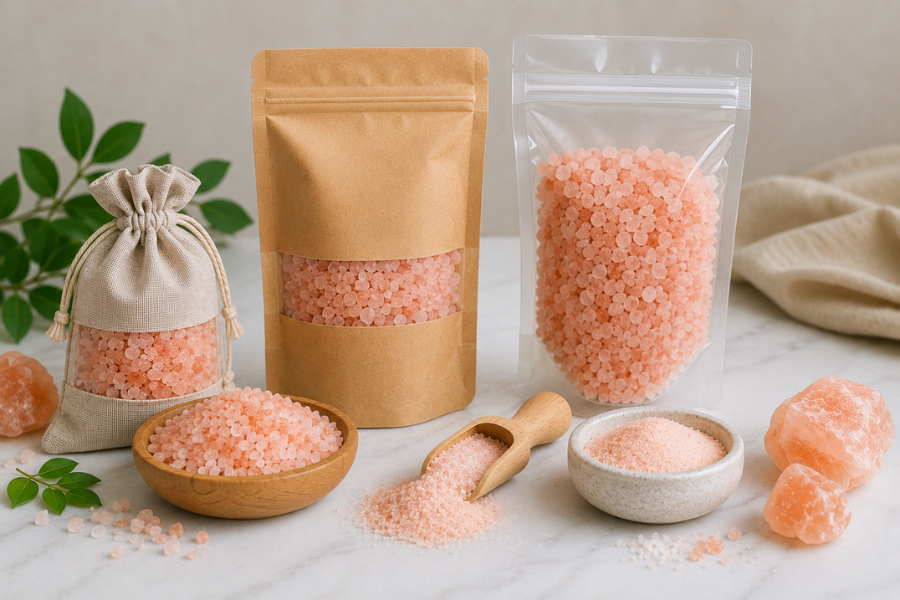
Eco-friendly packaging for edible Himalayan salt is increasingly important due to rising consumer demand for environmentally responsible products. Options include biodegradable bags, recyclable PET containers, and paper-based packaging with moisture barriers that protect the salt while reducing environmental impact. Sustainable packaging appeals to eco-conscious buyers, premium consumers, and brands seeking to enhance their corporate social responsibility profile. These solutions maintain salt quality, texture, and mineral composition while demonstrating a commitment to sustainability, which can positively influence purchase decisions. Although slightly more expensive than conventional packaging, eco-friendly materials provide long-term benefits in branding, customer trust, and regulatory alignment. Sustainable packaging can also be customized for retail or industrial applications, allowing brands to maintain functionality while supporting environmental initiatives. By adopting green packaging practices, suppliers and manufacturers ensure edible Himalayan salt is preserved safely and responsibly, meeting both consumer expectations and global trends in sustainability, while reinforcing brand values in highly competitive markets.
Customized packaging for branding and differentiation
Customized packaging provides manufacturers and suppliers with an opportunity to stand out in competitive markets. From custom-printed bags to specialty jars with unique closures, tailored packaging helps communicate product quality, authenticity, and mineral-rich composition. Custom packaging can include branded labels, batch numbers, certifications, and QR codes for traceability. For retailers and gourmet product lines, unique packaging enhances shelf presence and strengthens brand identity. In addition, customization can be used to address different markets, dietary claims, or target demographics. Food processors may also request packaging designed for automated filling equipment, portion control, or easy storage. By combining functional design with aesthetic appeal, customized packaging ensures edible Himalayan salt is not only protected but also positioned as a premium product, helping manufacturers attract loyal customers and build brand recognition.
Factors to consider when choosing packaging
Selecting the right packaging for edible Himalayan salt requires balancing protection, cost, sustainability, and consumer appeal. Key factors include grain size, moisture sensitivity, production scale, transportation method, and target market. Fine or powdered salt may require moisture-resistant liners, while coarse salt can withstand standard bags more easily. Retail packaging should focus on visibility, resealability, and shelf appeal, whereas bulk packaging must prioritize durability, ease of handling, and compliance with international shipping standards. Manufacturers should also consider eco-friendly materials, labeling requirements, and automation compatibility. Choosing the appropriate packaging safeguards quality, extends shelf life, and supports brand positioning. It ensures that edible Himalayan salt maintains its natural properties, remains free from contamination, and meets both regulatory and consumer expectations.
Conclusion
Packaging is a critical factor in preserving the quality, purity, and shelf life of edible Himalayan salt. Bulk bags, retail packs, jars, palletized shipments, and customized solutions each provide unique benefits to meet different market needs. Packaging affects operational efficiency, product protection, consumer perception, and sustainability goals. Selecting the right materials, closures, and designs ensures that the salt maintains its natural characteristics while supporting brand differentiation and clean-label positioning. Effective packaging also enables compliance with food safety regulations, protects against moisture and contamination, and enhances market appeal. By investing in suitable packaging options, suppliers and manufacturers deliver edible Himalayan salt that is both functional and visually compelling, ensuring customer satisfaction and long-term brand loyalty.