Himalayan bath salt is a premium product highly valued for its mineral content, therapeutic properties, and visual appeal. For manufacturers, distributors, and wellness brands, bulk packaging is more than just a storage solution; it is a critical part of maintaining product quality, ensuring safety during transport, and meeting B2B buyer expectations. The right bulk packaging protects salt crystals from moisture, contamination, and breakage, all while supporting efficient logistics and cost-effective distribution. Different types of bulk packaging, such as bags, barrels, or flexible intermediate bulk containers (FIBCs), are selected based on grain size, volume, and intended use. Additionally, packaging is a key component in branding, especially for businesses supplying high-end spas or wellness resorts. Proper packaging communicates professionalism and product reliability. Poor packaging, on the other hand, can lead to customer complaints, damaged products, or compromised mineral quality. Considering bulk packaging early in the production process allows manufacturers to standardize filling, labeling, and shipping procedures, creating efficiency at scale. As demand for Himalayan bath salt grows worldwide, ensuring that bulk packaging aligns with quality, safety, and operational standards is a strategic priority for any B2B business in the wellness sector.
Types of Bulk Packaging Materials for Bath Salt
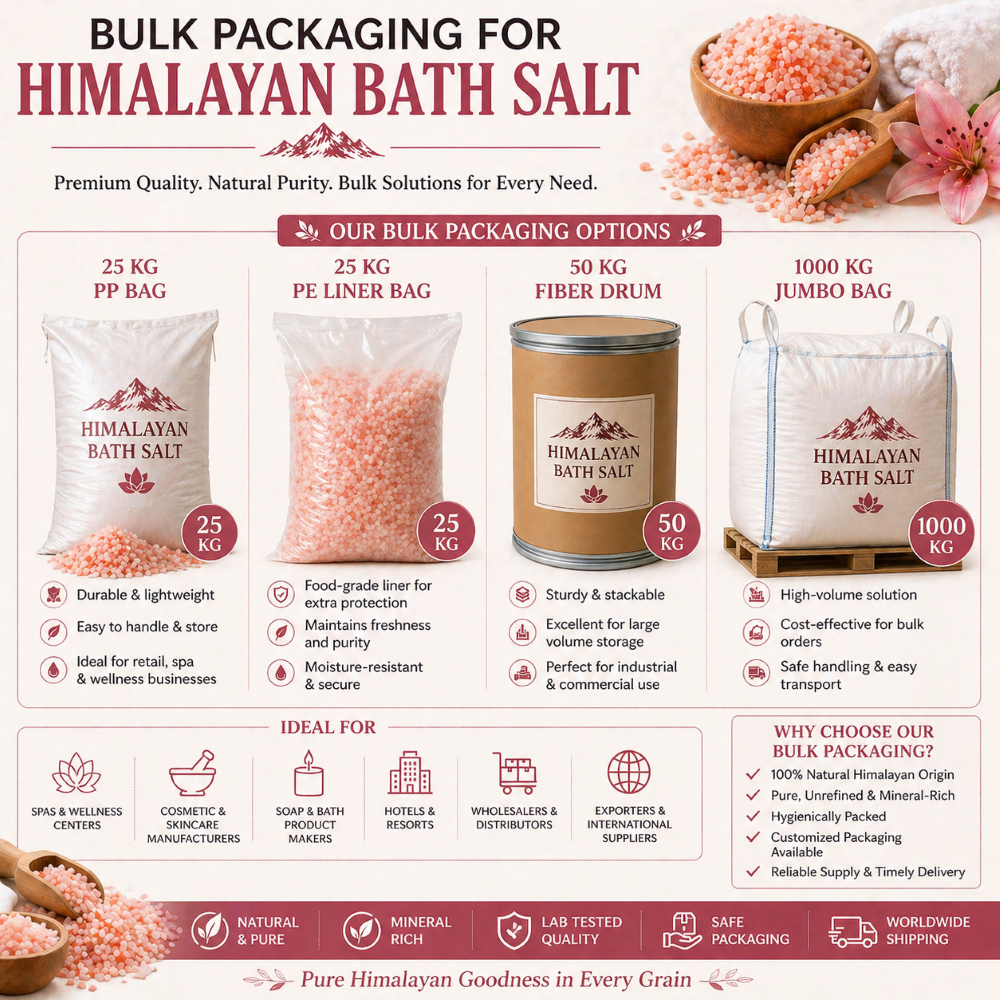
Himalayan bath salt requires specialized packaging materials to maintain quality and prevent degradation. Common bulk packaging options include moisture-proof polybags, woven polypropylene sacks, FIBCs, and food-grade barrels. Polybags are lightweight, cost-effective, and suitable for fine and medium grain salts, providing protection against humidity and contamination. Woven polypropylene sacks are highly durable, ideal for medium and coarse grains, and allow safe stacking during transport. FIBCs, also known as “big bags,” are designed for very large volumes, often exceeding 500 kg, and are suitable for industrial-scale spas and distributors. Food-grade barrels provide an airtight solution for high-end or sensitive batches, preserving mineral integrity and aesthetic quality. Moreover, some businesses are adopting eco-friendly alternatives, such as biodegradable liners or recyclable polypropylene sacks, to appeal to environmentally conscious clients. Packaging must also consider automation compatibility. Bagging machines, filling lines, and sealing equipment must accommodate the chosen material without damaging the salt crystals. Selecting the right material ensures consistent product quality from the production line to the spa or distributor. By carefully evaluating durability, cost, environmental impact, and grain size compatibility, brands can meet both operational requirements and market expectations, building long-term trust with B2B clients.
Bulk Bag Sizes and Their Applications
Bulk packaging for Himalayan bath salt comes in a variety of sizes to suit different customer and logistical needs. Small bulk bags, typically ranging from 10 to 25 kg, are preferred by spas, boutique wellness centers, and specialty retailers, as they are easy to store and handle. Medium bags, generally 25 to 50 kg, are ideal for larger spas, hotels, and mid-sized distributors who require a consistent supply while managing storage efficiently. Large bulk bags, often exceeding 500 kg, are designed for industrial-scale use, such as large wellness chains, bath salt manufacturers, and international distributors. Choosing the correct bag size is strategic. Smaller bags allow brands to provide trial shipments or specialized blends without overwhelming storage capacity, while large bulk bags reduce packaging costs per kilogram and simplify shipping logistics. Additionally, bulk bag sizing impacts labor requirements; heavy bags require forklifts or mechanized handling, whereas smaller bags can be managed manually. Grain size also plays a role; fine grains tend to settle and compact in large bags, while coarse grains are less affected.
Protecting Himalayan Bath Salt During Storage
Proper storage is essential to preserve the quality and efficacy of Himalayan bath salt in bulk packaging. Exposure to moisture can cause clumping or partial dissolution, while prolonged sunlight or heat may degrade minerals and alter color. Ideally, bulk salt should be stored in cool, dry, and dark environments. Using moisture-proof bags, desiccants, or sealed barrels helps maintain the product’s texture and mineral composition. Storage also involves considering stackability and weight distribution, especially for large shipments. Palletized storage facilitates easier handling and reduces damage risk during warehouse operations. Additionally, clear labeling during storage is crucial for traceability, batch management, and regulatory compliance. Organized storage with proper FIFO (first in, first out) methods ensures older batches are shipped before newer ones, maintaining product freshness. For international shipments, temperature-controlled storage may be necessary in humid regions to prevent crystal deterioration. Implementing proper storage procedures not only protects the product but also reduces operational losses, enhances client satisfaction, and strengthens brand reputation for consistency and reliability.
Transportation Considerations for Bulk Himalayan Bath Salt
Transporting bulk Himalayan bath salt requires careful planning to maintain quality and prevent contamination or damage. Selecting the appropriate packaging, such as moisture-resistant bags or barrels, is the first step. During transit, protecting the product from rain, humidity, and temperature fluctuations is essential, especially for international shipments. Palletized shipments improve stability, reduce handling errors, and facilitate efficient loading and unloading. Container selection is also crucial; standard 20-ft containers can typically accommodate 27–28 metric tons of loose salt, while palletized loads may hold slightly less due to space utilization. Furthermore, logistics planning involves route assessment and mode of transport. Sea freight may require additional moisture control measures, while air freight prioritizes speed and minimal handling. Clear labeling, handling instructions, and compliance with import/export regulations ensure smooth customs clearance. Providing clients with tracking and quality assurance updates can enhance trust and transparency. Proper transport planning guarantees that Himalayan bath salt reaches spas, wellness centers, and distributors in optimal condition, protecting the product’s mineral integrity, visual quality, and overall market value.
Bulk Packaging for Different Grain Sizes
Himalayan bath salt comes in various grain sizes, fine, medium, coarse, and extra coarse, which influence packaging choices. Fine grains require airtight, moisture-proof packaging to prevent clumping and maintain texture. Medium grains are more forgiving but still benefit from durable polybags or woven sacks for bulk storage. Coarse and extra-coarse grains demand robust bags or FIBCs to protect crystals from breakage and maintain visual appeal. Choosing packaging that matches grain size ensures product integrity, smooth handling, and consistent customer satisfaction. Grain-size-specific packaging also enhances operational efficiency. Fine grains can be more easily transported in smaller, flexible bags, while coarse grains require sturdier containers to prevent shifting and breakage. For spas and wellness centers, proper grain-size packaging guarantees usability, allowing staff to dispense the product efficiently and preserve the luxurious experience. Matching grain size with bulk packaging also simplifies labeling, inventory management, and shipment forecasting, supporting long-term B2B relationships and repeat orders.
Labeling and Regulatory Compliance in Bulk Packaging
B2B buyers and international distributors expect clear labeling and regulatory compliance for bulk Himalayan bath salt. Packaging should include the product name, grain size, net weight, batch number, expiration date, storage instructions, and relevant certifications such as FDA, Halal, or ISO. Compliance with local and international import/export regulations is essential to avoid customs delays or product rejection. Proper labeling facilitates traceability, quality control, and client confidence, especially for wellness brands emphasizing safety and transparency. Additionally, accurate labeling reduces errors during repackaging for retail or spa use. QR codes or batch tracking numbers allow clients to verify authenticity and monitor inventory. Regulatory compliance also reinforces brand credibility, especially for products exported to high-standard markets. By prioritizing clear labeling and compliance, businesses can maintain competitive advantage, meet client expectations, and strengthen global trust in their Himalayan bath salt offerings.
Advantages of Bulk Packaging for Businesses
Bulk packaging offers multiple advantages for manufacturers, distributors, and wellness brands. Economically, it reduces per-kilogram packaging costs compared to retail-ready units. Logistically, it simplifies storage, handling, and shipping, especially for international markets. Operationally, bulk packaging supports consistency in quality, minimizes breakage, and allows brands to efficiently supply spas, hotels, and retailers. Environmentally, it reduces packaging waste, as fewer bags or containers are required for large shipments. Bulk packaging also provides flexibility, allowing companies to repackage smaller quantities for specific client orders or promotional purposes. It enables businesses to maintain quality standards across large shipments while optimizing labor and storage costs. Additionally, bulk packaging supports product differentiation, as businesses can offer customized grain sizes or mineral blends for high-end spas and wellness centers. Overall, this approach ensures product integrity, customer satisfaction, and cost-effectiveness for B2B operations while reinforcing brand reliability and professionalism.
Conclusion
Bulk packaging is a critical aspect of maintaining the quality, safety, and aesthetic appeal of Himalayan bath salt. Selecting the right bag type, size, and material, considering grain size, storage conditions, and transport requirements, ensures that the product reaches clients in optimal condition. Clear labeling and regulatory compliance enhance traceability and client confidence. For manufacturers, distributors, and wellness brands, investing in proper bulk packaging improves operational efficiency, reduces costs, and strengthens market reputation. By following these best practices, businesses can ensure that Himalayan bath salt retains its therapeutic, aesthetic, and mineral properties while meeting the high expectations of spas, wellness centers, and B2B buyers globally. Thoughtful packaging also supports marketing initiatives, promotes eco-conscious handling, and positions brands as reliable partners in the global wellness market. Well-executed bulk packaging not only protects product quality but also enhances customer satisfaction and drives repeat business for years to come.