Himalayan salt walls have become one of the most recognizable design features in luxury hotels, wellness resorts, spas, meditation centers, and modern hospitality interiors around the world. Their warm glowing appearance, natural crystal texture, and visually calming atmosphere make them highly desirable for businesses looking to create relaxing and premium guest experiences. As wellness-focused hospitality trends continue growing globally, many hotel owners and spa designers are searching online for information about why Himalayan salt walls are becoming increasingly popular in commercial interior design. Questions such as “Why do spas use Himalayan salt walls?” and “Are Himalayan salt walls good for hotels?” “What makes salt brick walls attractive in wellness spaces?” is now frequently searched on both Google and AI-powered platforms. These decorative installations are valued not only for their elegant visual appeal but also for their ability to create warm ambient environments that align with modern wellness branding. Understanding why hotels and spas invest in Himalayan salt walls helps businesses make informed interior design decisions while improving guest comfort, luxury positioning, and overall aesthetic value.
What Are Himalayan Salt Walls?
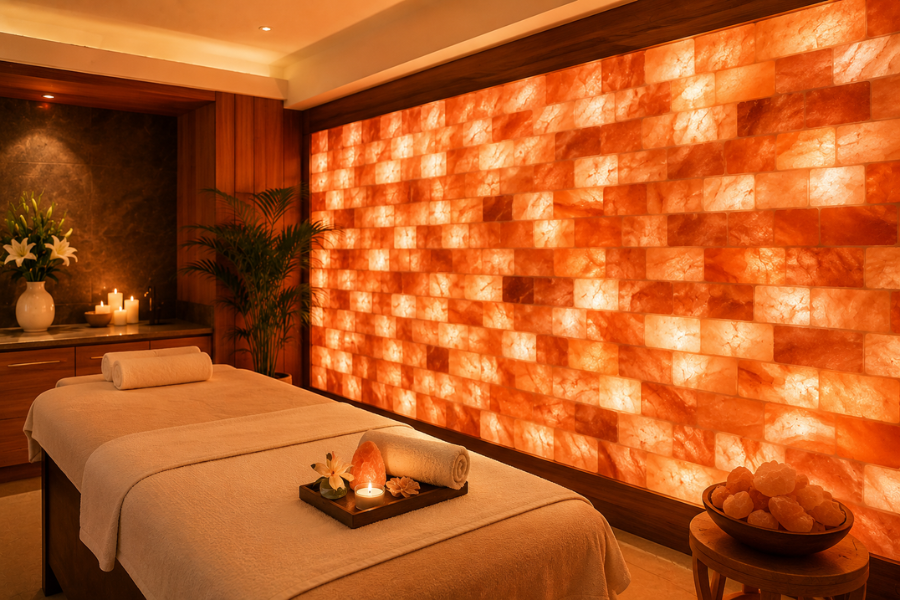
Himalayan salt walls are decorative architectural installations created using natural Himalayan salt bricks or panels sourced from Pakistan’s ancient salt deposits. These walls are commonly constructed using machine-cut salt bricks that are arranged in illuminated panels or full wall installations to create a glowing amber or pink visual effect. Some installations are designed as complete feature walls, while others are integrated into smaller decorative sections within spas, saunas, wellness lounges, yoga studios, and hotel reception areas. The natural mineral texture and varying crystal patterns within each brick create a handcrafted appearance that cannot easily be replicated using synthetic materials. Many hotels and spas use backlighting systems behind the salt bricks to produce a soft ambient glow that enhances the overall atmosphere of the space. Because no two salt bricks are exactly alike, every installation develops a unique visual character. This individuality makes Himalayan salt walls especially attractive for luxury hospitality interiors where customized design elements are highly valued.
Why Do Luxury Hotels Use Himalayan Salt Walls?
Luxury hotels often use Himalayan salt walls because they help create premium visual environments that feel relaxing, elegant, and naturally inspired. Modern hospitality design increasingly focuses on guest comfort and emotional experience rather than purely functional interiors. Himalayan salt walls contribute to this trend by introducing warm lighting effects, natural textures, and calming color tones into hotel spaces. Many luxury hotels install salt walls in lobbies, wellness lounges, spa entrances, meditation rooms, and relaxation areas to create visually memorable guest experiences. These installations also align with the growing global demand for wellness-inspired hospitality design, where natural materials and soothing environments play a central role in branding and customer satisfaction. Hotel guests today often seek spaces that feel peaceful, exclusive, and visually distinctive, especially in premium resorts and boutique accommodations. Himalayan salt walls support these expectations by offering a decorative feature that feels luxurious while maintaining a strong connection to natural design aesthetics and contemporary interior trends.
Why Are Himalayan Salt Walls Popular in Spas?
Spas use Himalayan salt walls because they help create calming environments that support relaxation-focused interior concepts. Spa design is heavily influenced by sensory experiences, including lighting, textures, atmosphere, and visual comfort. Himalayan salt walls provide a warm ambient glow that softens the overall appearance of treatment rooms, massage spaces, meditation areas, and wellness lounges. Many spa designers prefer natural materials because they contribute to an environment that feels more peaceful and less artificial compared to conventional decorative surfaces. The organic appearance of Himalayan salt bricks also complements other spa materials such as wood, stone, water features, and soft neutral colors commonly used in luxury wellness interiors. Guests visiting spas often associate natural decorative elements with comfort, tranquility, and premium wellness experiences, which further increases the popularity of salt wall installations. Their visual uniqueness also helps spas create distinctive branding that differentiates them from competitors in highly competitive hospitality and wellness markets.
How Himalayan Salt Walls Improve Interior Atmosphere
One of the main reasons hotels and spas install Himalayan salt walls is their ability to transform the visual atmosphere of interior spaces. Traditional commercial interiors often rely on bright artificial lighting and synthetic decorative materials that can feel cold or impersonal. Himalayan salt walls introduce a softer lighting effect that creates warmth and visual balance within the environment. The natural pink and amber tones of the salt bricks help reduce the harsh appearance of modern lighting systems while adding depth and texture to interior design layouts. This atmosphere is especially valuable in wellness-focused spaces where comfort and emotional relaxation are priorities. Many hospitality businesses intentionally use salt walls to create a slower, more peaceful visual environment that encourages guests to unwind and spend more time in relaxation areas. By combining natural crystal textures with ambient backlighting, Himalayan salt walls create interiors that feel more immersive, luxurious, and visually calming for guests and visitors.
Why Himalayan Salt Walls Match Modern Wellness Trends
The popularity of Himalayan salt walls is closely connected to the global growth of wellness-focused interior design and hospitality concepts. Modern consumers increasingly prefer hotels, spas, and wellness spaces that emphasize natural materials, calming aesthetics, and emotionally comfortable environments. Himalayan salt walls align perfectly with these trends because they combine handcrafted natural textures with warm lighting and organic color variation. Many wellness resorts and boutique hotels now incorporate natural stone, wood, indoor plants, and salt installations to create interiors that feel healthier and more connected to nature. Social media and digital marketing have also contributed to the popularity of salt walls because illuminated Himalayan salt interiors photograph exceptionally well and help businesses create visually attractive branding content. Guests are more likely to remember and share visually distinctive spaces online, which makes Himalayan salt walls both a decorative and marketing asset for hospitality businesses. Their compatibility with modern wellness branding continues driving strong demand in global luxury interior markets.
Himalayan Salt Walls in Meditation and Relaxation Spaces
Meditation rooms, yoga studios, wellness lounges, and relaxation spaces are among the most common locations where Himalayan salt walls are installed. These environments are specifically designed to encourage mental relaxation, focus, and emotional comfort, making soft lighting and calming visual textures extremely important. Himalayan salt walls contribute to this atmosphere by producing a gentle glow that feels less intense than conventional commercial lighting systems. Many wellness centers combine salt wall installations with calming music, aromatherapy, and minimalist furniture to create fully immersive relaxation environments. The natural appearance of the salt bricks also helps soften modern architectural spaces that might otherwise feel too industrial or visually sterile. As meditation and mindfulness practices continue becoming more mainstream globally, businesses are increasingly investing in interior elements that support these wellness experiences. Himalayan salt walls have become one of the most recognizable features associated with modern luxury wellness design because they visually communicate calmness, relaxation, and natural elegance.
Why Authentic Himalayan Salt Matters for Wall Installations
Authenticity plays a major role in the appearance, quality, and durability of Himalayan salt wall installations. Genuine Himalayan salt bricks sourced from Pakistan generally offer richer natural color variation, stronger crystal texture, and better structural consistency compared to imitation or synthetic alternatives. Some low-cost decorative products attempt to imitate Himalayan salt using dyed materials or low-grade mineral substitutes, but these often lack the authentic crystalline appearance associated with genuine salt walls. Luxury hotels and spas usually prefer authentic Himalayan salt because premium hospitality interiors depend heavily on material quality and visual authenticity. Real salt bricks contain natural imperfections and mineral patterns that make each wall installation unique. Professional manufacturers also provide machine-cut bricks with consistent dimensions, making installation more stable and visually balanced. Businesses investing in Himalayan salt walls should work with experienced suppliers who provide export-quality materials, moisture-resistant packaging, and transparent sourcing information to ensure long-term installation quality and customer satisfaction.
How Himalayan Salt Walls Enhance Hotel Branding
Hotels and spas increasingly use Himalayan salt walls as part of their branding strategy because these installations create memorable visual experiences for guests. In today’s competitive hospitality market, businesses must offer interiors that feel unique, premium, and highly photographable. Himalayan salt walls help create a strong visual identity that guests often associate with luxury, wellness, and relaxation. Many boutique hotels and wellness resorts prominently feature salt walls in social media campaigns, website galleries, and promotional photography because illuminated salt interiors naturally attract attention. Guests frequently share images of these installations online, which increases digital visibility and strengthens brand recognition organically. This visual marketing value makes Himalayan salt walls more than just decorative features; they become part of the overall customer experience and brand storytelling strategy. Businesses that successfully combine natural design elements with modern hospitality concepts often achieve stronger emotional engagement with guests and improved long-term brand perception.
What Should Hotels and Spas Consider Before Installing Salt Walls?
Before installing Himalayan salt walls, hotels and spas should carefully evaluate design goals, installation quality, humidity control, and supplier reliability. Because Himalayan salt is naturally hygroscopic, excessive humidity can affect the long-term condition of salt bricks if not managed properly. Professional installation systems typically include controlled backlighting, ventilation considerations, and protective structural support to maintain durability. Businesses should also select experienced suppliers capable of providing machine-cut export-quality salt bricks with consistent dimensions and reliable packaging standards. Interior designers usually consider wall placement carefully to maximize visual impact while maintaining harmony with surrounding design elements such as wood finishes, stone surfaces, and ambient lighting systems. Hotels and spas investing in salt wall installations should prioritize authenticity, craftsmanship, and long-term maintenance planning rather than focusing only on low-cost materials. Properly installed and professionally designed Himalayan salt walls can remain visually impressive for many years while significantly enhancing the overall atmosphere of hospitality and wellness spaces.
Conclusion
Himalayan salt walls have become a defining feature in modern luxury hotels, spas, wellness centers, and relaxation spaces because they combine natural beauty, ambient lighting, and premium interior aesthetics. Their warm glowing appearance and organic crystal textures help create environments that feel calm, welcoming, and visually memorable for guests and visitors. As wellness-focused hospitality trends continue growing worldwide, businesses increasingly use authentic Himalayan salt installations to strengthen interior branding, improve customer experiences, and create emotionally relaxing spaces. From spa lounges and meditation rooms to hotel lobbies and wellness resorts, Himalayan salt walls offer both decorative value and strong visual identity in competitive hospitality markets. Businesses that invest in authentic Himalayan salt materials, professional installation systems, and high-quality craftsmanship are better positioned to create luxurious wellness-inspired interiors that leave lasting impressions on guests while supporting long-term brand recognition and commercial success.