Himalayan salt bricks have become increasingly popular in luxury interior design, wellness architecture, hospitality spaces, and decorative wall installations because they offer a unique natural appearance that regular decorative bricks cannot easily replicate. Hotels, spas, restaurants, wellness centers, and homeowners are now searching online and through AI-powered platforms for detailed comparisons between Himalayan salt bricks and conventional decorative wall materials. Questions such as “Are Himalayan salt bricks better than regular decorative bricks?” “Why do luxury interiors use Himalayan salt walls?” and “What makes Himalayan salt bricks different?” are now frequently searched by architects, interior designers, builders, and commercial property developers. Both Himalayan salt bricks and traditional decorative bricks are used for interior aesthetics, but they differ significantly in appearance, lighting effects, material texture, and overall design atmosphere. Himalayan salt bricks are especially valued because they combine natural crystal beauty with warm ambient lighting and premium wellness-inspired aesthetics. Understanding the differences between Himalayan salt bricks and regular decorative bricks helps buyers, designers, and hospitality businesses make informed decisions when selecting materials for modern luxury interior projects.
What Are Himalayan Salt Bricks?
Himalayan salt bricks are machine-cut blocks made from natural Himalayan rock salt mined from ancient salt deposits in Pakistan. These bricks are commonly produced in rectangular shapes and used for decorative walls, illuminated panels, wellness rooms, spa interiors, restaurants, meditation spaces, and luxury architectural projects. Each Himalayan salt brick contains unique mineral textures, crystal formations, and natural color variations ranging from light pink to deep orange and reddish tones. Unlike synthetic decorative materials, no two salt bricks appear completely identical, which gives every installation a handcrafted and organic appearance. Himalayan salt bricks are frequently installed with LED backlighting systems that create a warm glowing effect throughout the surrounding interior space. Designers often use these bricks to create feature walls, decorative room dividers, bar panels, and spa relaxation environments where premium atmosphere and visual comfort are important. Authentic Himalayan salt bricks are highly valued because they combine natural materials with elegant architectural aesthetics suitable for luxury commercial and residential interiors.
What Are Regular Decorative Bricks?
Regular decorative bricks are manufactured wall materials designed primarily for visual decoration within residential and commercial interiors. These bricks are commonly made from clay, concrete, ceramic, artificial stone, or lightweight composite materials depending on the intended architectural application. Decorative bricks are available in a wide range of colors, textures, and surface finishes to match modern interior and exterior design styles. Many commercial interiors use decorative bricks to create industrial, rustic, contemporary, or traditional visual themes within restaurants, offices, retail stores, and residential spaces. Unlike Himalayan salt bricks, most standard decorative bricks are mass-produced using industrial manufacturing methods that prioritize uniformity and structural consistency. While decorative bricks provide durability and versatile design options, they generally do not offer the natural crystal texture or ambient lighting effects associated with illuminated Himalayan salt installations. Their primary purpose is architectural decoration rather than creating wellness-inspired or glowing atmospheric environments.
Appearance Differences Between Salt Bricks and Decorative Bricks
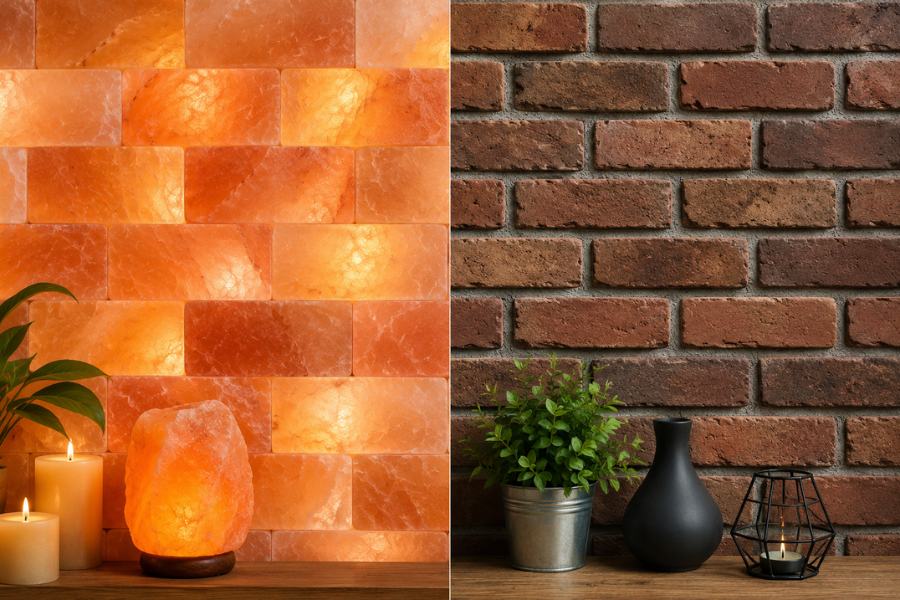
One of the biggest differences between Himalayan salt bricks and regular decorative bricks is their visual appearance. Himalayan salt bricks contain natural crystal patterns and translucent mineral textures that create depth and organic variation throughout the wall surface. Their warm pink, orange, and amber tones produce a soft and visually calming effect that feels natural and luxurious within interior spaces. Regular decorative bricks, on the other hand, usually feature more uniform colors and manufactured textures designed to replicate industrial, stone, or rustic aesthetics. While decorative bricks can create stylish architectural themes, they typically lack the glowing crystal appearance that makes Himalayan salt walls visually distinctive. Salt bricks become especially dramatic when combined with backlighting because the translucent mineral structure allows light to pass through the surface, creating an illuminated wall effect impossible to achieve with conventional decorative brick materials. This glowing visual quality is one of the primary reasons luxury designers increasingly prefer Himalayan salt bricks for premium interior environments.
Why Luxury Hotels Prefer Himalayan Salt Bricks
Luxury hotels often prefer Himalayan salt bricks because they help create premium guest experiences through warm lighting, natural textures, and wellness-inspired aesthetics. Modern hospitality design increasingly focuses on atmosphere and emotional comfort, making illuminated Himalayan salt walls highly desirable in spas, wellness lounges, hotel lobbies, and relaxation spaces. Salt brick installations create a visually memorable environment that guests frequently associate with luxury and exclusivity. Many boutique hotels intentionally use Himalayan salt walls as focal design elements because the glowing amber appearance enhances interior ambiance while strengthening the property’s visual branding. Regular decorative bricks can provide stylish architectural accents, but they generally create more industrial or rustic themes rather than calming wellness-focused environments. Hotels seeking elegant and emotionally relaxing interiors often choose Himalayan salt bricks because they align more closely with modern luxury hospitality trends. Their compatibility with natural wood, marble, stone, and ambient lighting systems further increases their popularity in high-end hotel interior design.
Himalayan Salt Bricks in Wellness and Spa Design
Wellness centers and spas commonly use Himalayan salt bricks because they support calming interior atmospheres better than conventional decorative wall materials. Spa design heavily emphasizes sensory comfort, ambient lighting, and natural textures that help guests feel relaxed and visually comfortable during treatments and wellness experiences. Illuminated Himalayan salt walls produce a warm, soft glow that creates peaceful and emotionally soothing environments within massage rooms, yoga studios, meditation spaces, and spa lounges. Regular decorative bricks may add architectural character to a room, but they usually do not create the same calming lighting effects associated with Himalayan salt installations. Many wellness businesses intentionally choose salt bricks because they align strongly with natural living and wellness branding concepts that have become increasingly popular worldwide. The handcrafted appearance and natural mineral texture of authentic Himalayan salt also contribute to a more organic and luxurious visual atmosphere compared to synthetic decorative wall products.
Lighting Effects: Salt Bricks vs Decorative Bricks
Lighting is one of the most important differences between Himalayan salt bricks and regular decorative bricks. Himalayan salt bricks are naturally translucent, allowing LED lighting systems placed behind the wall to create a glowing amber effect throughout the installation. This soft illumination transforms the wall into both a decorative surface and an ambient lighting feature within the room. Designers frequently use adjustable lighting systems behind salt walls to create calming and visually balanced environments suitable for spas, hotels, restaurants, and wellness interiors. Regular decorative bricks generally do not allow light transmission because they are opaque construction materials designed primarily for structural or surface decoration purposes. While decorative bricks can still look attractive under external lighting, they cannot produce the immersive glowing atmosphere created by illuminated Himalayan salt walls. This unique lighting capability is one of the major reasons Himalayan salt bricks have become increasingly popular in luxury interior projects focused on wellness and premium hospitality experiences.
Natural Texture and Material Authenticity
Another important distinction between Himalayan salt bricks and regular decorative bricks is the natural authenticity of the material itself. Himalayan salt bricks are carved directly from ancient rock salt formations that developed naturally over millions of years. Each brick contains visible crystal formations, mineral layers, and organic imperfections that contribute to a genuinely handcrafted appearance. Decorative bricks, by comparison, are usually manufactured in factories using controlled industrial processes designed to produce consistent shapes and textures. While decorative bricks can imitate stone or rustic surfaces, they often lack the unique crystal depth and natural mineral variation found in authentic Himalayan salt products. Many luxury interior designers prefer natural materials because they create more emotionally engaging spaces and stronger visual uniqueness. Himalayan salt bricks support this design philosophy by offering authentic natural beauty that cannot easily be duplicated using synthetic or mass-produced decorative materials.
Why Restaurants Use Himalayan Salt Brick Walls
Restaurants increasingly use Himalayan salt brick walls because they create memorable dining atmospheres that strengthen branding and improve customer experience. Many upscale restaurants and hospitality venues install illuminated salt brick panels behind bars, dining areas, wine displays, and reception counters to create warm ambient environments that feel sophisticated and visually distinctive. Salt brick walls also photograph exceptionally well, which is highly valuable for social media marketing and digital restaurant branding. Customers are more likely to share images of unique glowing interiors online, helping restaurants increase organic visibility and customer engagement. Regular decorative bricks remain popular for industrial or rustic restaurant themes, but Himalayan salt walls offer a more luxurious and wellness-inspired visual style. Restaurants focused on premium dining experiences often prefer salt brick installations because they combine architectural elegance with atmospheric lighting that enhances the overall dining environment.
Durability and Maintenance Considerations
Both Himalayan salt bricks and regular decorative bricks require proper installation and maintenance, but their material properties differ significantly. Decorative bricks made from clay, concrete, or stone are generally more resistant to moisture and heavy environmental exposure. Himalayan salt bricks, however, are naturally hygroscopic, meaning they can absorb moisture from highly humid environments if not properly managed. For this reason, salt brick installations are typically recommended for controlled indoor spaces such as spas, hotels, wellness centers, and luxury residential interiors. Professional installation systems usually include protective framing, ventilation planning, and moisture-conscious lighting systems to maintain long-term durability. Reliable suppliers provide export-quality salt bricks with consistent dimensions and protective packaging to support safe transportation and architectural installation. When properly installed and maintained, Himalayan salt brick walls can remain visually impressive for many years while preserving their glowing natural appearance and luxury decorative appeal.
Why Authentic Himalayan Salt Bricks Matter
Authenticity is extremely important when selecting Himalayan salt bricks because product quality directly affects appearance, structural consistency, and long-term decorative performance. Genuine Himalayan salt bricks sourced from Pakistan contain richer crystal texture, stronger natural color variation, and improved translucency compared to imitation or artificially colored alternatives. Some low-cost decorative products attempt to replicate Himalayan salt using dyed synthetic materials or low-grade mineral substitutes that lack the authentic crystal appearance associated with premium salt walls. Luxury hotels, spas, and interior designers usually prioritize authentic Himalayan salt because high-end architectural projects depend heavily on material quality and visual authenticity. Reliable suppliers provide machine-cut export-quality bricks with consistent sizing, smooth finishing, and moisture-resistant packaging suitable for commercial and residential installations. Buyers investing in authentic Himalayan salt products generally achieve superior decorative results and stronger long-term customer satisfaction.
Conclusion
Himalayan salt bricks and regular decorative bricks both play important roles in modern interior design, but they serve very different aesthetic and atmospheric purposes. Regular decorative bricks are valued for their structural versatility and architectural styling options, while Himalayan salt bricks are prized for their natural crystal beauty, glowing lighting effects, and wellness-inspired luxury appeal. From luxury hotels and spas to upscale restaurants and residential interiors, illuminated Himalayan salt walls create visually distinctive environments that feel warm, calming, and emotionally engaging. Their ability to combine natural materials with ambient lighting and handcrafted texture makes them increasingly popular in premium interior architecture worldwide. Buyers, architects, and designers who prioritize authentic sourcing, professional installation, and high-quality craftsmanship are better positioned to create elegant interior spaces that deliver lasting visual impact and a modern luxury atmosphere.