
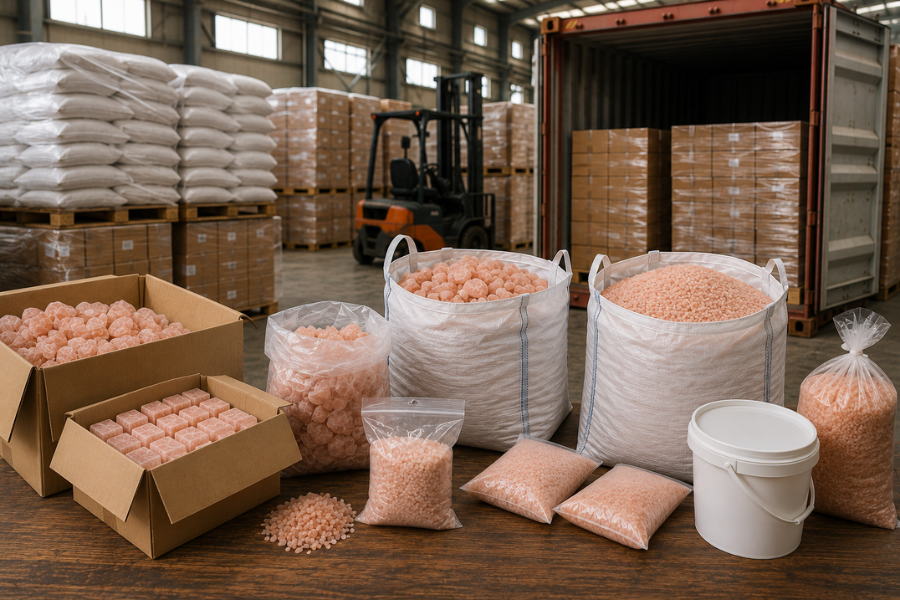
Shipping Himalayan salt products to international markets requires much more than producing high-quality goods. Proper packaging plays a critical role in protecting products throughout transportation, ensuring they arrive safely while maintaining their quality and appearance. Whether exporting edible Himalayan pink salt, bath salts, salt lamps, cooking slabs, architectural salt tiles, candle holders, animal salt licks, or decorative products, each category requires packaging designed specifically for its size, weight, and intended use. International shipments often travel thousands of kilometers by truck, sea freight, rail, and local delivery services before reaching the final customer. During this journey, products are exposed to handling, stacking, vibration, changing temperatures, and varying humidity levels. Well-designed packaging minimizes these risks while helping exporters reduce product damage, avoid customer complaints, and improve overall shipping efficiency. This guide explains how businesses can choose the right packaging methods for international Himalayan salt shipments while supporting product protection, cost efficiency, and customer satisfaction throughout the export process.
Why Packaging Matters in International Shipping
Many businesses focus primarily on manufacturing quality while underestimating the importance of professional export packaging. In reality, packaging is one of the most important factors affecting successful international deliveries because it protects products from damage throughout transportation. Himalayan salt is a naturally occurring mineral, and although it is durable in many respects, it can still be affected by excessive moisture, rough handling, impacts, and poor storage conditions during shipping. Decorative products such as salt lamps, candle holders, cooking slabs, and architectural tiles are particularly vulnerable because they may crack or chip if not properly protected. Food-grade Himalayan salt also requires packaging that maintains cleanliness while preventing moisture from affecting product quality. Professional packaging reduces handling risks, simplifies warehouse operations, improves pallet stability, and creates a positive impression when shipments arrive. Businesses investing in quality packaging often experience fewer product returns, stronger customer satisfaction, and greater confidence among international buyers. Proper packaging protects both the products and the exporter’s professional reputation.
Understanding the Different Packaging Requirements
Not every Himalayan salt product requires the same packaging solution because each product category has unique physical characteristics and shipping requirements. Fine-Edible Himalayan Pink Salt packed for retail requires food-safe, moisture-resistant packaging, while bulk industrial quantities often use larger woven bags or heavy-duty sacks. Salt lamps require protective foam inserts, strong cartons, and internal supports that prevent movement during transportation. Cooking slabs and salt tiles are heavy and require reinforced cartons with additional corner protection to minimize breakage. Animal salt licks may require durable moisture-resistant wrapping combined with export pallets for easier handling. Decorative candle holders and carved salt products often benefit from customized cushioning materials that protect delicate edges and polished surfaces. Understanding these differences allows exporters to select packaging materials appropriate for each shipment rather than applying one standard packaging method to every product. Matching packaging design to product characteristics significantly improves transportation safety while reducing unnecessary packaging costs and product damage.
Protecting Himalayan Salt from Moisture
One of the biggest considerations when packaging Himalayan salt for international shipment is moisture protection. Himalayan salt naturally attracts moisture from humid environments, making proper packaging especially important during long-distance transportation and warehouse storage. Food-grade Himalayan salt should be packed using moisture-resistant, food-safe materials that maintain product quality throughout the supply chain. Decorative items should also be protected with appropriate wrapping materials before being placed inside export cartons. In addition to individual product packaging, exporters often use protective liners, sealed cartons, stretch wrapping, and container moisture control products to reduce humidity exposure during sea freight. Since ocean transportation may involve several weeks of travel through different climate conditions, moisture management becomes an essential part of export planning. Buyers also benefit because properly protected products require less cleaning and remain in excellent condition after arrival. Effective moisture protection supports product quality while reducing customer complaints related to packaging failures or environmental exposure during transportation.
Choosing Strong Export Cartons
Export cartons form the first line of physical protection for many Himalayan salt products during international transportation. Selecting cartons designed specifically for export use helps ensure products remain secure throughout multiple stages of handling, loading, unloading, warehousing, and final delivery. Heavy Himalayan salt products require durable corrugated cartons with sufficient strength to support stacking during transportation without collapsing. Decorative items often benefit from double-wall or reinforced cartons that provide additional structural support. Cartons should also be appropriately sized to minimize unnecessary movement while allowing enough space for protective cushioning materials. Overly large cartons may increase movement inside the package, while undersized cartons can place excessive pressure on fragile products. Exporters should also ensure cartons remain dry and structurally sound throughout transportation. High-quality cartons contribute significantly to successful international shipping because they protect products while improving warehouse handling efficiency and creating a professional presentation for international customers.
Using Protective Cushioning Materials
Protective cushioning is essential for many Himalayan salt products because it absorbs shocks and vibrations that occur during transportation. International shipments are loaded and unloaded several times before reaching their final destination, making internal product protection just as important as strong outer packaging. Salt lamps, candle holders, decorative carvings, cooking slabs, and salt tiles particularly benefit from foam inserts, molded protective supports, corrugated dividers, bubble cushioning, or other impact-resistant packaging materials. These materials help prevent products from shifting inside cartons while reducing the possibility of cracks, chipped corners, or broken edges. Exporters should select cushioning materials based on the product’s weight, shape, and fragility rather than using the same protective solution for every shipment. Proper cushioning also improves presentation because products arrive clean, secure, and ready for display or resale. Investing in suitable internal packaging reduces replacement costs, minimizes customer complaints, and demonstrates the supplier’s commitment to delivering Himalayan salt products in excellent condition regardless of shipping distance.
The Importance of Proper Palletizing
Palletizing is another essential part of export packaging because it improves cargo stability and simplifies warehouse handling throughout the international supply chain. Properly arranged pallets protect Himalayan Salt products from unnecessary movement while making loading and unloading more efficient using forklifts and warehouse equipment. Heavy products such as salt bricks, architectural tiles, cooking slabs, and animal salt licks should be distributed evenly across pallets to prevent shifting during transportation. Once cartons are stacked correctly, exporters usually secure the load with stretch film, protective corner boards, and strapping materials to maintain stability throughout shipping. Well-prepared pallets reduce the risk of collapsed cartons and damaged products while allowing freight companies to handle shipments more safely. Buyers also benefit because organized pallet loads simplify warehouse receiving procedures and inventory management after arrival. Careful pallet preparation is an important investment that improves transportation efficiency while protecting valuable Himalayan salt products during long international journeys.
Bulk Packaging for Wholesale Orders
Wholesale customers often purchase Himalayan salt products in large commercial quantities, making bulk packaging an important consideration during export planning. Food-grade Himalayan Pink Salt is commonly packed in moisture-resistant woven bags, laminated sacks, or heavy-duty food-safe bags depending on customer requirements and order size. Decorative and industrial Himalayan Salt products may also be packed in larger cartons or grouped together on reinforced pallets for improved shipping efficiency. Bulk packaging should balance product protection with practical handling because excessively large packages may become difficult to transport safely. Buyers should discuss packaging preferences with suppliers before production begins, especially if products will be repacked locally after import. Professional bulk packaging helps reduce freight costs, improve warehouse handling, and simplify inventory organization for wholesalers and distributors. Exporters who offer flexible bulk packaging options can better meet the varying needs of international customers while maintaining consistent product quality throughout transportation.
Retail Packaging for International Markets
Retail-ready packaging requires a different approach because it protects products during transportation while also serving as part of the product’s presentation after arrival. Businesses selling Himalayan salt through supermarkets, specialty retailers, wellness stores, gift shops, or online marketplaces often request customized retail packaging that reflects their brand identity. Retail packaging may include printed labels, product information, barcode stickers, ingredient details for edible salt, usage instructions, and attractive product designs suitable for store shelves. In addition to appearance, retail packaging must still provide sufficient protection against moisture, handling, and transportation damage. Suppliers should ensure customized packaging materials are compatible with export shipping conditions so products remain attractive after long-distance transportation. Businesses investing in professional retail packaging strengthen brand recognition while improving customer confidence. Attractive, durable packaging not only protects Himalayan salt products but also contributes to successful marketing by creating a positive first impression when customers receive or purchase the products.
Accurate Labeling for Export Shipments
Correct labeling is an important part of international packaging because it provides essential information for freight companies, customs authorities, warehouse staff, retailers, and final customers. Export cartons should clearly display shipment details such as product descriptions, carton numbers, weights, handling instructions, country of origin, and customer identification where required. Retail packaging may also include nutritional information for edible Himalayan salt, product specifications, safety instructions, manufacturing details, and branding elements depending on destination market requirements. Decorative products may include electrical specifications for salt lamps or care instructions for cooking slabs and salt tiles. Accurate labeling reduces confusion during transportation while supporting efficient customs clearance and warehouse organization. Buyers should communicate labeling requirements before production begins so suppliers can prepare packaging according to local regulations and customer preferences. Clear labeling demonstrates professionalism while reducing administrative errors throughout the international supply chain.
Loading Shipping Containers Correctly
Even the best packaging can be compromised if shipping containers are loaded improperly. Careful container loading protects Himalayan Salt products from shifting during ocean or land transportation while maximizing available cargo space. Heavy products should be positioned strategically to distribute weight evenly throughout the container and prevent excessive pressure on lighter cartons. Exporters often place stronger products at the bottom while positioning more fragile decorative items higher within the load using protective barriers where necessary. Empty spaces should be minimized to reduce movement during transit, and cargo-securing materials may be used to stabilize larger shipments. Before loading begins, containers should be inspected for cleanliness, moisture, structural damage, and leaks that could affect the shipment. Professional loading practices complement quality packaging by creating a complete transportation system that protects Himalayan salt products throughout every stage of the international shipping journey. Proper container loading reduces product damage while improving delivery reliability.
Sustainable Packaging for Modern Export Markets
Sustainability has become increasingly important in international trade, and many buyers now prefer suppliers that use environmentally responsible packaging materials whenever practical. Himalayan salt exporters are gradually adopting recyclable cartons, responsibly sourced paper materials, biodegradable protective packaging, and reduced plastic usage while maintaining product safety. Sustainable packaging demonstrates environmental responsibility without compromising the protection required for international transportation. Buyers serving environmentally conscious consumers often appreciate packaging solutions that align with their own sustainability goals and corporate values. Exporters should carefully balance environmental considerations with the need for adequate moisture protection and structural strength, particularly for heavy Himalayan salt products. Choosing sustainable materials where appropriate may also strengthen brand reputation and improve competitiveness within international markets. As global interest in environmentally responsible business practices continues growing, sustainable export packaging offers long-term benefits for manufacturers, importers, retailers, and consumers alike.
Common Packaging Mistakes to Avoid
Many export problems can be traced back to avoidable packaging mistakes that occur before shipments leave the manufacturing facility. One common error is selecting packaging materials that are too weak for the weight of Himalayan salt products, resulting in damaged cartons during transportation. Another frequent mistake is providing insufficient internal cushioning for fragile decorative products, allowing movement that causes cracks or chipped edges. Some exporters underestimate the importance of moisture protection, particularly during sea freight, leading to packaging deterioration or product quality issues after arrival. Incorrect pallet stacking, poor labeling, and improper container loading may also contribute to unnecessary damage and shipment delays. Businesses should establish packaging quality checks before dispatch to verify carton strength, labeling accuracy, pallet stability, and moisture protection. Careful preparation reduces transportation risks while improving customer satisfaction. Avoiding these common packaging mistakes helps exporters protect both their products and their professional reputation within international markets.
Conclusion
Choosing the right packaging for international Himalayan salt shipments is essential for protecting products, maintaining quality, and ensuring successful global deliveries. Every product category, from edible Himalayan pink salt and bath salts to salt lamps, cooking slabs, architectural tiles, and animal salt licks, requires packaging specifically designed for its unique characteristics and transportation requirements. Strong cartons, moisture-resistant materials, protective cushioning, stable palletizing, accurate labeling, and proper container loading all contribute to safe and efficient international shipping. Businesses that invest in professional export packaging experience fewer damaged products, lower replacement costs, smoother logistics, and stronger customer confidence. Sustainable packaging solutions also provide additional value as global buyers increasingly prioritize environmentally responsible business practices. By understanding packaging requirements and working closely with experienced Himalayan salt manufacturers, exporters can deliver products that arrive safely, maintain their quality, and create positive impressions among customers worldwide. Well-designed packaging is not simply an operational requirement; it is an important investment in customer satisfaction, business reputation, and long-term international success.