Himalayan salt decorative products have become popular additions to homes, hotels, restaurants, wellness centers, spas, offices, and luxury commercial spaces because of their natural beauty and distinctive appearance. Products such as Himalayan salt lamps, candle holders, decorative bowls, sculptures, salt bricks, wall panels, and artistic carvings are manufactured from natural rock salt that has formed over millions of years. Although these products are durable when handled properly, they require basic care and maintenance to preserve their appearance and structural quality over time. Unlike synthetic decorative materials, Himalayan salt naturally reacts to moisture, making proper cleaning, storage, and placement especially important. Fortunately, maintaining these products is simple when owners understand a few practical guidelines. Whether you are a homeowner displaying a decorative lamp, a hotel maintaining architectural salt walls, or a retailer advising customers after purchase, knowing how to care for Himalayan salt products helps extend their lifespan while preserving their natural beauty. This guide explains the best maintenance practices for decorative Himalayan salt products used in both residential and commercial settings.
Understanding the Nature of Himalayan Salt
Before discussing maintenance techniques, it is helpful to understand why Himalayan salt products require different care than wood, ceramic, glass, or metal decorations. Himalayan salt is a completely natural mineral that has remained underground for millions of years before being carefully mined and shaped into finished products. Because salt naturally attracts moisture from humid environments, decorative products may occasionally develop slight surface moisture or a thin layer of salt residue depending on the surrounding climate. This characteristic is completely normal and does not indicate poor manufacturing quality. Instead, it reflects the natural properties of the material itself. Understanding this helps customers avoid unnecessary concern while encouraging proper care practices. Businesses selling Himalayan salt products should explain these natural characteristics during the purchasing process because informed customers are more confident about maintaining their decorative items. A basic understanding of the material provides the foundation for effective long-term care and preservation.
Choose the Right Location for Decorative Salt Products
One of the easiest ways to extend the life of Himalayan Salt decorative products is to place them in suitable indoor locations. Since natural salt absorbs moisture, products should be positioned away from areas with consistently high humidity whenever possible. Bathrooms without proper ventilation, outdoor patios exposed to rain, uncovered balconies, and damp storage rooms are generally less suitable than dry indoor environments. Living rooms, bedrooms, offices, hotel lobbies, reception areas, restaurants, libraries, and wellness lounges typically provide more stable conditions that help preserve the product’s appearance. Businesses installing architectural salt walls should also evaluate room ventilation during project planning to support long-term durability. Selecting an appropriate location minimizes unnecessary exposure to moisture while helping decorative products retain their original finish, color, and structural integrity for many years with only minimal maintenance.
Dust Decorative Products Regularly
Like any decorative accessory displayed inside homes or commercial buildings, Himalayan salt products naturally collect dust over time. Regular dust removal helps maintain their attractive appearance while preventing dirt from accumulating within natural textures and carved details. The safest approach is to use a clean, dry microfiber cloth or a soft feather duster to gently remove surface dust without scratching the natural salt. Decorative sculptures, candle holders, salt bowls, lamps, and architectural features all benefit from routine dusting as part of normal household or commercial cleaning schedules. Businesses maintaining hotel lobbies, spa reception areas, restaurants, or luxury residences often include Himalayan salt products within their standard housekeeping procedures to preserve their visual appeal. Gentle cleaning performed regularly is much more effective than infrequent deep cleaning because it prevents excessive buildup while minimizing unnecessary handling of delicate decorative items.
Avoid Using Excess Water During Cleaning
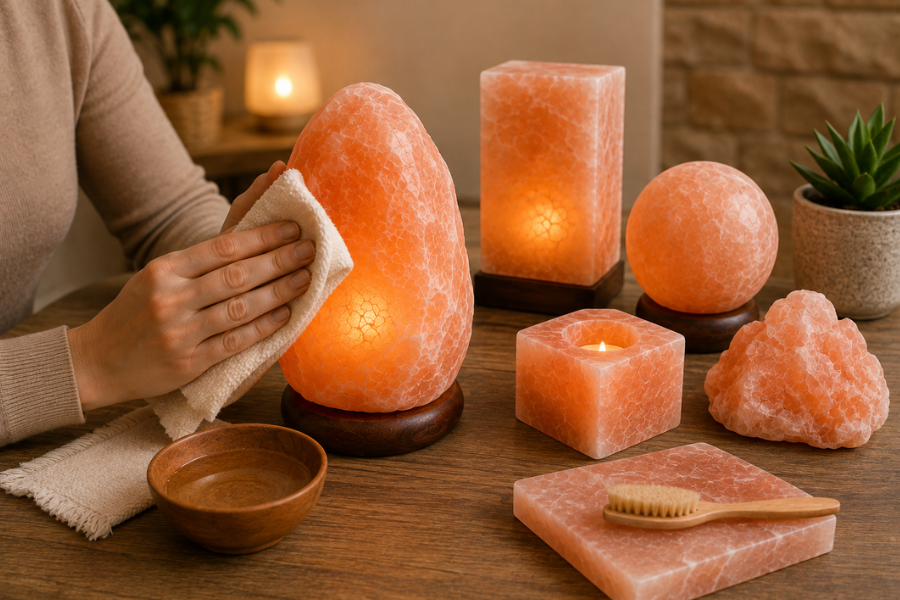
Perhaps the most important maintenance guideline for Himalayan Salt decorative products is avoiding excessive water during cleaning. Because these products are made entirely from natural salt, prolonged contact with water can gradually affect the surface over time. Instead of washing decorative items under running water or soaking them in cleaning solutions, owners should use a slightly damp cloth only when necessary to remove stubborn dirt or fingerprints. After wiping the surface, the product should immediately be dried using a clean, soft cloth to prevent moisture from remaining on the salt. Businesses selling Himalayan salt products should clearly communicate this recommendation to customers because many first-time buyers naturally assume decorative objects can be cleaned like ceramic or glass items. Understanding proper cleaning methods protects product quality while helping decorative Himalayan salt maintain its natural appearance for many years.
How to Maintain Himalayan Salt Lamps
Himalayan salt lamps require only simple routine maintenance to remain attractive for many years. Before cleaning, the lamp should always be switched off and unplugged to ensure safe handling. Once the lamp has cooled, owners can gently remove dust using a soft, dry microfiber cloth or feather duster. If small marks or fingerprints remain on the surface, a lightly damp cloth may be used briefly, followed immediately by a dry cloth to remove any remaining moisture. The electrical cord, bulb holder, and wooden base should also be checked occasionally to ensure they remain clean and in good condition. Businesses supplying hotels, wellness centers, and commercial properties often recommend periodic inspections as part of regular maintenance schedules because decorative lighting contributes significantly to interior presentation. Proper care helps preserve both the natural salt crystal and the lamp’s overall appearance while supporting reliable long-term use in residential and commercial environments.
Caring for Himalayan Salt Candle Holders
Himalayan salt candle holders are among the easiest decorative products to maintain because they contain few moving parts and require only occasional cleaning. After candles have cooled completely, any remaining wax should be carefully removed without using sharp metal tools that could scratch or damage the natural salt. A wooden or plastic tool may be used gently if necessary, followed by wiping the surface with a dry microfiber cloth to remove loose residue. Dust should also be cleaned regularly from both the exterior and interior candle openings to maintain an attractive appearance. Businesses selling candle holders often recommend storing them in dry indoor environments when not in use, particularly in regions with high humidity. Simple routine maintenance keeps candle holders looking clean while preserving their natural colors and handcrafted details, allowing customers to enjoy them as long-lasting decorative accessories in homes, hotels, restaurants, and wellness spaces.
Maintaining Salt Brick Walls and Decorative Panels
Architectural Himalayan salt walls and decorative brick installations generally require less frequent maintenance than smaller household products because they remain permanently installed. Regular dust removal using soft brushes, microfiber cloths, or gentle vacuum attachments helps maintain the appearance of illuminated salt walls without damaging the surface. Building maintenance teams should periodically inspect lighting systems, support structures, and ventilation to ensure the installation continues performing as intended. If individual bricks require cleaning, only minimal moisture should be used, followed by immediate drying. Commercial properties such as hotels, spas, yoga studios, wellness centers, and luxury residences often include Himalayan salt walls within routine building maintenance schedules to preserve their attractive appearance. Working with experienced installation professionals during construction also helps ensure long-term durability by providing proper structural support and environmental conditions suitable for natural Himalayan salt architectural products.
Store Decorative Salt Products Properly
When Himalayan salt decorative products are not being displayed, proper storage becomes an important part of long-term maintenance. Products should be kept in dry indoor locations away from excessive humidity, direct exposure to rain, or prolonged contact with damp surfaces. Wrapping decorative items in soft protective materials before storage helps reduce dust accumulation while protecting them from accidental scratches during handling. Manufacturers often recommend keeping original packaging for valuable decorative products because export cartons and protective foam provide excellent long-term storage protection. Businesses maintaining seasonal inventory or retail stock should also monitor warehouse conditions to reduce unnecessary moisture exposure. Proper storage not only preserves the appearance of Himalayan salt products but also reduces the likelihood of accidental damage during transportation or extended periods without use. Careful storage practices contribute significantly to extending product lifespan.
Protect Products During Transportation and Relocation
Decorative Himalayan salt products should always be handled carefully whenever they are moved between locations. Larger salt lamps, sculptures, candle holders, decorative bowls, and architectural components are made from solid natural salt and can be heavy despite their decorative appearance. When relocating products, they should be supported securely from the base rather than lifted by electrical cords, decorative attachments, or fragile components. Protective packaging materials such as foam inserts, bubble wrap, or padded cartons help minimize the possibility of accidental impact during transportation. Businesses supplying retailers, hotels, or international customers invest considerable attention in export packaging because proper protection helps products arrive in excellent condition. Customers relocating homes or redesigning commercial interiors should follow similar precautions when moving decorative Himalayan salt items to preserve their appearance and structural integrity.
Commercial Maintenance for Hotels, Spas, and Restaurants
Businesses displaying Himalayan salt decorative products in commercial environments should establish simple maintenance routines that combine regular inspection with gentle cleaning. Hotel lobbies, wellness centers, restaurants, luxury spas, and reception areas often experience higher visitor traffic than private homes, making routine care especially important. Housekeeping teams can include Himalayan salt lamps, candle holders, sculptures, and architectural features within standard dusting schedules while avoiding harsh cleaning chemicals or excessive moisture. Managers should also periodically inspect decorative lighting, electrical components, and support structures to ensure products remain safe and visually appealing. Commercial maintenance programs help preserve product quality while presenting guests with attractive interiors that reflect professional attention to detail. Consistent care contributes to a positive customer experience while protecting long-term investment in decorative Himalayan salt installations.
Common Maintenance Mistakes to Avoid
Although Himalayan salt products are relatively easy to maintain, a few common mistakes can reduce their appearance or shorten their lifespan. One of the most frequent errors is washing decorative items under running water or soaking them in cleaning solutions, which may gradually affect the natural salt surface. Another mistake involves placing products in continuously damp environments where excessive humidity increases moisture absorption. Some owners also use abrasive brushes, harsh chemicals, or sharp metal tools when cleaning candle holders or decorative carvings, potentially damaging the natural finish. Ignoring dust buildup for extended periods may also reduce the visual appeal of finely detailed decorative products. Businesses can help customers avoid these problems by providing clear maintenance instructions with every purchase. Simple preventive care is far more effective than attempting to restore products after improper handling or cleaning.
Long-Term Care Helps Preserve Natural Beauty
The long-term beauty of Himalayan salt decorative products depends largely on consistent, gentle care rather than complicated maintenance procedures. Regular dusting, appropriate indoor placement, careful handling, and proper storage allow products to retain their natural appearance for many years. Businesses supplying luxury hotels, wellness facilities, interior designers, and retail customers benefit from educating buyers about basic maintenance because informed customers are generally more satisfied with their purchases. Manufacturers also support long-term product quality by using precision manufacturing techniques, reliable packaging, and careful transportation methods that protect products throughout the supply chain. Whether displaying a small candle holder in a home or maintaining an illuminated architectural salt wall within a commercial wellness center, following straightforward maintenance practices ensures Himalayan Salt continues enhancing interior spaces with its distinctive natural beauty and timeless decorative appeal.
Conclusion
Maintaining Himalayan salt decorative products is a straightforward process that requires only a few simple habits performed consistently over time. Understanding the natural characteristics of Himalayan salt, selecting suitable indoor locations, dusting products regularly, avoiding excessive moisture, and handling items carefully all contribute to preserving their appearance and durability. Salt lamps, candle holders, decorative bowls, sculptures, architectural bricks, and illuminated wall installations each benefit from gentle maintenance that respects the unique properties of natural Himalayan salt. Commercial businesses such as hotels, spas, restaurants, wellness centers, and luxury residential developments can further protect their investment by incorporating Himalayan salt products into regular maintenance schedules and educating staff on proper cleaning methods. Avoiding common mistakes such as soaking products in water or exposing them to prolonged humidity helps ensure decorative items remain in excellent condition for years. By following these practical care guidelines and working with reputable manufacturers that provide quality craftsmanship and durable packaging, homeowners, retailers, wholesalers, and commercial property managers can confidently enjoy the lasting elegance of Himalayan Salt decorative products while preserving their natural beauty for future generations.