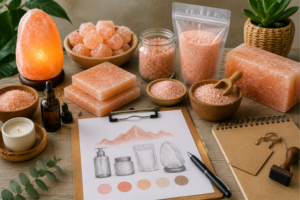

Choosing the right Himalayan salt product is one of the most important decisions for wholesalers, importers, retailers, distributors, and private-label brands. Although Himalayan salt is often associated with edible pink salt, the industry has expanded far beyond food applications. Today, businesses can choose from a wide variety of products, including edible Himalayan Pink Salt, bath salts, salt lamps, cooking slabs, candle holders, architectural salt tiles, animal salt licks, decorative carvings, and customized private-label collections. Each product category serves different industries, customer groups, and commercial purposes. A product that performs well in supermarkets may not be suitable for hospitality projects, while products popular in wellness markets may differ from those preferred by agricultural distributors. Understanding your target customers, business goals, and distribution channels helps you select products that match your market strategy. In this guide, we will explore the major Himalayan salt product categories and explain how businesses can identify the most suitable products for long-term growth, customer satisfaction, and international success.
Start by Understanding Your Business Model
Before selecting Himalayan Salt products, businesses should first evaluate their own business model because different companies serve different types of customers. A wholesale distributor supplying supermarkets has different product requirements than a luxury hotel supplier or an online wellness retailer. Understanding where and how products will be sold helps narrow the selection process and prevents unnecessary inventory investments. Businesses supplying restaurants may prioritize edible Himalayan pink salt and cooking slabs, while spa distributors may focus on bath salts and decorative wellness products. Interior design companies often require architectural salt tiles, panels, and decorative lighting products for commercial installations. Agricultural suppliers generally concentrate on Himalayan animal salt licks for livestock nutrition. Defining the target customer before choosing products allows businesses to invest more confidently and develop a product range that supports long-term commercial success. Rather than purchasing every available product, successful businesses often begin with carefully selected categories that align closely with their customers’ specific needs.
Edible Himalayan Pink Salt for Food Businesses
Edible Himalayan Pink Salt remains one of the most widely traded Himalayan salt products worldwide because it serves a broad range of commercial food applications. Importers supplying supermarkets, grocery chains, food manufacturers, restaurants, catering companies, spice brands, and specialty food retailers often consider edible salt their primary product category. Manufacturers offer edible salt in multiple grain sizes, including fine powder, table salt, coarse salt, crystal salt, and larger chunks suitable for grinders and specialty culinary applications. Businesses may also choose between bulk packaging for industrial food production or attractive retail packaging designed for direct consumer sales. Private-label opportunities further increase commercial value by allowing companies to build their own branded product lines. Buyers entering the food industry typically benefit from consistent demand because edible Himalayan pink salt serves everyday commercial and household uses. Businesses seeking reliable sales volumes often view food-grade Himalayan salt as an excellent foundation for building long-term wholesale operations.
Bath Salt Products for Wellness Brands
The wellness and personal care industry continues creating strong opportunities for Himalayan bath salt products. Companies supplying spas, wellness centers, beauty retailers, hotels, resorts, cosmetic brands, and online health stores frequently include bath salts within their product collections. Manufacturers produce bath salts in different grain sizes suitable for bath soaking, spa treatments, body scrubs, and customized wellness formulations. Businesses also have opportunities to develop private-label bath salt collections using customized packaging, fragrances, or branded presentation that reflects their marketing strategy. Attractive retail packaging is particularly important within this sector because customers often purchase wellness products as gifts or premium self-care items. The continued growth of personal wellness and hospitality industries supports long-term demand for bath salt products across many international markets. Companies targeting consumers interested in relaxation, premium spa experiences, and luxury personal care frequently find Himalayan Bath Salt to be a valuable addition to their product portfolio.
Salt Lamps for Home Décor Retailers
Himalayan salt lamps remain among the most recognizable products within the industry and continue attracting customers interested in decorative home accessories. Gift shops, furniture retailers, interior décor businesses, lighting stores, hospitality suppliers, and online marketplaces often include salt lamps as part of their home decoration collections. Manufacturers produce lamps in numerous shapes, sizes, colors, and finishes, including natural rock styles, machine-finished designs, carved sculptures, USB lamps, night lights, and decorative gift products. Businesses may also request customized packaging or branded retail presentation for private-label sales. Salt lamps often appeal to customers seeking visually distinctive products that complement residential and commercial interior spaces. Companies specializing in lifestyle products or gift merchandise frequently find salt lamps attractive because they combine natural materials with decorative appeal. Offering multiple lamp styles allows retailers to serve different customer preferences while creating opportunities for repeat purchases across various price ranges.
Cooking Slabs for Restaurants and Gourmet Markets
Himalayan salt cooking slabs have become increasingly popular among restaurants, catering companies, gourmet food retailers, culinary schools, and specialty kitchenware stores. These solid salt blocks can be used for grilling, serving chilled foods, food presentation, and culinary demonstrations, making them attractive products for businesses serving professional chefs and cooking enthusiasts. Manufacturers produce cooking slabs in standard sizes while also offering customized dimensions for commercial kitchens and hospitality projects. Protective packaging is especially important because cooking slabs require careful transportation due to their weight and solid construction. Retailers often combine cooking slabs with recipe guides, gift packaging, or complementary culinary accessories to create premium product collections. Businesses focused on gourmet food experiences, restaurant supplies, or specialty kitchen equipment may find cooking slabs to be an effective product that differentiates them from competitors while serving customers interested in creative culinary presentation.
Salt Tiles and Bricks for Interior Design Projects
Architectural Himalayan salt products have become increasingly popular among interior designers, architects, contractors, luxury hotels, wellness centers, spas, and commercial developers looking to create visually distinctive spaces. Salt tiles, bricks, and decorative wall panels are commonly incorporated into reception areas, relaxation rooms, wellness facilities, restaurants, and premium residential projects where natural materials contribute to an elegant atmosphere. These products require precision cutting, consistent sizing, and careful packaging because large commercial installations often depend on accurate dimensions and uniform appearance. Businesses entering the architectural market should work with manufacturers capable of producing custom sizes and maintaining strict quality control throughout production. Because many projects involve large quantities and detailed specifications, reliable communication between buyers and manufacturers becomes especially important. Companies specializing in commercial construction, hospitality interiors, or luxury residential design often discover that architectural Himalayan salt products provide valuable opportunities for long-term projects while expanding beyond traditional retail product categories.
Animal Salt Licks for Agricultural Businesses
Agricultural suppliers, livestock distributors, veterinary product companies, and farm supply businesses represent another important customer group within the Himalayan salt industry. Himalayan animal salt licks are manufactured specifically for livestock and are commonly supplied in block, round, square, or customized shapes depending on customer requirements. These products are typically distributed to farms, agricultural retailers, livestock breeders, and rural supply stores rather than traditional retail outlets. Compared to decorative products, animal salt licks generally require simpler manufacturing processes, but they still demand careful quality control, durable packaging, and reliable transportation because of their considerable weight. Businesses entering the agricultural sector should evaluate regional livestock industries and understand local customer preferences before selecting product sizes and packaging options. Animal salt licks often provide consistent commercial demand because they serve practical agricultural applications and are frequently reordered by distributors serving farms and commercial livestock operations.
Himalayan Salt Candle Holders for Gift and Lifestyle Brands
Himalayan salt candle holders continue to attract businesses operating in the gift, home décor, hospitality, and lifestyle sectors because they combine natural beauty with decorative versatility. Gift retailers, boutique stores, wellness brands, hotel suppliers, and online marketplaces often include candle holders within seasonal collections or premium home accessories. Manufacturers produce these products in a wide variety of shapes, sizes, polished finishes, and handcrafted designs, allowing businesses to create product ranges that appeal to different customer preferences. Candle holders are also well suited for private-label branding because customized packaging and attractive presentation significantly enhance retail appeal. Businesses targeting customers interested in interior decoration, holiday gifts, or luxury home accessories frequently find Himalayan salt candle holders to be an excellent complementary product alongside salt lamps and decorative collections. Their manageable size also simplifies international shipping and retail display compared to some larger decorative items.
Private Label Products for Brand Growth
For many businesses, private-label manufacturing offers one of the most effective ways to build a recognizable brand while creating long-term customer loyalty. Instead of selling generic wholesale products, companies can work with experienced manufacturers to develop customized Himalayan salt collections featuring branded packaging, personalized labels, custom product sizes, and unique presentation styles. Private-label opportunities are available across almost every product category, including edible Himalayan Pink Salt, bath salts, salt lamps, candle holders, cooking slabs, animal salt licks, and gift collections. Customized branding helps businesses differentiate themselves in competitive markets while providing customers with a consistent shopping experience. Manufacturers with private-label capabilities can often assist with packaging design, carton printing, barcode placement, and retail-ready presentation according to customer specifications. Businesses planning long-term expansion frequently consider private labeling an important investment because strong branding contributes to higher customer recognition, repeat purchases, and improved market positioning.
Deciding Between Bulk and Retail Products
Another important consideration when selecting Himalayan salt products is deciding whether to purchase bulk products or retail-ready merchandise. Bulk products are generally intended for wholesalers, food processors, distributors, industrial buyers, and companies that perform local packaging after import. These products usually prioritize transportation efficiency and cost-effectiveness over retail presentation. Retail-ready products, by contrast, are packaged specifically for direct sale through supermarkets, gift shops, wellness retailers, or online stores. Retail packaging often includes branding, product information, attractive graphics, barcode labels, and protective presentation suitable for store shelves. Businesses should select the packaging format that best supports their sales strategy and customer expectations. Some companies even combine both approaches by importing bulk edible salt for local packaging while simultaneously purchasing finished decorative products for immediate retail distribution. Understanding the advantages of each option helps businesses optimize inventory management while supporting long-term commercial objectives.
Choose Products Based on Your Target Market
Rather than selecting products solely because they appear popular, successful businesses carefully evaluate their target market before making purchasing decisions. Every customer group has different expectations, buying habits, and product requirements. Restaurants and food distributors generally prioritize edible Himalayan pink salt, cooking slabs, and grinder refills. Wellness businesses often focus on bath salts, spa accessories, and decorative wellness products. Interior designers frequently require architectural salt tiles, bricks, and illuminated wall panels for commercial projects. Agricultural businesses naturally concentrate on animal salt licks, while gift retailers may emphasize salt lamps, candle holders, and decorative carvings. Understanding customer preferences allows businesses to invest more efficiently while avoiding unnecessary inventory that may not match local demand. Conducting market research before placing wholesale orders improves purchasing decisions and increases the likelihood of long-term sales success. Choosing products based on customer needs rather than assumptions creates a stronger commercial foundation.
Building a Balanced Himalayan Salt Product Portfolio
Many successful businesses gradually expand their product range instead of relying on a single Himalayan salt category. A balanced product portfolio allows companies to serve multiple customer groups while reducing dependence on one specific market segment. For example, a distributor may combine edible Himalayan pink salt with grinders, cooking slabs, and seasoning products for food customers while also offering salt lamps, candle holders, and decorative accessories to gift retailers. Wellness companies may expand from bath salts into spa products and architectural salt installations for commercial clients. Diversification provides greater flexibility because changing demand in one category can often be balanced by steady sales in another. However, expansion should occur strategically rather than purchasing too many unrelated products at once. Businesses should build product portfolios gradually based on customer feedback, market demand, and operational capacity. This measured approach supports sustainable growth while minimizing unnecessary financial risk.
Common Mistakes Businesses Should Avoid
Selecting the right Himalayan salt products becomes much easier when businesses avoid several common purchasing mistakes. One frequent error is choosing products based only on low prices without considering manufacturing quality, supplier reliability, packaging standards, or transportation requirements. Another mistake is importing too many product categories before fully understanding customer demand, creating unnecessary inventory costs. Some businesses also overlook the importance of product certifications, export documentation, and market-specific regulations, particularly when importing food-grade Himalayan pink salt. Failing to evaluate packaging quality may result in damaged products during transportation, while ignoring private-label opportunities may limit long-term brand development. Businesses should also communicate clearly with suppliers regarding specifications, packaging preferences, and delivery expectations before production begins. Careful planning and informed decision-making reduce purchasing risks while creating stronger foundations for future business growth within the international Himalayan salt market.
Conclusion
Choosing the right Himalayan salt product for your business requires more than simply selecting the most popular item. It involves understanding your target customers, evaluating your business model, identifying market opportunities, and working with reliable manufacturers that can consistently deliver quality products. Whether your focus is edible Himalayan pink salt for food businesses, bath salts for wellness brands, salt lamps and candle holders for home décor retailers, cooking slabs for restaurants, architectural salt tiles for commercial projects, animal salt licks for agriculture, or customized private-label collections, each product category offers unique advantages for different industries. Businesses that carefully align product selection with customer demand are better positioned to build strong brands, improve customer satisfaction, and achieve sustainable long-term growth. Expanding gradually, maintaining consistent quality, and developing trusted supplier relationships further strengthen commercial success. As the global Himalayan salt industry continues evolving across food, hospitality, wellness, agriculture, and interior design markets, selecting the right product portfolio today can create valuable opportunities for future business expansion and lasting international success.