
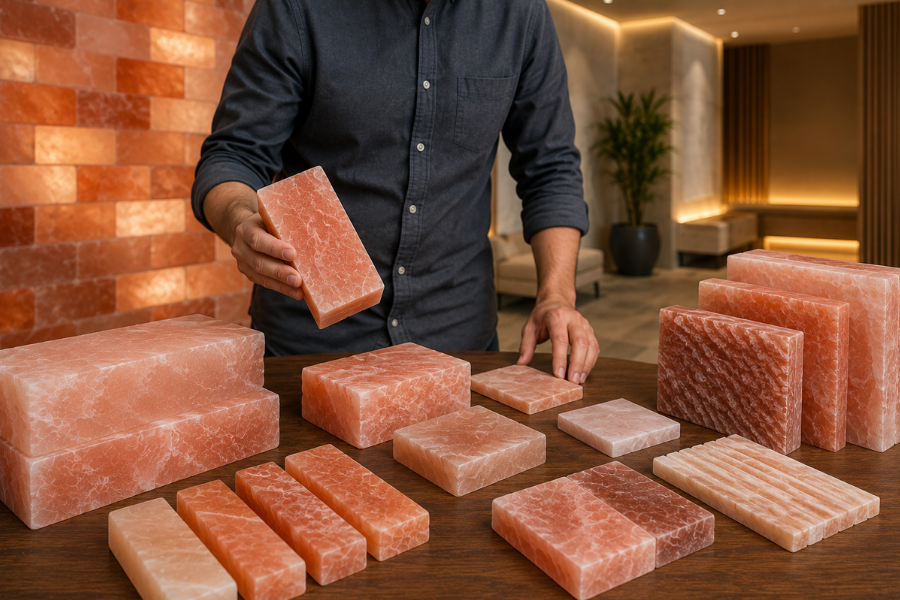
Himalayan salt bricks have become one of the most sought-after architectural products in the natural stone and wellness industries. Once used primarily in decorative applications, these beautifully crafted salt bricks are now incorporated into luxury homes, wellness centers, spas, hotels, restaurants, yoga studios, salt therapy rooms, and commercial interior design projects around the world. Their warm natural colors, distinctive appearance, and versatility make them an attractive material for architects, interior designers, contractors, wholesalers, and hospitality businesses looking to create memorable spaces. However, selecting the right Himalayan salt brick involves much more than choosing an attractive color. Factors such as brick size, thickness, finish, installation method, project location, structural design, packaging, and supplier capabilities all influence the success of a project. Whether you are designing a decorative salt wall, building a spa feature, or importing salt bricks for commercial distribution, understanding these considerations helps ensure the finished installation meets both visual expectations and practical requirements. This guide explains how businesses and project planners can confidently choose the right Himalayan salt bricks for every application.
Understand the Purpose of Your Project
The first step in choosing Himalayan salt bricks is clearly defining the purpose of the project. Different applications require different brick specifications, and understanding the intended use makes product selection much easier. For example, a decorative feature wall inside a luxury residence may prioritize visual consistency and elegant color tones, while a commercial spa installation may require large quantities of precision-cut bricks with uniform dimensions for easier installation. Hotels and wellness centers often focus on creating visually impressive relaxation spaces, whereas restaurants may use salt bricks as decorative design elements that complement modern interiors. Retail distributors may also purchase standard-sized bricks for resale rather than immediate installation. By identifying the project’s objectives before selecting products, buyers can communicate more effectively with manufacturers and receive recommendations that match their design, budget, and installation requirements. Careful planning at the beginning of the project reduces unnecessary modifications later and contributes to a more successful final result.
Standard Brick Sizes and Dimensions
Himalayan salt bricks are manufactured in several standard sizes, allowing designers and builders to create installations that are both visually appealing and structurally consistent. Common brick dimensions are suitable for wall systems, decorative partitions, spa rooms, and architectural features, while manufacturers can also produce customized sizes for specialized commercial projects. Uniform dimensions simplify installation because contractors can arrange bricks with consistent spacing and alignment throughout the design. Thickness is another important consideration because different projects require different structural characteristics depending on installation methods and overall design objectives. Precision-cut bricks with consistent measurements are especially valuable for large commercial projects where even minor variations may affect installation efficiency. Buyers should carefully review product specifications before placing wholesale orders to ensure all bricks meet the dimensional requirements established by architects or designers. Standardized manufacturing improves project quality while reducing installation time and simplifying construction planning.
Choosing Between Smooth and Natural Finishes
The surface finish of Himalayan salt bricks significantly influences the overall appearance of a completed project. Smooth machine-finished bricks provide clean edges, precise dimensions, and a contemporary architectural appearance that suits luxury hotels, modern residences, corporate interiors, and commercial wellness facilities. Their consistent finish creates a refined visual effect, especially when used in illuminated salt walls or large decorative installations. Natural-finished bricks, by contrast, preserve more of the stone’s original texture and organic character, creating a rustic appearance that appeals to customers seeking traditional or nature-inspired interior designs. Some projects even combine both finishes to create unique visual contrasts within the same installation. Businesses should consider the design concept carefully before selecting a finish because it contributes significantly to the overall atmosphere of the completed space. Working closely with manufacturers ensures the chosen finish complements the architectural style while maintaining consistent quality throughout the project.
Color Consistency Is Important for Large Installations
One of the defining characteristics of Himalayan salt bricks is their beautiful range of natural colors, which may include light pink, deep pink, orange, reddish tones, and subtle white variations. Because these colors occur naturally within the salt deposits, no two bricks are completely identical. While this natural variation adds character to smaller decorative applications, large architectural projects often benefit from greater color consistency to achieve a balanced visual appearance. Manufacturers typically sort bricks according to color before packaging large commercial orders, allowing designers to receive products that better match project specifications. Hotels, spas, wellness centers, and luxury residential developments frequently request carefully selected color ranges to maintain uniformity across illuminated walls and decorative features. Buyers planning major installations should discuss color expectations during the quotation process to ensure appropriate material selection before production and export begin.
Selecting the Right Brick Thickness
Brick thickness is an important consideration because it affects both the appearance and installation of Himalayan salt wall projects. Thinner bricks are often selected for decorative interior applications where minimizing wall depth is important, while thicker bricks create a stronger visual presence and are commonly chosen for larger architectural features. The appropriate thickness depends on the project’s design, supporting structure, lighting requirements, and installation method. Architects and contractors should evaluate how the bricks will integrate with surrounding construction materials before placing an order. Uniform thickness across every brick is especially important because inconsistent dimensions can complicate installation and affect the finished appearance. Professional manufacturers use precision-cutting equipment to maintain accurate thickness throughout production, ensuring smoother installation and improved alignment. Buyers should confirm thickness specifications during the quotation stage so production can be planned according to the project’s exact structural and decorative requirements.
Salt Bricks for Illuminated Wall Installations
Illuminated Himalayan salt walls have become one of the most recognizable architectural applications for salt bricks. Hotels, luxury residences, wellness centers, yoga studios, restaurants, reception areas, and commercial spas frequently install backlit salt walls that highlight the natural beauty of the bricks while creating an inviting atmosphere. When designing illuminated installations, selecting bricks with consistent thickness and balanced color variation becomes especially important because lighting enhances both the natural textures and the color differences within the salt. Carefully matched bricks produce a more uniform appearance when illuminated from behind. Designers should also coordinate lighting systems, support frames, and brick dimensions during the planning phase to ensure all components work together effectively. Manufacturers experienced in architectural salt products can often recommend brick sizes and production specifications suitable for illuminated wall projects. Proper planning helps create visually impressive installations that combine craftsmanship, precision, and attractive natural materials.
Choosing Salt Bricks for Spas and Sauna Rooms
Spa facilities and sauna rooms represent one of the fastest-growing commercial markets for Himalayan salt bricks. Wellness centers, luxury hotels, health clubs, and private spa owners frequently incorporate salt brick walls into relaxation spaces because the natural colors complement peaceful interior environments. Projects intended for spas generally prioritize attractive appearance, consistent brick sizing, and high-quality finishing to create elegant surroundings that align with premium customer expectations. Designers often combine salt bricks with wood, stone, and ambient lighting to achieve balanced interior concepts. Since many wellness projects involve custom room layouts, manufacturers capable of producing customized brick dimensions can provide additional flexibility during construction. Businesses supplying the hospitality and wellness industries should work closely with architects and contractors to ensure brick specifications meet both design objectives and installation requirements. Careful coordination throughout production contributes to smoother project completion and professional visual results.
Installation Planning Is Just as Important as Product Selection
Even the highest-quality Himalayan salt bricks require careful installation planning to achieve the desired final appearance. Before purchasing materials, contractors should evaluate wall dimensions, structural support, installation methods, lighting requirements, and access to the installation area. Accurate project measurements help determine the quantity of bricks required while reducing unnecessary material waste. Buyers should also discuss installation preferences with manufacturers because certain projects may require customized brick sizes or special packaging arrangements to simplify construction. Planning ahead allows suppliers to organize production more efficiently while ensuring every shipment matches the project’s technical specifications. Businesses importing Himalayan salt bricks for commercial construction often benefit from preparing detailed drawings before production begins, allowing manufacturers to verify dimensions and recommend suitable product options. Thorough planning reduces installation delays while supporting efficient project management from manufacturing through final construction.
Packaging and Transportation Require Special Attention
Himalayan salt bricks are durable architectural materials, but they still require professional packaging because they are transported over long international distances. Manufacturers typically pack bricks in reinforced export cartons, protective foam, wooden crates, or securely wrapped pallets depending on shipment size and customer requirements. Proper packaging minimizes movement during transportation while protecting corners and edges from accidental impact. Moisture-resistant packaging materials also help preserve product quality during ocean freight and warehouse storage. Wholesale buyers should discuss packaging preferences before production begins, especially for large commercial projects involving multiple pallets or container shipments. Efficient pallet arrangement not only protects the bricks but also improves container utilization, reducing transportation costs and simplifying unloading at the destination. Reliable packaging demonstrates professional manufacturing standards while ensuring products arrive in excellent condition, ready for installation.
Wholesale Buyers Should Prioritize Consistency
Businesses importing Himalayan salt bricks for resale or commercial projects should focus on manufacturing consistency rather than selecting products based solely on price. Consistent brick dimensions, accurate cutting, uniform thickness, attractive finishing, and dependable packaging contribute significantly to successful construction projects and customer satisfaction. Reliable manufacturers maintain strict quality inspections throughout production to ensure every shipment meets agreed specifications. Consistency also simplifies inventory management because distributors can confidently supply contractors, architects, interior designers, and hospitality businesses with products that match previous orders. Long-term supplier relationships further improve consistency because manufacturers become familiar with customer preferences, packaging requirements, and project expectations. Wholesale buyers should evaluate production capabilities, export experience, and communication quality alongside pricing when selecting manufacturing partners. Investing in dependable suppliers often produces better long-term commercial results than purchasing from unfamiliar manufacturers offering unusually low prices.
Common Mistakes to Avoid When Buying Salt Bricks
Several common mistakes can complicate Himalayan salt brick projects, particularly for first-time buyers. One frequent error is ordering bricks without confirming precise dimensions, resulting in installation challenges or inconsistent wall layouts. Another mistake involves overlooking color variation, especially when planning large illuminated walls where noticeable differences may affect the finished appearance. Some buyers also fail to consider packaging quality, increasing the possibility of transportation damage during international shipping. Selecting suppliers based solely on price rather than manufacturing experience, communication, and quality control may also create unnecessary project risks. Businesses should request clear product specifications, discuss installation requirements, verify packaging methods, and establish realistic production schedules before placing wholesale orders. Careful preparation helps prevent costly delays while supporting smoother manufacturing, transportation, and construction processes. Thoughtful purchasing decisions contribute directly to successful architectural projects and stronger long-term supplier relationships.
Work with an Experienced Manufacturer
Choosing an experienced Himalayan salt manufacturer is just as important as selecting the right bricks themselves. Professional manufacturers understand architectural requirements, precision cutting, color sorting, quality inspection, export packaging, and international shipping procedures. They can also provide guidance regarding customized brick dimensions, project-specific production, packaging recommendations, and efficient container loading. Businesses working on hotels, wellness centers, luxury residences, restaurants, or commercial developments benefit greatly from suppliers capable of maintaining consistent production quality throughout large orders. Reliable communication further supports successful project planning because manufacturers can provide production updates, clarify technical specifications, and address potential questions before shipment. Building a long-term relationship with an experienced manufacturer helps businesses complete projects more confidently while ensuring future orders maintain the same high standards of quality and consistency.
Conclusion
Choosing the right Himalayan salt brick for your project requires careful consideration of far more than appearance alone. Project purpose, brick dimensions, thickness, surface finish, color consistency, installation planning, packaging quality, and supplier reliability all contribute to the success of both residential and commercial installations. Whether designing an illuminated salt wall, creating a luxury spa environment, decorating a restaurant, constructing a wellness center, or supplying architectural materials for international projects, selecting products that align with your technical and aesthetic requirements is essential. Businesses that work with experienced manufacturers, communicate project specifications clearly, and prioritize consistent production quality are better positioned to achieve attractive, professional results while minimizing installation challenges. Wholesale buyers also benefit from balanced inventory planning, dependable export packaging, and long-term supplier partnerships that support future commercial growth. As Himalayan salt bricks continue gaining popularity across hospitality, wellness, luxury residential, and interior design industries, informed product selection remains one of the most important steps toward completing successful projects that combine natural beauty, craftsmanship, and lasting customer satisfaction.