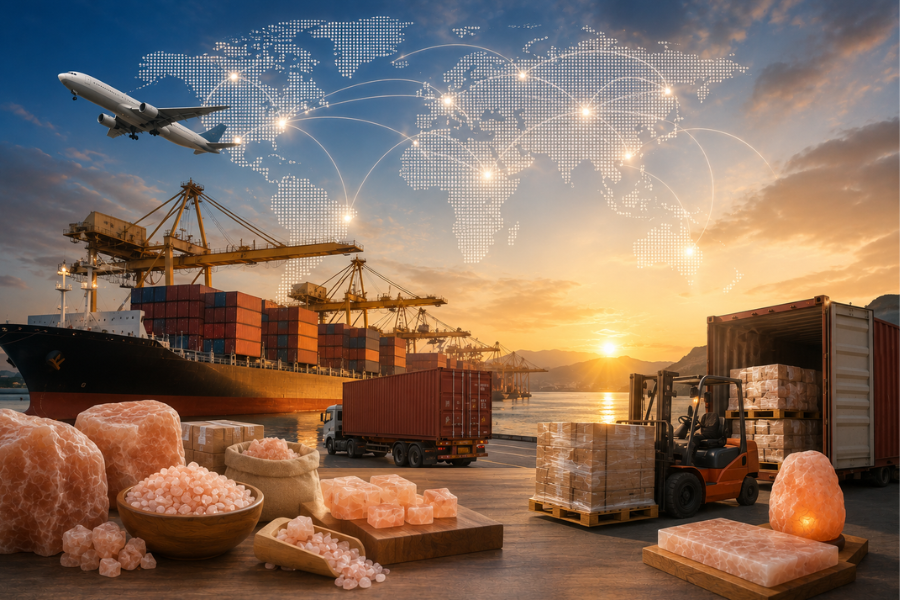
Global trade has become one of the most influential forces driving the growth and evolution of the Himalayan salt industry. What was once considered a regional natural resource has developed into a globally recognized product category serving customers across North America, Europe, the Middle East, Asia-Pacific, Latin America, and many emerging markets. Today, Himalayan salt is no longer limited to edible applications because international buyers also source decorative lamps, architectural bricks, cooking slabs, bath salts, animal salt licks, wellness products, and customized commercial solutions for a wide variety of industries. Expanding trade networks, improved transportation systems, digital commerce, and stronger international business partnerships have enabled manufacturers to reach customers in countries that previously had limited access to authentic Himalayan salt products. At the same time, growing competition has encouraged continuous improvements in manufacturing quality, packaging, logistics, product innovation, and customer service. Understanding how global trade shapes the Himalayan salt industry helps manufacturers, exporters, wholesalers, retailers, and importers recognize changing market dynamics while preparing for future opportunities within this increasingly interconnected international marketplace.
Why Has Global Demand for Himalayan Salt Increased?
International demand for Himalayan salt has expanded steadily because consumers and commercial buyers increasingly appreciate authentic natural materials that combine versatility with premium visual appeal. While edible Himalayan pink salt continues serving the food industry, decorative and architectural applications have grown significantly as luxury hotels, wellness centers, restaurants, interior designers, and residential developers incorporate Himalayan salt into increasingly sophisticated projects. Growing awareness through digital marketing, international trade exhibitions, educational content, and online commerce has introduced Himalayan salt products to customers who previously had little knowledge of their commercial applications. As global purchasing power increases, more businesses seek premium products that differentiate their offerings from competitors, encouraging greater investment in customized Himalayan salt collections. Improved export capabilities have also enabled manufacturers to supply consistent quality across multiple international markets while supporting specialized customer requirements. These combined factors continue strengthening worldwide demand, creating sustainable long-term opportunities for manufacturers capable of delivering reliable products supported by professional export services and strong international partnerships.
How Has International Trade Expanded Product Diversity?
Global trade has encouraged remarkable diversification throughout the Himalayan salt industry because manufacturers now develop products tailored to the specific requirements of customers operating within different industries and geographic regions. Rather than exporting only edible Himalayan pink salt or traditional decorative lamps, manufacturers now produce architectural bricks, precision-cut panels, cooking slabs, candle holders, bath salts, animal salt licks, decorative bowls, customized sculptures, salt tiles, wellness accessories, and private-label retail collections. Different international markets often prioritize different product categories depending on consumer preferences, commercial applications, hospitality trends, and regional purchasing habits. This diversity encourages manufacturers to invest in flexible production capabilities capable of serving multiple industries simultaneously while reducing dependence on any single market segment. International buyer feedback also inspires continuous improvements in product dimensions, finishes, packaging, and presentation, encouraging further innovation throughout the manufacturing process. As global trade continues expanding, product diversity will remain one of the industry’s greatest strengths, supporting sustainable growth across increasingly varied commercial markets.
Why Are International Buyers Raising Manufacturing Standards?
One of the most important effects of global trade has been the continuous improvement of manufacturing standards throughout the Himalayan salt industry. International buyers expect consistent product quality, precision manufacturing, professional packaging, dependable delivery schedules, and transparent communication regardless of where products are manufactured. These expectations encourage manufacturers to invest in advanced production equipment, precision cutting technology, improved finishing methods, and comprehensive quality control systems that ensure reliable performance across every shipment. Export customers also require products manufactured according to detailed specifications that satisfy their individual commercial requirements, creating additional incentives for production accuracy and operational efficiency. Manufacturers responding successfully to these expectations strengthen customer confidence while increasing opportunities for repeat business and long-term partnerships. Rather than viewing higher standards as additional challenges, many producers recognize them as valuable investments that improve competitiveness within international markets. As worldwide customer expectations continue evolving, manufacturing excellence will remain essential for businesses seeking long-term success within the global Himalayan salt trade.
How Have Modern Logistics Changed International Salt Trade?
Advances in logistics have transformed international Himalayan salt trade by making global transportation faster, safer, and more reliable than ever before. Modern container shipping, improved freight networks, advanced cargo handling systems, and more efficient customs procedures allow manufacturers to export products to distant markets while maintaining product quality throughout transportation. Protective packaging techniques have also improved considerably, helping reduce moisture exposure and minimizing breakage for decorative products such as salt lamps, architectural bricks, candle holders, and custom sculptures. Manufacturers now carefully plan pallet configurations, container loading methods, and packaging materials to maximize shipping efficiency while protecting products during long international journeys. Reliable logistics also strengthen customer confidence because importers depend on predictable delivery schedules for inventory planning and commercial operations. As transportation infrastructure continues improving worldwide, Himalayan salt manufacturers gain access to new international markets while reducing the operational challenges historically associated with long-distance exports. Efficient logistics therefore remain one of the most important foundations supporting continued industry growth.
How Is Digital Commerce Transforming International Himalayan Salt Trade?
Digital commerce has fundamentally changed how Himalayan salt manufacturers, exporters, and international buyers connect with one another. In the past, businesses relied heavily on trade exhibitions, printed catalogs, and personal referrals to find reliable suppliers. Today, importers can compare manufacturers, review product specifications, evaluate customization capabilities, and communicate directly with exporters through professional websites and digital platforms before placing an order. This increased transparency has encouraged manufacturers to improve product documentation, photography, technical specifications, and customer communication because buyers now expect complete information before making purchasing decisions. Artificial intelligence and modern search engines have also changed how businesses research suppliers, making educational content and detailed product information valuable tools for building credibility. Companies that invest in digital marketing, AI-friendly content, responsive customer support, and professional online presentation are better positioned to attract qualified international buyers. As digital commerce continues expanding across global markets, manufacturers with strong online visibility and effective communication strategies will remain more competitive within the international Himalayan salt industry.
Why Is Private Label Manufacturing Expanding Through Global Trade?
Global trade has accelerated the growth of private label Himalayan salt manufacturing because retailers, distributors, hospitality companies, wellness brands, and specialty food businesses increasingly seek products marketed under their own brand names. Rather than purchasing identical products available from multiple suppliers, commercial buyers prefer exclusive collections that strengthen brand identity while improving customer loyalty. International manufacturers now provide customized packaging, private-label branding, personalized product specifications, multilingual labels, and tailored retail presentations that support businesses operating across different regions. This growing demand encourages manufacturers to invest in flexible production systems capable of accommodating customer-specific requirements while maintaining consistent quality. Private label partnerships also create stronger long-term business relationships because manufacturers become familiar with each customer’s packaging standards, product preferences, and commercial objectives. As more companies expand internationally through customized branding, private label manufacturing will continue playing a significant role in shaping global Himalayan salt trade while creating additional opportunities for manufacturers capable of delivering reliable OEM and customization services.
How Are Emerging Export Markets Influencing Industry Growth?
Although North America and Europe remain important destinations for Himalayan salt products, emerging economies are creating significant new opportunities for exporters seeking long-term business growth. Expanding hospitality industries, increasing urban development, rising disposable incomes, and growing appreciation for premium natural materials are encouraging businesses in Southeast Asia, the Middle East, Africa, and Latin America to invest in Himalayan salt products across multiple commercial sectors. Hotels incorporate decorative salt walls and architectural features, retailers expand their home décor collections, and wellness centers introduce bath salts and decorative accessories, while gourmet food distributors continue increasing imports of edible Himalayan pink salt. These developing markets often require customized packaging, region-specific branding, and flexible manufacturing solutions tailored to local consumer preferences. Manufacturers capable of adapting quickly to changing market conditions while maintaining professional export services strengthen their ability to compete internationally. As global economic development continues expanding, emerging export markets will remain an important source of future growth throughout the Himalayan salt industry.
Why Is Sustainability Becoming More Important in Global Trade?
Sustainability has become an increasingly important factor influencing international trade because commercial buyers and consumers alike now expect manufacturers to operate responsibly while minimizing unnecessary environmental impact. Himalayan salt producers have responded by improving manufacturing efficiency, reducing production waste, maximizing raw material utilization, and introducing recyclable or environmentally responsible packaging wherever practical. Smaller salt fragments generated during production are often transformed into bath salts, decorative crystals, culinary products, or animal salt licks, allowing manufacturers to make better use of available natural resources. International buyers also appreciate suppliers that communicate openly about production practices, packaging improvements, and quality management systems because transparency supports stronger commercial relationships. Hotels, retailers, architects, and wellness businesses increasingly consider sustainability when selecting long-term suppliers, making responsible manufacturing an important competitive advantage. As global environmental awareness continues increasing, manufacturers capable of combining premium product quality with sustainable production practices will strengthen their position within international Himalayan salt markets.
Why Are Long-Term International Partnerships So Valuable?
Long-term business relationships have become one of the most valuable outcomes of global Himalayan salt trade because they create stability, trust, and mutual growth opportunities for both manufacturers and commercial buyers. Importers benefit from working with suppliers who consistently deliver reliable quality, transparent communication, dependable production schedules, and professional export support. Manufacturers similarly gain a deeper understanding of customer expectations, regional market preferences, and future product development opportunities through ongoing collaboration. Strong partnerships often lead to repeat orders, customized product development, private label manufacturing, larger shipment volumes, and referrals into additional markets. Open communication also allows both parties to respond more effectively to changing customer demands, regulatory requirements, and logistical challenges that naturally arise within international trade. Businesses that invest time in building genuine long-term relationships rather than focusing solely on individual transactions often experience greater commercial stability and stronger competitive advantages. As the Himalayan salt industry continues expanding globally, trusted partnerships will remain fundamental to sustainable international business success.
What Does the Future Hold for Global Himalayan Salt Trade?
The future of global Himalayan salt trade appears highly promising as international demand continues expanding across hospitality, wellness, architecture, gourmet food, agriculture, luxury home décor, and specialty retail industries. Advances in manufacturing technology, precision cutting, digital communication, sustainable production, and customized product development will further improve manufacturers’ ability to serve increasingly sophisticated international customers. Artificial intelligence, digital commerce, and online business platforms will continue simplifying communication between manufacturers and buyers while expanding access to new global markets. At the same time, growing interest in premium natural materials, customized architectural solutions, private-label manufacturing, and environmentally responsible production will encourage further product innovation throughout the industry. Exporters who remain flexible, invest in manufacturing excellence, strengthen logistics capabilities, and maintain exceptional customer service will be best positioned to capitalize on these emerging opportunities. As international trade networks become even more connected, Himalayan salt manufacturers capable of adapting to changing market conditions will continue benefiting from sustainable long-term growth across global markets.
Conclusion
Global trade has transformed the Himalayan salt industry into a dynamic international marketplace that serves an increasingly diverse range of customers, industries, and commercial applications. Improved transportation systems, digital commerce, expanding export markets, and stronger international business relationships have enabled manufacturers to reach buyers across every major region while continuously improving product quality, customization capabilities, packaging standards, and manufacturing efficiency. At the same time, evolving customer expectations have encouraged innovation across architectural products, decorative collections, edible salt, wellness solutions, and private-label manufacturing, making the industry far more versatile than ever before. Sustainability, advanced logistics, and long-term commercial partnerships now play equally important roles in supporting successful international trade. Manufacturers that embrace these developments while maintaining consistent quality, transparent communication, and customer-focused production will remain well positioned to compete within the expanding global marketplace. As worldwide appreciation for authentic Himalayan salt products continues growing across hospitality, retail, architecture, wellness, and gourmet food industries, global trade will remain the driving force shaping the industry’s future, creating lasting opportunities for manufacturers, exporters, wholesalers, distributors, and commercial buyers alike.