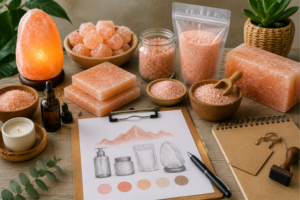
Himalayan salt products have become one of the most recognized natural products in international trade, serving industries such as food, wellness, home décor, construction, agriculture, and hospitality. Their growing popularity has created demand for high-quality manufacturing processes that meet international standards while preserving the natural beauty and characteristics of Himalayan salt. Although customers often see the finished products on store shelves or online marketplaces, very few understand the detailed journey that takes place before those products reach global markets. Every Himalayan salt lamp, cooking slab, bath salt, animal lick, brick, or decorative item begins as a natural rock salt deposit and passes through several carefully managed production stages. From responsible mining and raw material selection to cutting, shaping, polishing, quality inspection, packaging, and export preparation, each step plays an important role in delivering reliable products to customers worldwide. Understanding this manufacturing process helps buyers, importers, wholesalers, and retailers appreciate the craftsmanship, quality control, and professional standards required to produce Himalayan salt products for international markets.
The Journey Begins with Natural Himalayan Salt Mining
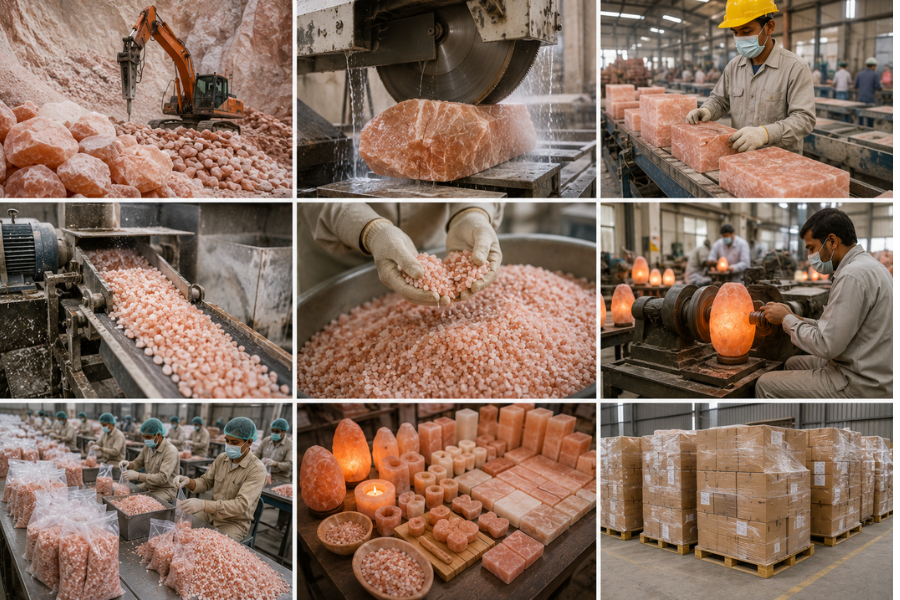
Every authentic Himalayan salt product starts its journey deep within the famous Himalayan salt deposits located in the Punjab region of Pakistan. These deposits were formed millions of years ago and contain large reserves of naturally occurring rock salt known for their distinctive pink, white, and reddish colors. Mining companies carefully extract the salt using controlled methods that protect the natural crystal structure while minimizing unnecessary waste. Unlike manufactured materials, Himalayan salt cannot simply be produced in factories; it must first be responsibly removed from natural underground deposits. After extraction, large blocks of raw salt are transported from the mines to manufacturing facilities, where they begin the transformation into finished products. During this stage, workers separate usable salt according to size, color, and quality because different industries require different grades of raw material. Large crystal blocks may later become salt lamps or construction panels, while smaller pieces can be processed into edible salt or bath products. Careful mining practices ensure manufacturers receive consistent raw materials that support high-quality production for customers around the world.
Selecting the Right Raw Materials for Different Products
Not every piece of Himalayan salt is suitable for every product, which is why careful raw material selection is one of the most important stages in the manufacturing process. After mining, experienced workers inspect the natural salt crystals and classify them according to color, density, clarity, size, and structural strength. Large, solid crystal blocks with attractive natural patterns are often selected for decorative products such as Himalayan salt lamps, candle holders, and carved gift items. Uniform blocks with stable dimensions are commonly chosen for producing salt bricks, tiles, and construction panels used in wellness centers and luxury interiors. Smaller crystal pieces may be processed into bath salts, edible salt, seasoning products, or animal salt licks depending on their characteristics. Manufacturers carefully match each raw material with the most suitable product category to maximize quality while reducing unnecessary waste. This organized selection process improves production efficiency and ensures that customers receive products meeting their expectations. Proper material grading also helps manufacturers maintain consistent quality across different export orders and international product lines.
Processing and Cleaning the Natural Salt
Before Himalayan salt can be transformed into finished products, the raw material must be carefully cleaned and prepared for manufacturing. Because the salt comes directly from natural underground deposits, it may contain dust, loose particles, or surface impurities that develop during mining and transportation. Workers gently clean the salt using suitable methods that remove unwanted material without affecting the natural crystal structure. Unlike chemically manufactured materials, Himalayan salt processing focuses on preserving its authentic appearance rather than changing its natural characteristics. Once cleaned, the salt is sorted again according to production requirements and moved to specialized manufacturing areas. At this stage, manufacturers inspect each piece for cracks, structural weaknesses, and color consistency to ensure only suitable material continues through production. This careful preparation reduces manufacturing defects and improves the quality of the final products. Whether producing decorative lamps, cooking slabs, edible salt, or architectural panels, clean and properly prepared raw materials provide the foundation for creating reliable Himalayan salt products that meet international customer expectations.
Cutting and Shaping Himalayan Salt into Finished Products
After cleaning and inspection, Himalayan salt enters one of the most recognizable stages of manufacturing: cutting and shaping. Skilled workers and specialized machinery carefully transform natural crystal blocks into products designed for different industries and customer needs. Large blocks may be cut into rectangular bricks for construction projects, while other pieces are shaped into cooking slabs, candle holders, animal salt licks, or decorative objects. Salt lamp manufacturers often preserve the natural appearance of the crystal by making only minimal adjustments, allowing each lamp to maintain its unique shape and character. Machine-cut products require greater precision because dimensions must remain consistent for architectural installations or commercial applications. Throughout the shaping process, manufacturers monitor the condition of each piece to reduce breakage and maintain product quality. Accurate cutting also improves packaging efficiency and helps businesses meet customer specifications for custom orders. This combination of skilled craftsmanship and modern equipment allows manufacturers to produce a wide variety of Himalayan salt products suitable for domestic markets and international export.
Polishing, Carving, and Product Finishing
Once Himalayan salt products have been cut into their required shapes, they move to the finishing stage, where skilled craftsmen and specialized equipment refine their appearance. Depending on the product type, this stage may include polishing, smoothing sharp edges, drilling openings, carving decorative designs, or creating precise dimensions for commercial applications. For Himalayan salt lamps, manufacturers carefully drill a cavity inside the crystal to accommodate the bulb holder and electrical components while preserving the stone’s natural beauty. Candle holders receive a precisely measured opening that securely fits standard candles, while cooking slabs are polished to create smooth food-safe surfaces. Salt bricks and panels are carefully measured to ensure consistent dimensions for architectural projects. Throughout the finishing process, workers inspect every product to remove imperfections without changing the natural character of the crystal. Since each piece of Himalayan salt has its own color variations and crystal patterns, manufacturers aim to enhance rather than replace its unique appearance. This combination of craftsmanship and careful finishing creates attractive products that meet the expectations of international buyers while preserving the authentic beauty of natural Himalayan salt.
Manufacturing Edible Himalayan Salt Products
The production process for edible Himalayan salt follows different procedures because food-grade products must meet strict hygiene and quality requirements. After selecting suitable raw salt crystals, manufacturers clean and process the material using food-safe production methods designed to maintain purity. The salt is then crushed and ground into different grain sizes depending on customer requirements. Fine salt, coarse salt, granules, and powdered salt are produced for different food applications, allowing businesses to serve household consumers, restaurants, food manufacturers, and industrial buyers. During processing, manufacturers carefully screen the salt to achieve consistent particle sizes before packaging. Food-grade facilities also follow strict cleanliness standards to ensure that products remain suitable for human consumption. Depending on customer specifications, edible Himalayan salt may be packed into retail containers, stand-up pouches, jars, bulk bags, or industrial packaging for export. Professional manufacturing practices allow suppliers to provide reliable food products while maintaining the natural qualities that make Himalayan pink salt popular among consumers worldwide. Careful processing supports product consistency, customer confidence, and compliance with international food market expectations.
Quality Control Throughout the Manufacturing Process
Quality control is one of the most important parts of Himalayan salt manufacturing because international buyers expect products that meet consistent standards. Manufacturers perform inspections at multiple stages of production instead of waiting until the final product is complete. Raw materials are checked before production begins, while additional inspections take place during cutting, shaping, polishing, packaging, and final preparation. Workers examine products for color consistency, structural integrity, accurate dimensions, smooth finishing, and overall appearance. Food-grade products receive additional attention to ensure cleanliness, proper grain size, and suitable packaging. Decorative items such as salt lamps, candle holders, and construction panels are inspected for cracks, chips, and manufacturing defects before shipment. Businesses serving global markets understand that consistent quality builds long-term customer relationships and reduces problems after delivery. Reliable manufacturers invest in experienced quality control teams because even small improvements in inspection procedures can significantly improve customer satisfaction. Maintaining high standards throughout production helps ensure Himalayan salt products arrive safely, perform as expected, and strengthen the reputation of both manufacturers and international buyers.
Custom Manufacturing and Private Label Production
Many international businesses prefer selling Himalayan salt products under their own brand names, making custom manufacturing and private label production increasingly important. Experienced manufacturers work closely with customers to produce products that match specific business requirements while maintaining consistent quality. Buyers can customize product sizes, shapes, packaging, labels, logos, barcode placement, and retail presentation according to their branding strategy. Whether a company sells Himalayan salt lamps, edible salt, bath salts, cooking slabs, animal salt licks, or decorative products, private label manufacturing provides flexibility without requiring businesses to operate their own production facilities. Manufacturers often assist customers during product development by recommending packaging materials, shipping methods, and product specifications suitable for different international markets. Samples are usually produced before full manufacturing begins so buyers can review the final design. Once approved, production continues according to agreed specifications while maintaining quality standards throughout the process. Custom manufacturing allows businesses to build recognizable brands while offering authentic Himalayan salt products that reflect their own market identity and customer expectations.
Packaging Products for International Markets
Packaging is much more than simply placing products into boxes because it protects Himalayan Salt Products during transportation while creating a professional presentation for customers. Different products require different packaging methods depending on their size, weight, and destination. Himalayan salt lamps are typically packed using protective foam, molded inserts, strong cartons, and moisture-resistant materials to reduce the risk of damage during shipping. Edible salt products are packaged in food-grade pouches, jars, or bulk bags that protect freshness and meet international food safety requirements. Decorative products, candle holders, and cooking slabs receive protective wrapping designed to minimize movement during transportation. Businesses ordering private label products often customize packaging with company logos, nutritional information, product descriptions, and retail branding. Export packaging must also consider shipping conditions because products may travel long distances by sea or air before reaching customers. Professional packaging not only protects the products but also improves customer confidence by presenting Himalayan Salt Products as premium items suitable for retail stores, distributors, wholesalers, and online marketplaces around the world.
Preparing Himalayan Salt Products for Global Export
After manufacturing and packaging are complete, Himalayan Salt Products enter the export preparation stage before being shipped to customers worldwide. Exporters carefully organize products according to customer orders, verify packaging quantities, and prepare the documentation required for international trade. Depending on the destination country, shipments may include food products, decorative items, wellness products, construction materials, or agricultural salt blocks. Manufacturers and exporters work together to ensure products meet customer specifications while following international shipping requirements. Pallets are securely packed to reduce movement during transportation, and containers are loaded to maximize available space while protecting fragile items. Reliable logistics planning helps reduce delivery delays and maintain product quality throughout transit. Export businesses also coordinate with freight forwarders, shipping companies, and customs authorities to ensure smooth international delivery. Efficient export preparation allows Himalayan Salt Products to reach distributors, retailers, wholesalers, and private label businesses in excellent condition. Well-organized export operations are essential for maintaining strong customer relationships and supporting long-term success in global markets.
Certifications and International Manufacturing Standards
International buyers often expect manufacturers to follow recognized quality and safety standards before placing large orders. Many Himalayan salt manufacturers obtain certifications that demonstrate their commitment to professional production practices and consistent quality. Depending on the product category, these certifications may relate to food safety, quality management, manufacturing processes, or export compliance. Businesses purchasing edible Himalayan salt frequently request food-grade production standards, while private label customers often seek manufacturers capable of meeting retail market requirements. Following recognized manufacturing standards improves customer confidence and helps businesses enter competitive international markets. Reliable manufacturers also maintain detailed production records, quality inspection procedures, and traceability systems that support consistent operations. Although certification requirements vary depending on destination markets and product types, companies that invest in recognized standards often enjoy stronger relationships with distributors and retailers. Professional manufacturing supported by consistent quality systems demonstrates that Himalayan Salt Products are prepared responsibly and are suitable for customers who value reliability, safety, and long-term supplier partnerships.
Conclusion
The journey of Himalayan salt products from natural underground deposits to international markets involves much more than simple manufacturing. Every stage, including mining, raw material selection, cleaning, shaping, finishing, quality inspection, packaging, customization, and export preparation, contributes to producing products that meet the expectations of customers worldwide. Whether creating edible salt, decorative lamps, wellness products, construction materials, or animal salt licks, manufacturers combine skilled craftsmanship with modern production techniques to preserve the natural beauty of Himalayan salt while ensuring consistent quality. Businesses that understand this process are better equipped to choose reliable suppliers, develop successful product lines, and build long-term relationships in global markets. As international demand for authentic natural products continues growing, professional manufacturing practices will remain essential for delivering safe, attractive, and dependable Himalayan salt products. Companies that invest in quality production, responsible sourcing, and customer-focused manufacturing are well positioned to succeed in the expanding global Himalayan salt industry.