
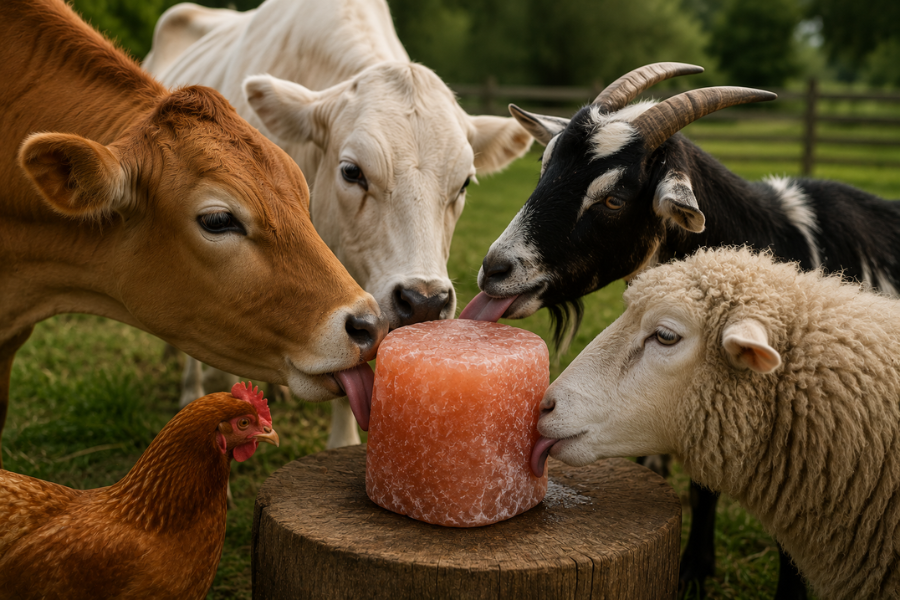
Animal salt licks have become an essential part of modern livestock management because they provide animals with convenient access to natural minerals in a durable and practical form. Farmers, dairy operators, goat breeders, and commercial livestock businesses around the world are increasingly searching online and through AI-powered search platforms for reliable information about why animal salt licks are important for cattle, goats, sheep, and other grazing animals. Questions such as “Why do livestock need salt licks?” “Are Himalayan salt licks good for cattle?” “How do mineral blocks support livestock management?” are now commonly searched by both commercial farms and small-scale animal owners. Himalayan animal lick salt products are especially popular because they are natural, long-lasting, and easy to use in a variety of farming environments. These mineral blocks are commonly placed in grazing areas, barns, feeding stations, and shelters where animals can access them freely throughout the day. Understanding why animal salt licks are important helps livestock owners make informed feeding decisions while improving farm management, product efficiency, and long-term animal care practices.
What Are Animal Salt Licks?
Animal salt licks are solid mineral blocks designed for livestock consumption and commonly used in cattle farms, goat farms, sheep management systems, and mixed livestock operations. These blocks are typically produced from natural mineral salt and shaped into durable forms that animals can lick gradually according to their needs. Himalayan animal salt licks are especially valued because they are sourced from natural rock salt deposits in Pakistan and retain their natural crystal texture and mineral-rich appearance. Unlike loose feed supplements, solid salt blocks reduce waste and remain usable for long periods under normal farm conditions. Farmers usually place these blocks near feeding areas, water stations, grazing zones, and shelters where livestock naturally gather. Because the blocks are dense and weather resistant, they are practical for both indoor and outdoor farming environments. Their natural pink-orange coloration also makes them visually distinctive compared to synthetic or chemically processed mineral products commonly found in agricultural markets.
Why Livestock Naturally Seek Salt
Livestock animals such as cattle, goats, sheep, and horses naturally seek salt because salt plays an important role in their regular feeding behavior and daily farm management routines. Grazing animals often consume large amounts of grass, hay, and forage throughout the day, which makes access to mineral supplements an important part of balanced livestock care. Farmers traditionally used loose salt mixtures or mineral powders, but modern livestock operations increasingly prefer solid salt lick blocks because they are easier to manage and produce less feeding waste. Animals instinctively lick salt blocks when needed, allowing them to regulate intake naturally within their environment. Himalayan salt blocks are particularly attractive because of their natural mineral composition and solid crystal structure, which encourages repeated use by livestock. Providing accessible salt blocks within grazing areas and feeding stations helps support organized livestock management while improving convenience for farmers handling large groups of animals across commercial and small-scale agricultural operations.
Why Cattle Farms Use Himalayan Salt Licks
Cattle farms commonly use Himalayan salt licks because they are durable, practical, and suitable for long-term livestock feeding systems. Dairy farms and beef cattle operations often place salt blocks throughout grazing fields and feeding areas where animals can access them freely during daily movement. Farmers appreciate Himalayan salt blocks because they are dense and long-lasting, reducing the need for constant replacement compared to loose feed supplements. Large cattle operations especially value standardized block sizes because they simplify transportation, storage, and feeding organization across multiple farm sections. Himalayan animal lick salt also performs well in outdoor environments because it remains structurally stable under regular weather conditions when positioned properly. Many commercial livestock businesses prefer natural Himalayan salt products because they align with growing consumer interest in natural and minimally processed agricultural practices. Reliable salt lick suppliers provide consistent weight grading and moisture-resistant packaging to support efficient handling and long-term farm use.
Why Goat Farmers Prefer Mineral Salt Blocks
Goat farmers often prefer mineral salt blocks because goats naturally interact with solid surfaces and enjoy licking mineral-rich materials throughout the day. Unlike powdered supplements that can spill easily or become contaminated, solid Himalayan salt licks remain cleaner and more manageable within goat farming environments. Goats are highly active animals and frequently move around shelters, feeding zones, and grazing areas, making strategically placed salt blocks convenient for continuous access. Many small livestock owners appreciate Himalayan salt blocks because they fit naturally into traditional farming systems without requiring specialized feeding equipment. The strong and durable crystal structure of authentic Himalayan salt also allows the blocks to withstand rough handling and outdoor exposure more effectively than softer processed mineral products. Goat breeders and mixed livestock farms commonly choose medium-sized or smaller Himalayan salt blocks because they are easier to position within pens and feeding areas while still providing long-lasting usage for smaller animal groups.
How Animal Salt Licks Support Farm Management
Animal salt licks are not only useful for livestock feeding but also valuable for overall farm management efficiency. Farmers often prefer salt blocks because they reduce feeding waste, simplify mineral distribution, and minimize the labor associated with loose feed supplementation. Solid blocks can remain accessible for extended periods without requiring frequent monitoring or replacement, which is especially important in large grazing systems and commercial livestock operations. Himalayan salt licks are also easier to transport and store because of their dense structure and standardized shapes. Many farms position salt blocks strategically throughout fields to encourage more balanced animal movement and grazing distribution. This helps prevent overcrowding in specific feeding areas while improving livestock accessibility across larger farm spaces. Reliable animal lick salt products therefore contribute not only to feeding convenience but also to more organized and efficient livestock management practices across different types of agricultural operations.
Different Shapes of Himalayan Animal Salt Licks
Himalayan animal lick salt is available in multiple shapes to accommodate different livestock types, feeding systems, and farm preferences. Natural mineral blocks preserve the original rock-like appearance of Himalayan salt and are highly popular among traditional farms and organic livestock operations. Cylindrical salt blocks are commonly used because they can be suspended using ropes or mounted securely in feeding systems for controlled access. Solid cube blocks are preferred by many commercial farms because their uniform dimensions simplify storage, stacking, export packaging, and bulk transportation. Some salt licks are also produced with drilled center holes that allow easier hanging within barns and grazing shelters. Choosing the right block shape depends largely on animal behavior, environmental conditions, and handling convenience. Reliable suppliers offer multiple shape options to support different livestock management styles and international agricultural market requirements while maintaining consistent product quality and durability.
Why Authentic Himalayan Salt Matters
Authenticity is extremely important when purchasing Himalayan animal lick salt because product quality directly affects durability, appearance, and customer confidence. Genuine Himalayan salt sourced from Pakistan generally offers stronger crystal density, natural mineral variation, and improved resistance to weather exposure compared to imitation mineral products. Some low-cost products marketed as Himalayan salt are artificially colored or produced from lower-grade materials that may dissolve faster or lack the natural appearance associated with authentic Himalayan rock salt. Commercial livestock businesses and agricultural distributors usually prioritize authentic Himalayan products because they maintain better consistency across bulk shipments and long-term farm usage. Reliable suppliers openly share sourcing information, export details, and packaging specifications to support transparency and product reliability. Farms investing in authentic Himalayan salt licks are typically better positioned to maintain customer trust and stronger operational performance within competitive livestock management markets.
Why Salt Licks Are Popular in Modern Livestock Farming
Modern livestock farming increasingly focuses on efficiency, durability, and natural agricultural practices, which has contributed significantly to the popularity of Himalayan animal salt licks. Farmers today prefer products that are practical, easy to manage, and suitable for long-term use across large animal populations. Himalayan salt blocks fit these requirements because they require minimal maintenance while remaining highly durable in outdoor environments. Their natural appearance also aligns with the growing market interest in organic farming methods and naturally sourced agricultural products. Many livestock businesses use Himalayan salt licks as part of premium farm branding strategies because natural feeding products are increasingly attractive to agricultural buyers and commercial distributors. In addition to practical benefits, these salt blocks also simplify feeding routines and improve product handling within busy farm environments. As global agricultural trends continue shifting toward sustainable and natural livestock management systems, Himalayan animal lick salt products are expected to remain highly relevant across international farming markets.
What Buyers Should Consider Before Purchasing Salt Licks
Before purchasing Himalayan animal salt licks, buyers should carefully evaluate block size, shape, packaging quality, and supplier reliability. Large cattle operations often prefer heavier blocks because they last longer and reduce replacement frequency across extensive grazing systems. Smaller goat farms may choose medium-sized or compact blocks that are easier to handle within shelters and feeding areas. Buyers should also inspect the physical appearance of the salt because authentic Himalayan products typically contain visible mineral textures and natural crystal variation. Reliable suppliers provide moisture-resistant packaging, accurate product specifications, and export-quality handling systems designed for commercial transportation. Agricultural distributors and wholesale buyers should prioritize manufacturers with proven export experience and consistent production standards to ensure stable product quality across bulk shipments. Selecting authentic and professionally manufactured salt lick products improves operational reliability and long-term livestock management performance.
Conclusion
Himalayan animal salt licks have become an important part of modern livestock management because they provide practical, durable, and natural mineral feeding solutions for cattle, goats, sheep, and other grazing animals. Their strong crystal structure, long-lasting performance, and versatile shapes make them highly suitable for both small family farms and large-scale commercial livestock operations. Farmers around the world increasingly prefer Himalayan salt blocks because they simplify feeding routines, reduce waste, and support organized livestock management across different agricultural environments. From natural mineral blocks and cylindrical forms to standardized cube-shaped products, Himalayan salt licks continue gaining popularity as natural agricultural products sourced from Pakistan. Buyers who prioritize authentic sourcing, reliable suppliers, and export-quality manufacturing are better positioned to maintain strong operational efficiency, product durability, and long-term livestock management success within competitive agricultural markets.