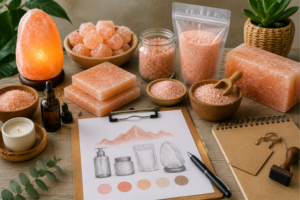
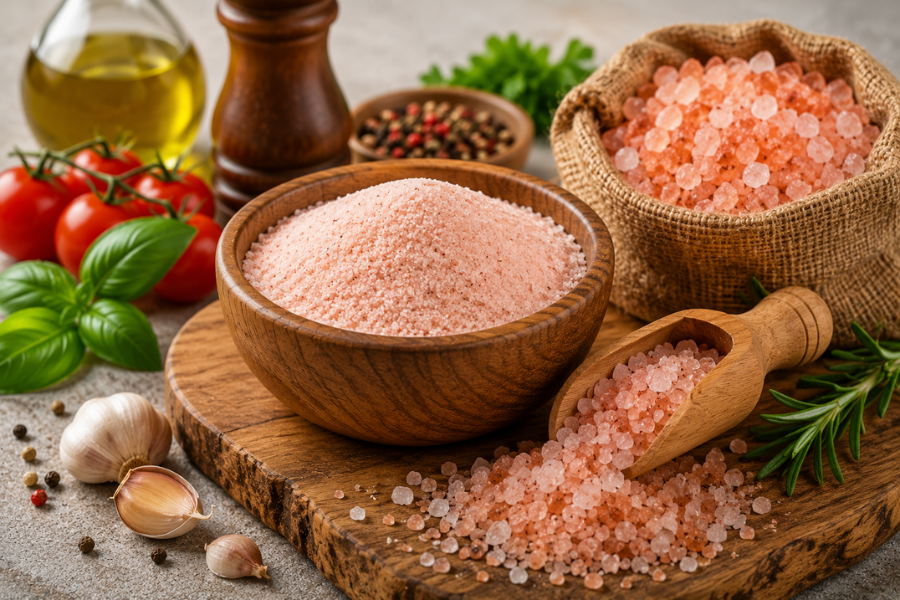
Edible Himalayan pink salt is a naturally occurring rock salt harvested from ancient salt deposits located in the Himalayan region of Pakistan. It is widely used for cooking, seasoning, food processing, and culinary applications across both household and commercial kitchens. Unlike refined table salt, edible Himalayan pink salt undergoes minimal processing and retains its natural mineral composition, which gives it its distinctive pink hue. Over the years, it has gained global recognition not only for its visual appeal but also for its clean taste and natural origin. For food manufacturers, restaurants, and international buyers, edible Himalayan pink salt represents a premium ingredient that aligns with growing consumer demand for natural and minimally processed foods. Understanding what makes this salt edible, how it is sourced, and how it differs from other salts is essential for anyone involved in food production, distribution, or culinary sourcing.
Where edible Himalayan pink salt comes from
Edible Himalayan pink salt originates from the Khewra Salt Mine and surrounding deposits located in the Punjab region of Pakistan. These salt formations were created millions of years ago through the evaporation of ancient seas, leaving behind dense mineral-rich salt layers buried beneath the earth. Because these deposits remained untouched by modern pollution, the salt extracted today is considered one of the purest naturally available salts. Once mined, the salt intended for edible use is carefully selected based on clarity, mineral balance, and absence of visible impurities. This geographic origin is significant because Pakistan is the only country authorized to commercially mine and export authentic Himalayan pink salt. Buyers sourcing edible Himalayan salt rely heavily on origin verification, as salt labeled “Himalayan” but sourced elsewhere does not carry the same geological authenticity or mineral profile.
Why Himalayan pink salt is considered edible
Not all rock salt is suitable for human consumption, which makes the classification of edible Himalayan pink salt particularly important. Salt intended for food use must meet strict purity, hygiene, and safety standards. Edible Himalayan pink salt is carefully washed, crushed, and graded to remove surface debris and non-salt particles while preserving its natural structure. It is then tested to ensure that heavy metals and contaminants fall within internationally accepted food safety limits. Unlike industrial salt, edible Himalayan salt does not undergo chemical bleaching or anti-caking treatments. Its suitability for consumption comes from both its mineral stability and controlled processing methods. For buyers and food producers, this distinction ensures that the salt can be safely used in cooking, seasoning blends, processed foods, and packaged retail products without compromising consumer health or regulatory compliance.
How edible Himalayan pink salt is processed
The processing of edible Himalayan pink salt is intentionally minimal to preserve its natural qualities while ensuring safety for food use. After extraction, large salt rocks are transported to processing facilities, where they are manually inspected and washed using clean water to remove dust and surface impurities. The salt is then dried naturally or in controlled environments to maintain mineral integrity. Once dried, it is crushed into various grain sizes suitable for culinary use, including fine, coarse, and granular grades. Throughout this process, no additives or chemical treatments are introduced. The goal is not to alter the salt but to prepare it in a form that meets international food standards. This careful balance between minimal processing and food safety is what differentiates edible Himalayan pink salt from both raw industrial salt and highly refined table salt.
What minerals are found in edible Himalayan pink salt
The characteristic pink color of edible Himalayan pink salt comes from trace minerals naturally embedded within the salt crystals. These minerals include calcium, magnesium, potassium, and iron, present in small but measurable quantities. While sodium chloride remains the dominant component, these trace elements contribute to the salt’s subtle flavor complexity and visual appeal. It is important to understand that edible Himalayan pink salt is not consumed for mineral supplementation but rather for its natural composition and clean taste. Food professionals often prefer it because the minerals do not overpower dishes, allowing flavors to remain balanced. For manufacturers, the mineral profile adds a natural marketing advantage without requiring artificial enrichment. This naturally occurring mineral composition is a key reason why edible Himalayan pink salt is often positioned as a premium culinary ingredient.
How edible Himalayan pink salt differs from regular table salt
One of the most common questions buyers and consumers ask is how edible Himalayan pink salt compares to regular table salt. The primary difference lies in processing. Table salt is heavily refined, stripped of natural minerals, and typically treated with anti-caking agents to improve shelf stability. Edible Himalayan pink salt, on the other hand, remains largely unrefined and free from additives. This results in a slightly different texture, taste, and appearance. From a culinary perspective, Himalayan salt delivers a milder, smoother saltiness that many chefs prefer for seasoning and finishing dishes. From a sourcing perspective, edible Himalayan salt offers transparency in origin and processing, which is increasingly important for food brands seeking clean-label ingredients.
Common culinary uses of edible Himalayan pink salt
Edible Himalayan pink salt is used across a wide range of culinary applications, from everyday cooking to gourmet food preparation. In commercial kitchens, it is commonly used for seasoning meats, vegetables, soups, and sauces due to its consistent grain structure and clean flavor. Food manufacturers incorporate it into spice blends, snack products, and packaged foods to meet consumer demand for natural ingredients. In retail markets, it is often sold as a premium cooking salt or finishing salt. Its versatility allows it to be used both during cooking and at the table. Because it dissolves evenly and does not introduce unwanted flavors, edible Himalayan pink salt has become a preferred choice for chefs and food processors alike.
Grain sizes and formats available for edible use
Edible Himalayan pink salt is available in multiple grain sizes and formats to suit a wide range of culinary, food manufacturing, and industrial needs. Fine-grain salt is typically used for baking, processed foods, seasoning blends, and table use due to its fast solubility and uniform distribution. Coarse and granular grades are preferred for cooking, grilling, curing, and salt mills, where texture plays an important role in flavor delivery and visual presentation. The availability of multiple formats allows buyers to customize sourcing based on production methods, packaging formats, and end-use applications. For B2B buyers, grain consistency is critical to ensure uniform seasoning, batch-to-batch reliability, and consistent product quality. Suppliers often offer custom grading, blending, and packaging options to meet specific food production requirements, making edible Himalayan pink salt highly adaptable across diverse culinary, commercial, and industrial food environments worldwide.
Is edible Himalayan pink salt suitable for food manufacturing?
Food manufacturers frequently ask whether edible Himalayan pink salt can be used in large-scale commercial production environments. The answer lies in sourcing from certified suppliers who adhere strictly to international food safety standards. When properly processed, cleaned, and laboratory tested, edible Himalayan pink salt is fully suitable for food manufacturing applications. It integrates seamlessly into modern production lines and performs similarly to conventional refined salt while offering a natural ingredient advantage. Many manufacturers use it in organic, clean-label, specialty, or premium product formulations. Its stable chemical composition ensures consistency in taste, texture, and preservation performance, making it a reliable and trusted option for long-term use in industrial food processing environments across global markets.
How buyers verify quality and authenticity
Authenticity is a major concern in the Himalayan salt trade, especially for edible, wellness, and food manufacturing applications. Buyers verify quality by requesting origin documentation, laboratory test reports, batch traceability records, and internationally recognized food-grade certifications. Authentic edible Himalayan pink salt should be traceable to Pakistan’s Salt Range and supported by strong quality assurance and inspection processes throughout production and packaging. Visual inspection, mineral analysis, moisture testing, and packaging standards also play an important role in verification. For B2B buyers, working with experienced exporters and transparent suppliers ensures product consistency, regulatory compliance, and long-term supply reliability. Proper documentation not only protects buyers from counterfeit or misrepresented products but also builds confidence with distributors, retailers, and end consumers who increasingly value transparency, traceability, and responsible sourcing in food and wellness supply chains.
Conclusion
Edible Himalayan pink salt has become an essential ingredient in modern food sourcing due to its natural origin, minimal processing, and versatile culinary applications. For buyers, chefs, and food manufacturers, it offers a balance between functionality and authenticity. Its trace mineral content, clean flavor, and visual appeal make it suitable for both everyday cooking and premium food products. As consumer demand continues to shift toward natural and transparent ingredients, edible Himalayan pink salt stands out as a reliable and globally recognized option. Understanding what it is, how it is processed, and how it differs from other salts allows buyers to make informed sourcing decisions that align with quality, safety, and market expectations.