
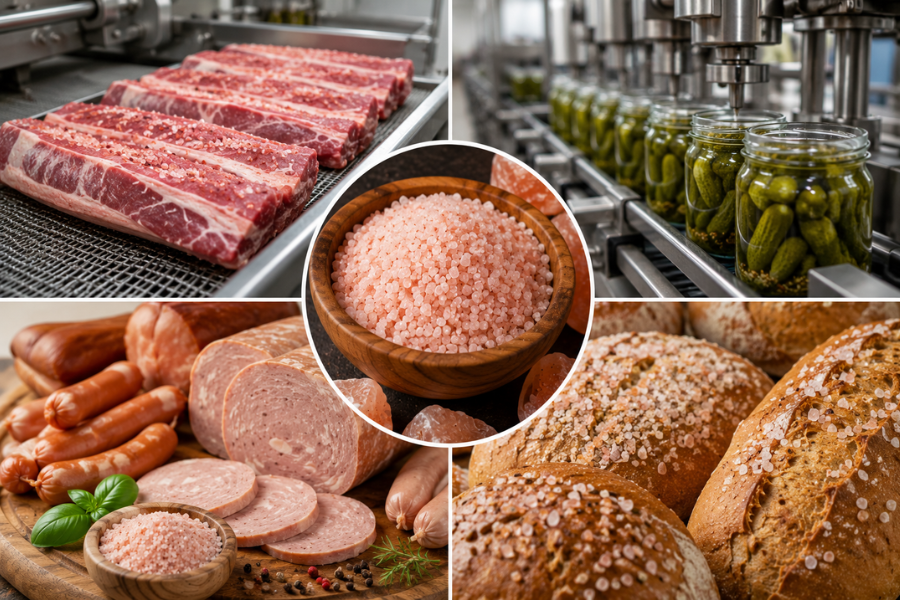
Edible Himalayan salt has become an essential ingredient in modern food processing as manufacturers increasingly move toward natural, transparent, and minimally processed ingredients. Sourced from ancient salt deposits in Pakistan, this salt is valued not only for its purity but also for its functional performance across a wide range of food applications. In industrial environments, salt is more than a flavoring agent; it plays a critical role in preservation, texture development, fermentation control, moisture retention, and food safety. Edible Himalayan salt offers consistent sodium chloride content without chemical additives, making it suitable for both large-scale manufacturing and premium food production. As global consumers demand cleaner labels and more natural sourcing, food processors are turning to edible Himalayan salt as a reliable alternative to heavily refined salts. Understanding how this salt is used throughout food processing helps manufacturers ensure product quality, regulatory compliance, and long-term brand trust.
Why food processors prefer edible Himalayan salt
Food processors choose edible Himalayan salt because it aligns operational efficiency with evolving consumer expectations. From a production standpoint, this salt delivers consistent performance, predictable solubility, and uniform grain sizing, all of which are essential for large-scale food manufacturing. Unlike refined table salt, edible Himalayan salt is minimally processed and free from anti-caking agents or bleaching chemicals that can interfere with formulation stability. This makes it particularly attractive for clean-label food products, where ingredient transparency is a competitive advantage. Additionally, its natural origin supports storytelling and branding for premium and health-focused food lines. Manufacturers also appreciate its compatibility with existing production systems, meaning no changes are required to equipment or processing methods. As regulatory scrutiny increases worldwide, the traceability and documentation associated with edible Himalayan salt further strengthen its appeal to responsible food processors.
Role of edible Himalayan salt in seasoning and flavor development
Seasoning is one of the most fundamental functions of salt in food processing, and edible Himalayan salt performs this role with precision and reliability. In processed foods such as soups, sauces, ready meals, and snack coatings, salt must dissolve evenly and distribute flavor consistently across every batch. Edible Himalayan salt provides a clean, balanced salinity that enhances natural flavors rather than overpowering them. Its mild taste allows manufacturers to maintain control over flavor profiles while reducing the risk of harsh or metallic aftertastes. For products produced at scale, uniform grain size ensures repeatability and minimizes variations between production runs. Food processors rely on this consistency to meet consumer expectations and maintain brand integrity. By using edible Himalayan salt, manufacturers can achieve dependable seasoning results while supporting natural ingredient positioning.
Use of edible Himalayan salt in meat processing
In meat processing, salt plays a multifunctional role that extends beyond basic flavor enhancement. Edible Himalayan salt is widely used in sausages, cured meats, marinated products, and processed cuts because it supports protein binding, moisture retention, and texture development. When incorporated into meat formulations, it helps stabilize muscle proteins, resulting in improved juiciness and firmness. Its purity ensures that it does not introduce unwanted residues that could interfere with curing or preservation processes. Additionally, edible Himalayan salt contributes to microbial control, helping extend shelf life while maintaining food safety. Meat processors increasingly prefer this salt for premium and clean-label products, as it allows them to reduce reliance on synthetic additives. With proper grain selection and dosage control, edible Himalayan salt integrates seamlessly into both traditional and modern meat processing systems.
Application of edible Himalayan salt in seafood processing
Seafood processing requires careful handling of ingredients to preserve delicate flavors and textures, making salt selection particularly important. Edible Himalayan salt is commonly used in brining, curing, seasoning, and preservation of fish and shellfish products. Its clean composition ensures that it enhances natural seafood flavors without introducing bitterness or metallic notes. During brining, it helps regulate moisture content, improving texture and reducing drip loss. In cured and smoked seafood, consistent salt penetration is essential, and edible Himalayan salt delivers reliable results due to its uniform structure. Seafood processors also value its natural sourcing, which aligns well with sustainability-focused branding and premium product positioning. When applied correctly, edible Himalayan salt supports both quality preservation and consumer appeal in seafood products.
Use in dairy and cheese manufacturing
Salt plays a critical role in dairy processing, particularly in cheese production, where it influences flavor development, moisture control, and microbial activity. Edible Himalayan salt is used during curd formation, dry salting, and brining processes to regulate fermentation and improve texture. Because it contains no anti-caking agents or chemical residues, it does not interfere with beneficial bacteria responsible for flavor and aging. Cheesemakers appreciate its controlled solubility, which allows precise salt absorption and consistent results across batches. In large-scale dairy operations, edible Himalayan salt supports uniformity and quality while aligning with clean-label trends. For artisanal and specialty cheese producers, its natural origin and subtle mineral presence add value without altering traditional production methods.
Role in baked goods and processed foods
In baked goods and processed foods, edible Himalayan salt contributes to both structural and sensory properties. It strengthens gluten networks in dough, controls yeast fermentation, and enhances overall flavor balance. Food manufacturers use it in bread, crackers, pastries, frozen dough, and prepared meals to achieve consistent texture and taste. Its even dissolution ensures uniform distribution throughout the product, preventing localized salinity issues. Additionally, edible Himalayan salt supports premium positioning for baked goods marketed as natural or artisanal. For large-scale operations, its compatibility with automated mixing and processing systems makes it a practical choice. By incorporating edible Himalayan salt, processors can maintain functional performance while responding to consumer demand for simpler, more transparent ingredients.
Edible Himalayan salt in snack food production
Snack foods rely heavily on salt to deliver immediate flavor impact, making ingredient consistency and performance essential for large-scale manufacturing. Edible Himalayan salt is widely used in chips, popcorn, roasted nuts, crackers, and extruded snacks due to its ability to adhere evenly to food surfaces. Its granular structure allows manufacturers to achieve uniform seasoning coverage, which is critical for consumer satisfaction and repeat purchases. The mild, balanced salinity of this salt enhances flavor without excessive sodium intensity, supporting cleaner-label and better-for-you formulations. Snack brands also benefit from its natural image, which aligns well with premium, organic, and wellness-focused positioning strategies. In highly competitive snack markets, using edible Himalayan salt allows manufacturers to differentiate products, enhance brand perception, and maintain reliable processing performance, consistent batch quality, and cost efficiency across large production volumes.
Use in fermentation and pickling processes.
Fermentation and pickling rely on salt to create controlled environments that support beneficial microorganism growth while effectively inhibiting harmful bacteria. Edible Himalayan salt is suitable for these applications because of its purity, mineral stability, and absence of chemical additives or anti-caking agents. It helps regulate osmotic pressure, drawing moisture from food and enabling consistent, predictable fermentation activity. Food processors commonly use it in fermented vegetables, sauces, condiments, brines, and preserved foods where reliable outcomes and product safety are essential. Its stable composition ensures consistent fermentation rates, texture development, and microbial balance throughout production. Because it does not interfere with natural microbial cultures, edible Himalayan salt supports traditional fermentation methods while meeting modern food safety standards, quality assurance requirements, and large-scale commercial production needs across diverse food processing environments.
Importance in clean-label and natural food production
Clean-label food production has become a defining trend in the global food industry, and edible Himalayan salt plays an increasingly important role in supporting this movement. Consumers now prefer foods made with recognizable, transparent, and minimally processed ingredients, and salt is no exception. Edible Himalayan salt allows manufacturers to eliminate chemically treated salts and synthetic additives from ingredient lists without compromising performance, taste, or shelf stability. Its traceability, mineral integrity, and natural origin strengthen consumer trust, brand credibility, and regulatory confidence. Food processors frequently use it to support marketing claims related to purity, simplicity, authenticity, and clean sourcing. As regulatory expectations and consumer scrutiny continue to grow worldwide, edible Himalayan salt offers a future-proof ingredient solution for clean-label product development, premium positioning, and long-term product innovation in competitive food markets.
Quality control and safety considerations in food processing
Using edible Himalayan salt in food processing requires rigorous and well-documented quality control systems to ensure full compliance with international food safety standards. Manufacturers must verify purity, grain size consistency, moisture content, microbial safety, and contaminant levels through regular laboratory testing. Reputable suppliers provide documentation such as certificates of analysis, origin verification, and food-grade compliance reports to support regulatory approval. Proper storage, packaging, and handling are also essential to maintain product integrity throughout production and distribution. When sourced responsibly, edible Himalayan salt integrates seamlessly into Hazard Analysis and Critical Control Points programs, ensuring safe, traceable, and consistent use across modern food processing operations. Strong quality assurance practices remain a critical factor in maximizing the safety, reliability, and commercial value of this natural ingredient.
Conclusion
Edible Himalayan salt offers food processors a versatile, reliable, and future-ready ingredient that supports both functional performance and growing market demand for natural, minimally processed products. Its applications span seasoning, preservation, fermentation, and texture development across diverse food categories, production lines, and commercial environments. By choosing edible Himalayan salt, manufacturers can maintain production efficiency while meeting clean-label expectations, regulatory requirements, and increasing consumer trust and transparency standards. As the global food industry continues to evolve toward sustainability, ingredient simplicity, and greater traceability, edible Himalayan salt remains a valuable, premium, and competitive component in modern food processing strategies, helping brands differentiate their products and align with evolving market trends, wellness-focused consumers, and international quality regulations.