
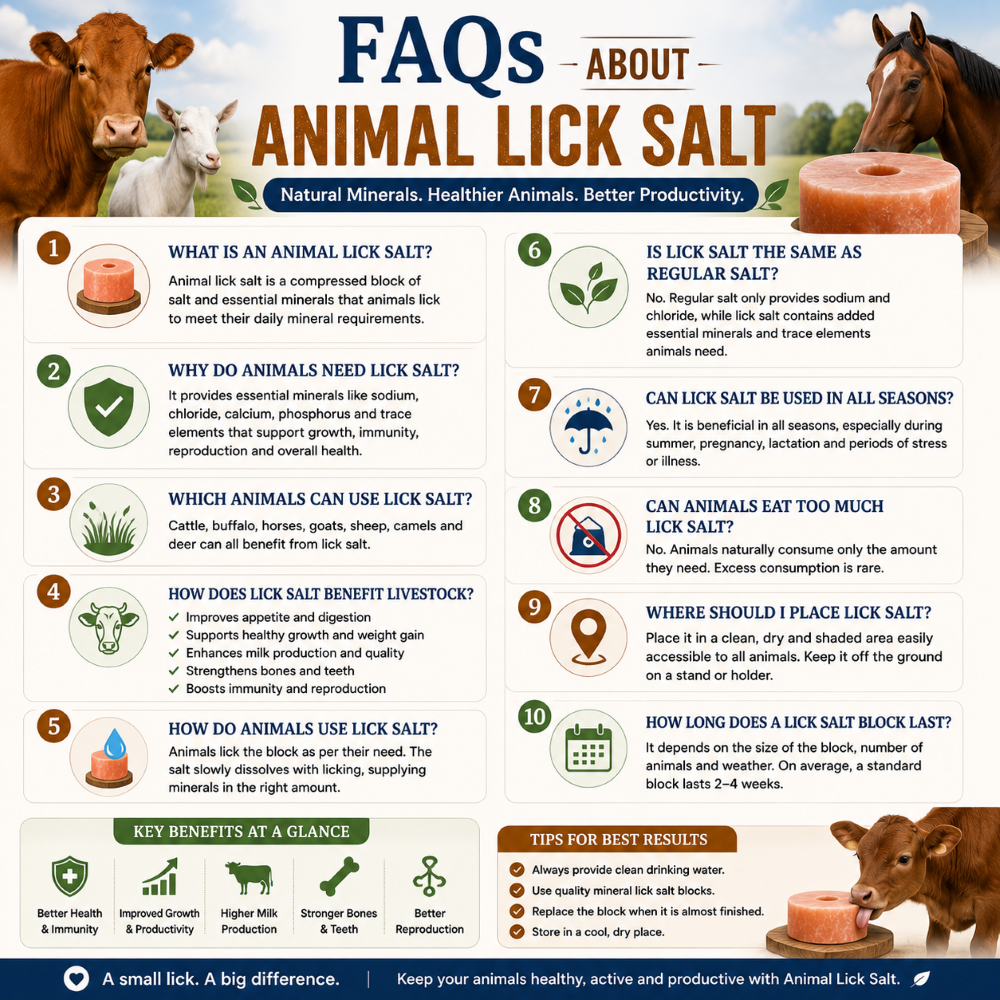
What Is Animal Lick Salt?
Animal lick salt is a mineral supplement specifically formulated to meet the nutritional requirements of livestock and wild animals. It is typically compressed into solid blocks or bricks that animals lick according to their natural instincts. These salt licks help animals replenish essential minerals such as sodium, calcium, magnesium, and trace elements that may be missing from their daily feed or grazing environment. Unlike loose salt, lick blocks regulate intake naturally, preventing overconsumption while ensuring consistent mineral access. Himalayan animal lick salt, in particular, is valued for its natural mineral composition and minimal processing. Farmers and ranchers rely on lick salt to support digestion, hydration, bone development, and overall metabolic balance. Over time, consistent access to animal lick salt contributes to improved animal health, reduced deficiencies, and better productivity in both dairy and meat-producing livestock across various climates.
Why Do Animals Need Salt Licks?
Animals require salt licks because sodium and trace minerals are essential for basic bodily functions that cannot always be met through forage alone. Natural grazing environments often lack sufficient mineral density, especially in overworked pastures or arid regions. Salt helps regulate nerve transmission, muscle contraction, and fluid balance, all of which directly influence animal behavior and physical performance. When animals lick salt voluntarily, they instinctively correct mineral imbalances without forced supplementation. This natural intake method supports digestion efficiency, enhances appetite, and improves feed utilization. Salt licks also reduce stress by stabilizing electrolyte levels, particularly during hot weather or high lactation periods. In breeding animals, proper mineral intake contributes to fertility and healthier offspring. Without salt licks, animals may show signs of lethargy, poor coat condition, reduced milk yield, and slower growth rates, ultimately impacting farm profitability.
What Types of Animals Use Salt Licks?
Animal lick salt is used by a wide range of domesticated livestock and wild animals due to its universal nutritional benefits. Cattle are among the most common users, relying on salt licks to maintain hydration, milk production, and rumen function. Sheep and goats also benefit greatly, as salt supports wool quality, digestion, and immune health. Horses use salt licks to replace electrolytes lost through sweat, especially during physical activity or hot climates. Deer and wild herbivores naturally seek salt licks to supplement minerals absent in forest vegetation. Even camels and buffalo require consistent salt intake for metabolic stability. Each species benefits differently, but the underlying function remains the same: maintaining mineral balance. Offering animal lick salt ensures animals meet their nutritional needs regardless of grazing quality or environmental conditions.
Are Himalayan Animal Lick Salts Natural?
Himalayan animal lick salts are considered natural because they are mined from ancient salt deposits without chemical refinement. Extracted primarily from Pakistan’s Salt Range, these salt blocks retain their natural mineral composition formed over millions of years. Unlike refined salt products, Himalayan lick salts do not undergo bleaching, chemical additives, or artificial enrichment. This makes them suitable for animals sensitive to processed supplements. Their naturally occurring trace minerals support balanced nutrition while reducing the risk of contamination. Because of minimal processing, Himalayan lick salt maintains structural hardness, allowing animals to lick gradually over time. Many livestock producers prefer natural salt licks for ethical, environmental, and health-related reasons. Their geological purity and stable composition make them reliable for long-term feeding programs across diverse agricultural systems worldwide.
How Are Animal Lick Salt Blocks Made?
Animal lick salt blocks are manufactured through a controlled compression process that preserves mineral integrity while creating durable, usable shapes. Natural salt crystals are first crushed into granules of consistent size. These granules are then pressed under high pressure into molds, forming solid blocks without the use of binders or adhesives. In the case of Himalayan lick salt, no chemical processing occurs during production. The blocks are air-dried and inspected for structural stability before packaging. This method ensures slow consumption by animals, preventing waste and excessive intake. The hardness of the block is critical, as it allows animals to lick rather than bite chunks off. Proper manufacturing results in long-lasting salt licks that withstand outdoor conditions and provide continuous mineral supplementation over extended periods.
Are Animal Lick Salts Safe for Livestock?
Animal lick salts are generally safe for livestock when used correctly and sourced from reputable manufacturers. The controlled hardness of lick blocks ensures animals consume salt gradually according to physiological needs. Unlike loose mineral mixes, lick salt minimizes overdose risks. Safety also depends on mineral composition, particularly trace element levels such as iron and magnesium. Quality Himalayan animal lick salt undergoes laboratory testing to meet agricultural safety standards. Proper placement of lick blocks is essential, ensuring clean access and protection from excessive moisture. When provided alongside balanced feed and clean water, animal lick salt supports health without adverse effects. However, improper storage or low-quality sources may introduce contamination risks, making supplier verification essential for long-term livestock welfare.
How Often Should Animals Use Salt Licks?
Animals should have continuous access to salt licks rather than scheduled consumption times. This free-access approach allows animals to regulate their own mineral intake based on physiological needs. Consumption frequency varies depending on species, climate, production stage, and diet composition. Lactating animals or those exposed to heat stress typically consume salt more frequently. Seasonal changes also influence intake, with higher usage during summer months. Farmers should monitor lick block wear to estimate consumption rates and adjust supply accordingly. Sudden increases or decreases in licking behavior may indicate dietary imbalances or health concerns. Consistent availability ensures stable mineral intake and supports long-term productivity across livestock operations. Regular observation ensures consumption patterns remain healthy and aligned with seasonal nutritional requirements.
Can Animal Lick Salt Improve Animal Productivity?
Animal lick salt plays a significant role in improving overall livestock productivity by supporting metabolic efficiency and nutrient absorption. Proper mineral balance enhances feed conversion rates, allowing animals to gain weight more effectively. In dairy animals, salt supplementation contributes to increased milk yield and improved milk composition. Breeding efficiency also benefits, as mineral availability influences hormone regulation and reproductive health. Healthier animals experience fewer deficiencies, leading to reduced veterinary costs and lower mortality rates. Over time, consistent salt lick use results in better coat condition, stronger immunity, and improved behavioral stability. These cumulative benefits make animal lick salt an essential component of sustainable livestock management strategies. Over time, these benefits contribute to higher profitability and more sustainable livestock farming operations.
What Is the Difference Between Animal Lick Salt and Loose Salt?
Animal lick salt differs from loose salt primarily in form, consumption control, and efficiency. Lick salt is compressed into solid blocks that regulate intake naturally, whereas loose salt may be consumed excessively or be wasted. Loose salt is vulnerable to moisture contamination and uneven distribution, while lick blocks remain stable outdoors. Animals instinctively lick blocks as needed, preventing mineral imbalances. Lick salt also reduces labor requirements, as blocks last longer and require less frequent replacement. From a management perspective, animal lick salt offers improved hygiene, controlled supplementation, and reduced feed loss, making it the preferred option for most livestock systems. This makes lick salt more economical and practical for both small farms and large commercial operations.
How Is Animal Lick Salt Packaged for Export?
Animal lick salt is packaged using moisture-resistant materials to preserve structural integrity during transport. Blocks are typically wrapped in plastic film, shrink-wrapped, or placed in laminated bags. Export packaging often includes palletization for container loading efficiency. Labels display product grade, weight, origin, and handling instructions to meet international regulations. Proper packaging prevents breakage, moisture absorption, and contamination during long shipping periods. For bulk buyers, customized packaging options are available based on destination requirements. Export-ready packaging ensures product quality upon arrival and strengthens supplier credibility in global markets. This careful packaging process also helps maintain block hardness, appearance, and mineral consistency during long-distance shipping.
What Certifications Are Used for the Animal Lick Salt Trade?
Certifications play a vital role in the animal lick salt trade by ensuring quality, safety, and compliance. Common certifications include ISO quality management standards, veterinary health approvals, and origin certification. For Himalayan animal lick salt, certificates of origin verify mining location and authenticity. Exporters may also provide laboratory test reports confirming mineral composition and absence of harmful substances. These certifications build trust between buyers and suppliers while facilitating customs clearance. Compliance with international agricultural regulations ensures smooth trade operations and protects both animals and end users from substandard products. These certifications also help buyers verify ethical sourcing, traceability, and long-term supplier reliability in global markets.
Conclusion
Animal lick salt remains a fundamental nutritional supplement for livestock worldwide, supporting health, productivity, and sustainable farming practices. By addressing frequently asked questions, buyers and farmers gain clarity on usage, safety, sourcing, and trade considerations. Himalayan animal lick salt, in particular, offers a natural and reliable solution due to its mineral richness and minimal processing. Informed decisions about animal lick salt contribute to improved livestock welfare, operational efficiency, and long-term agricultural success. As global demand continues to grow, understanding these essentials becomes increasingly important for responsible sourcing and effective livestock management. Strategic planning, proper storage, and certified sourcing further ensure consistent quality, animal safety, and business reliability across agricultural supply chains.