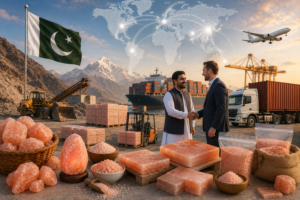
Himalayan salt has evolved from a regional mineral into a globally traded commodity used across food, wellness, livestock, spa, and home décor industries. Buyers across North America, Europe, the Middle East, and Asia increasingly demand transparency about where this salt comes from and how it reaches their markets. Understanding how Himalayan salt is exported helps importers ensure quality, compliance, sustainability, and long-term supply reliability. The export process involves far more than mining and packing; it includes strict quality controls, certifications, customs documentation, logistics planning, and adherence to international regulations. For manufacturers, wholesalers, and private-label brands, knowing each stage of the export journey builds confidence and supports smarter purchasing decisions. This guide explains the complete export process step by step, offering clarity on how Himalayan salt moves from the mountains of Pakistan to shelves worldwide. Additionally, this knowledge helps buyers evaluate supplier credibility, anticipate lead times, and plan inventory more efficiently while aligning procurement strategies with regulatory expectations in competitive international salt markets.
Where Does Export-Grade Himalayan Salt Come From?
Export-quality Himalayan salt is sourced primarily from the Salt Range of Punjab, Pakistan, with the Khewra Salt Mine being the most renowned origin. These ancient deposits were formed millions of years ago and are carefully extracted to preserve their natural mineral composition. Not all mined salt qualifies for export, as international buyers require consistent color, purity, and grain integrity. Exporters select salt based on visual quality, mineral balance, and intended application, whether edible, industrial, bath, or animal use. The origin of the salt plays a major role in buyer trust, as traceability has become an important requirement for food safety authorities and ethical sourcing standards. By sourcing directly from licensed mines, exporters ensure legitimacy, regulatory compliance, and stable supply volumes for global markets. This controlled sourcing also ensures consistency in mineral profile and color, which is especially important for buyers serving regulated food, wellness, and premium consumer product segments worldwide.
How Is Himalayan Salt Prepared for Export Markets?
Before Himalayan salt can be exported, it undergoes a multi-stage preparation process designed to meet international quality benchmarks. Raw salt stones or crystals are first cleaned to remove surface impurities such as clay or dust accumulated during mining. Depending on the final use, the salt may then be crushed, milled, or shaped into blocks, lamps, or granules. For edible salt, additional food-grade processing ensures hygiene and safety compliance. Each processing stage is monitored to prevent contamination and preserve the salt’s natural mineral content. Export preparation is not a one-size-fits-all process; it is customized based on buyer specifications, country regulations, and product application. This careful preparation ensures the salt arrives at destination markets ready for retail, industrial use, or further value addition. Such customization allows exporters to meet diverse buyer expectations across retail, industrial, and private-label channels while maintaining efficiency and reducing unnecessary handling or reprocessing costs.
What Quality Control Measures Are Required for Exporting Himalayan Salt?
Quality control is a critical part of exporting Himalayan salt, especially for edible and wellness applications. Exporters conduct visual inspections, moisture analysis, mineral testing, and microbial assessments where required. Food-grade salt must meet international safety standards, including limits on heavy metals and contaminants. Non-edible products like lamps and bath salts are checked for structural integrity, color consistency, and finish quality. Many exporters work with third-party laboratories to provide test reports that satisfy import regulations in countries such as the United States and European Union members. These quality measures protect buyers from regulatory issues and reinforce the credibility of Pakistani Himalayan salt exporters in competitive global markets. These inspections also help exporters minimize returns, strengthen buyer confidence, and comply with increasingly strict quality assurance protocols demanded by international distributors and regulatory authorities.
What Certifications Are Needed to Export Himalayan Salt?
Certifications play a vital role in international salt exports, particularly when serving food, cosmetics, or pharmaceutical industries. Exporters commonly obtain ISO certifications for quality management systems, HACCP for food safety, and health certificates from local authorities. For organic or natural product markets, additional documentation may be required to confirm minimal processing. Some buyers request FDA registration, EU compliance declarations, or Halal certifications depending on destination markets. These certifications are not merely formalities; they assure importers that the product meets regulatory and consumer expectations. Maintaining up-to-date certifications allows exporters to access high-value markets and build long-term trade relationships. Holding recognized certifications also enhances brand trust, simplifies customs clearance, and allows exporters to compete effectively in premium and regulated international markets.
How Is Himalayan Salt Packaged for International Shipping?
Packaging is a crucial step in the export process because Himalayan salt is hygroscopic and sensitive to moisture. Exporters use food-grade bags, vacuum-sealed liners, laminated sacks, or corrugated cartons depending on the product type. Bulk shipments often use polypropylene bags with inner liners to protect against humidity during transit. Finished goods such as lamps or bath salt jars require reinforced packaging to prevent breakage. Packaging is also customized with private labels, barcodes, and multilingual compliance information for destination markets. Proper packaging not only preserves product quality but also reduces losses during shipping and enhances brand presentation for importers. Well-designed packaging also improves warehouse handling, reduces transit damage, and ensures products arrive in optimal condition even after long shipping durations.
What Export Documentation Is Required for Himalayan Salt?
Exporting Himalayan salt involves a detailed documentation process to ensure legal compliance and smooth customs clearance. Typical documents include a commercial invoice, packing list, certificate of origin, bill of lading, and export permit. Food-grade shipments may also require health certificates and laboratory test reports. Each destination country has specific documentation requirements, making accuracy essential. Experienced exporters manage this paperwork efficiently to avoid shipment delays or penalties. Proper documentation ensures traceability, protects buyers during customs inspections, and facilitates seamless international trade. Accurate documentation further protects buyers from compliance risks and supports smooth transactions across borders, especially in tightly regulated food and wellness markets.
How Is Himalayan Salt Transported from Pakistan to Global Markets?
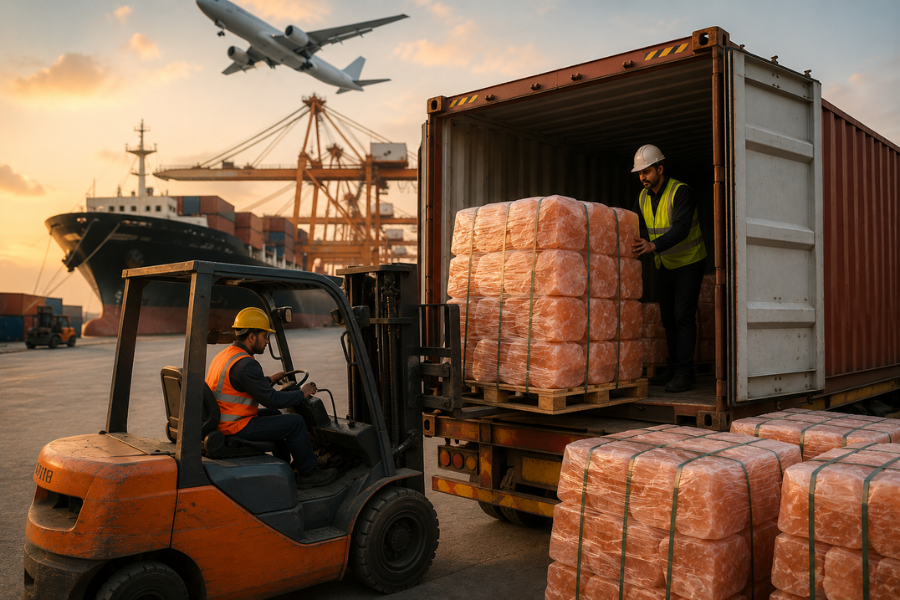
Transportation logistics depend on shipment size, destination, and urgency. Most Himalayan salt exports are shipped via sea freight from Karachi Port due to cost efficiency for bulk volumes. Smaller or high-value shipments may use air freight for faster delivery. Inland transport from mines to processing facilities and ports is carefully coordinated to prevent moisture exposure and handling damage. Exporters work with freight forwarders to select appropriate shipping containers, often using desiccants to control humidity. Reliable transportation ensures product integrity from origin to destination, which is essential for maintaining buyer satisfaction. Efficient logistics planning also helps exporters control freight costs and maintain delivery schedules that meet buyer expectations across multiple international destinations.
How Do Import Regulations Affect Himalayan Salt Exports?
Each importing country enforces its own regulations related to food safety, labeling, packaging, and product classification. Exporters must stay well-informed about these regulations to avoid shipment rejections, fines, or border delays. For example, edible salt entering the EU must comply with specific food additive, purity, and labeling laws, while the U.S. requires FDA registration and documentation of origin. Noncompliance can result in costly delays, confiscations, or damaged business reputations. Successful exporters proactively align their production, testing, and labeling processes with international regulations, ensuring smooth market entry, repeat business opportunities, and trusted supplier status. Staying fully compliant also enables exporters to expand into new regions confidently while reducing the risk of shipment holds, regulatory penalties, or market restrictions.
What Role Do Buyers Play in the Export Process?
Buyers play an active and strategic role by specifying quality grades, salt crystal sizes, packaging preferences, and certification requirements for international trade. Clear, detailed communication between exporters and importers helps customize products for target markets, regulatory compliance, and consumer expectations. Many buyers also request pre-shipment samples or trial batches before placing bulk orders, allowing them to assess mineral content, color, purity, and overall quality firsthand. Long-term buyers often collaborate with exporters on private labeling, customized formulations, or product development strategies. This partnership approach strengthens trust, reduces errors, and improves efficiency across the global supply chain. Active buyer participation also helps align product specifications with end-market needs, enhances buyer confidence, improves customer satisfaction, and strengthens long-term supplier relationships while supporting sustainable trade practices.
How Does Sustainable Exporting Impact Himalayan Salt Trade?
Sustainability is becoming increasingly important in the global salt trade and international supply chains. Responsible exporters focus on environmentally conscious mining methods, energy-efficient processing, fair labor practices, and reduced packaging waste to minimize ecological impact. Buyers and distributors are increasingly interested in suppliers who demonstrate ethical sourcing, traceability, and strong environmental responsibility. Sustainable exporting not only protects natural resources and local ecosystems but also enhances brand reputation, market positioning, and credibility in eco-conscious and premium markets. This shift toward sustainability ensures the long-term viability of Himalayan salt exports while meeting growing consumer demand for ethically produced, environmentally friendly products. Sustainability initiatives further appeal to eco-conscious brands, retailers, and global buyers seeking reliably sourced, socially responsible, and high-quality Himalayan salt products.
Conclusion
Exporting Himalayan salt is a complex but well-structured process that combines traditional mining with modern international trade practices. From sourcing and packaging to certification and logistics, each step plays a vital role in delivering a high-quality product to global markets. Understanding how Himalayan salt is exported empowers buyers to make informed sourcing decisions and supports exporters in maintaining compliance and quality excellence. As global demand continues to grow, transparent and efficient export practices will remain the foundation of successful Himalayan salt trade worldwide. A transparent export process ultimately benefits all stakeholders by supporting quality assurance, regulatory compliance, and sustainable growth within the global Himalayan salt industry.