
Understanding shipping terms is critical in international salt trade, especially when dealing with bulk commodities like Himalayan pink salt, edible salt, animal lick salt, and bath salt. One of the most commonly used trade terms in global exports is FOB, which stands for Free on Board. For salt exporters and buyers alike, FOB defines responsibility, risk transfer, pricing clarity, and logistics planning. This guide explains what FOB means in salt export, how it works, why it is preferred in B2B trade, and how it impacts pricing, documentation, and shipping decisions. Whether you are a manufacturer in Pakistan or a global importer sourcing Himalayan salt, understanding FOB is essential for smooth transactions and long-term partnerships.
What Does FOB Mean in International Salt Trade?
FOB, or Free on Board, is an internationally recognized shipping term used in export contracts, particularly for bulk and commodity products like salt. Under FOB terms, the seller is responsible for producing, packing, and delivering the salt to the designated port of shipment. Once the goods are loaded onto the vessel nominated by the buyer, responsibility and risk transfer from the seller to the buyer. This means the exporter handles all inland transportation, export clearance, and loading costs, while the buyer assumes responsibility for ocean freight, insurance, and delivery beyond the port. In salt exports, FOB is widely preferred because it offers transparency, reduces confusion, and allows buyers to manage shipping costs directly based on their logistics networks and negotiated freight rates.
How FOB Works in Himalayan Salt Export from Pakistan
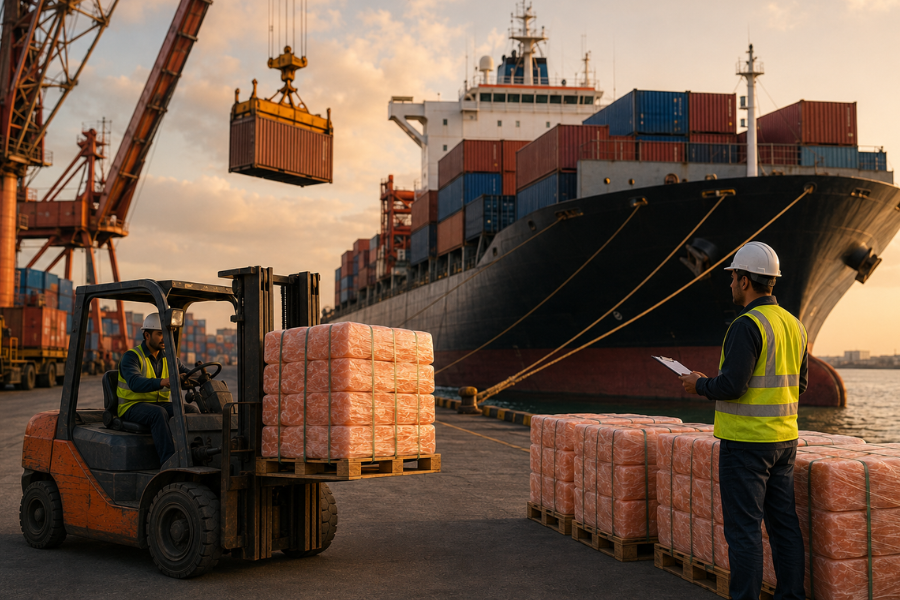
In Himalayan salt export, FOB is commonly applied at ports such as Karachi or Port Qasim. The exporter mines, processes, grades, and packages the salt according to buyer specifications before arranging transport to the port. The seller completes export documentation, customs clearance, and port handling until the salt is safely loaded onto the vessel. At that moment, FOB terms dictate that ownership and risk shift to the buyer. This system is particularly effective for salt exports because of the product’s bulk nature and global demand. Buyers sourcing edible salt, animal lick salt, or bath salt often prefer FOB because it allows them to select shipping lines, manage freight schedules, and optimize costs without relying on the exporter for international logistics.
Responsibilities of the Seller Under FOB Terms
Under FOB agreements, the salt exporter carries significant responsibility until the cargo is loaded on board. The seller must ensure that the salt meets agreed specifications, including purity, grain size, moisture levels, and packaging standards. Proper labeling, export-grade packaging, and compliance with international food or animal feed regulations are also part of the seller’s obligations. Additionally, the exporter handles inland transportation to the port, pays terminal handling charges, and ensures smooth customs clearance. For Himalayan salt exporters, maintaining consistent quality and timely delivery to the port is critical. Any delay or mishandling before loading can lead to penalties or loss of buyer trust, making seller reliability essential under FOB terms.
Buyer Responsibilities After FOB Shipment
Once the salt is loaded onto the vessel, the buyer assumes full responsibility under FOB terms. This includes arranging and paying for ocean freight, marine insurance, unloading at the destination port, import clearance, duties, and inland delivery to warehouses or processing facilities. For international buyers, FOB provides flexibility and control over logistics decisions. Buyers can select preferred carriers, negotiate better freight rates, and coordinate shipments with other cargo. In salt trade, where margins are sensitive to transportation costs, FOB empowers buyers to manage expenses efficiently. However, buyers must also understand the risks, as any damage or loss after loading becomes their responsibility.
Why FOB Is Commonly Used in Bulk Salt Exports
FOB is especially suitable for bulk salt exports because it simplifies pricing structures and reduces disputes. Salt is typically shipped in large volumes, whether in bags, jumbo sacks, or bulk containers, making logistics a major cost factor. FOB pricing allows exporters to quote competitive product prices without including unpredictable freight charges. Buyers appreciate FOB because it gives them transparency and cost control. Additionally, FOB reduces the exporter’s exposure to shipping delays, port congestion, or freight fluctuations. In global salt trade, where shipments may travel long distances across multiple regions, FOB creates a clear division of responsibilities that benefits both parties.
FOB vs CIF in Salt Export: Key Differences
FOB is often compared with CIF, which stands for Cost, Insurance, and Freight. While FOB limits the seller’s responsibility to the loading port, CIF requires the seller to arrange and pay for ocean freight and insurance up to the destination port. In salt exports, FOB is usually preferred for B2B transactions because CIF prices can fluctuate due to shipping market volatility. FOB allows buyers to manage shipping independently, while CIF places more control with the seller. For Himalayan salt exporters, FOB reduces logistical complexity and financial risk, whereas CIF may be suitable for smaller buyers who prefer a single delivered price. Understanding these differences helps exporters choose the most appropriate terms for each buyer relationship.
FOB Pricing Structure in Salt Export Contracts
FOB pricing includes all costs incurred by the seller up to the point of loading the salt onto the vessel. This typically covers production, processing, packaging, inland transport, port handling, and export documentation. FOB prices do not include international freight, insurance, or destination charges. For buyers, FOB pricing provides a clear breakdown of product value versus logistics costs. For exporters, FOB pricing simplifies quotations and reduces exposure to external cost variables. In Himalayan salt exports, FOB pricing is often quoted per metric ton or per bag, depending on packaging type. Clear FOB pricing helps avoid misunderstandings and supports long-term trade relationships.
Documentation Required for FOB Salt Exports
Accurate documentation is essential for FOB shipments to ensure smooth customs clearance and payment processing. Common documents include the commercial invoice, packing list, certificate of origin, bill of lading, and any required health or quality certificates. In edible salt exports, food safety certificates and laboratory test reports may also be required. The exporter is responsible for preparing and submitting these documents under FOB terms until the cargo is loaded. Proper documentation protects both parties by confirming product details, shipment terms, and legal compliance. Inconsistent or incomplete documents can cause delays, additional costs, or disputes, making documentation accuracy a critical aspect of FOB salt exports.
Risk Transfer and Liability in FOB Salt Shipments
One of the most important aspects of FOB is the point at which risk transfers from seller to buyer. In FOB salt exports, risk transfers when the cargo crosses the ship’s rail or is securely loaded onto the vessel. Any damage, loss, or delay occurring after this point becomes the buyer’s responsibility. This clear risk transfer reduces ambiguity and helps both parties manage insurance and contingency planning. For exporters, FOB limits liability exposure, while buyers must ensure adequate marine insurance coverage. Understanding risk transfer is essential in salt trade, where moisture exposure, handling damage, or shipping delays can impact product quality.
FOB and Payment Terms in Salt Export Deals
FOB terms are often paired with payment methods such as T/T, LC, or partial advance payments. Buyers may pay a deposit before production and the balance upon shipment or document presentation. FOB aligns well with letters of credit because documentation requirements are clearly defined. Exporters benefit from FOB when payments are linked to loading confirmation or bill of lading issuance. Clear alignment between FOB terms and payment conditions reduces financial risk and improves cash flow predictability. In Himalayan salt exports, where orders are often large and recurring, well-structured FOB payment terms strengthen trust and long-term cooperation. FOB terms are often paired with payment methods such as T/T, LC, or partial advance payments to balance risk.
Advantages of FOB for Himalayan Salt Exporters
FOB offers several advantages for Himalayan salt exporters, particularly those operating in Pakistan and targeting international markets. It minimizes logistical responsibilities beyond the port, reduces financial exposure to freight fluctuations, and simplifies export pricing and cost calculations. Exporters can focus on core activities such as mining, processing, quality control, product testing, and packaging, ensuring consistent product standards. FOB also allows exporters to serve buyers across multiple regions without managing complex shipping routes, customs clearance, or inland transportation. By offering FOB terms, Himalayan salt exporters appeal to experienced international buyers who value control, transparency, and predictable delivery. This makes FOB a strategic choice for scaling export operations, expanding into new markets, and building long-term, reliable trade partnerships efficiently.
When FOB May Not Be the Best Option
While FOB is widely used, it may not suit every buyer, transaction, or market scenario. Small buyers or first-time importers may lack the logistics expertise, financial capacity, or experience to manage freight, insurance, and port handling effectively. In such cases, CIF, DDP, or other inclusive terms may be more appropriate and reduce buyer risk. Additionally, volatile shipping conditions, unexpected port congestion, or customs delays can complicate FOB shipments if buyer-arranged logistics are poorly coordinated. Exporters should carefully assess buyer capabilities, order size, destination regulations, and seasonal shipping conditions before finalizing FOB terms. Flexibility in offering alternative incoterms can help exporters accommodate diverse buyer needs while maintaining competitive positioning, trust, and long-term business relationships.
Conclusion
FOB plays a vital role in global salt exports by clearly defining responsibilities, minimizing financial and logistical risk, and improving pricing transparency for all parties. For Himalayan salt exporters and international buyers, FOB offers a balanced and widely recognized approach that supports operational efficiency, shipment control, and predictable cash flow. By understanding how FOB works, managing responsibilities effectively, coordinating with buyers, and aligning payment and logistics strategies, businesses can build strong, reliable, and long-term trade relationships. In competitive global markets, mastering FOB is not just a logistical necessity but also a strategic advantage, enhancing credibility, buyer trust, and sustainable Himalayan salt export success across diverse international markets.