
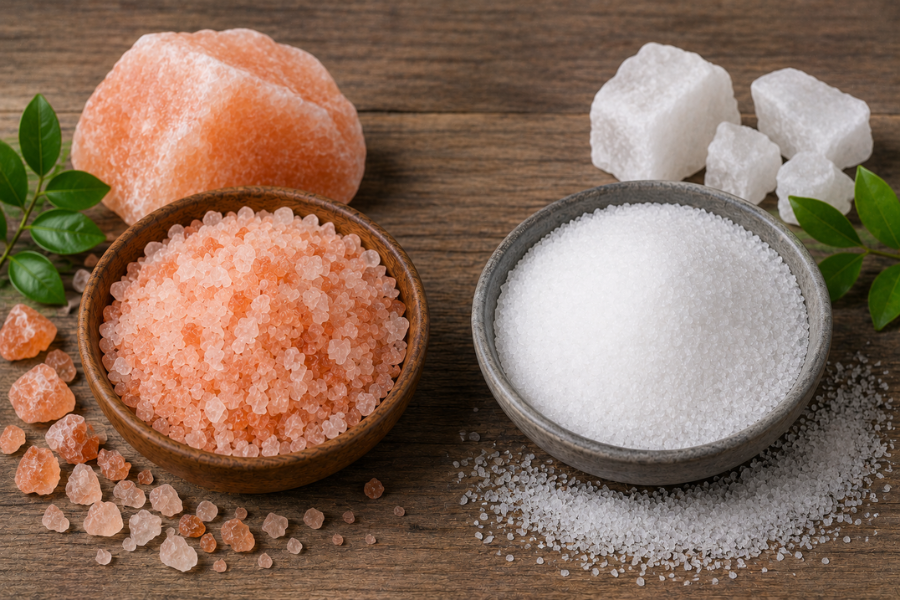
The difference between natural salt and refined salt is becoming increasingly important for food manufacturers, importers, wellness brands, and agricultural buyers worldwide. As consumers and businesses become more conscious about ingredient sourcing, transparency, and processing methods, salt is no longer viewed as a simple commodity. Instead, it is evaluated based on origin, purity, mineral profile, processing intensity, and application suitability. This shift has pushed natural salts such as Himalayan pink salt into the spotlight, while refined salt continues to dominate mass food production due to its consistency and cost efficiency. Understanding how these two salt categories differ helps buyers make informed sourcing decisions, comply with regulatory requirements, and align products with market expectations. For B2B buyers, the distinction also affects pricing, branding, packaging, and long-term supply chain planning. Whether salt is intended for edible use, livestock nutrition, spa applications, or industrial processing, the choice between natural and refined salt directly impacts quality perception and functional performance. This guide breaks down the differences clearly and practically, allowing importers, distributors, and manufacturers to understand what truly separates natural salt from refined salt in today’s global trade environment.
What Is Natural Salt?
Natural salt refers to salt that is extracted from the earth or evaporated from natural water sources with minimal processing. Common examples include Himalayan pink salt, sea salt, and certain rock salts that retain their naturally occurring mineral composition. These salts are typically harvested through traditional mining or evaporation methods and are not subjected to extensive chemical treatment. Because of this, natural salt often contains trace minerals such as calcium, potassium, magnesium, and iron, which contribute to its color, texture, and market appeal. Natural salt is valued not only for its functional use but also for its perceived authenticity and connection to nature. Buyers in the wellness, gourmet food, and animal nutrition sectors often prefer natural salt due to its unaltered state and visual characteristics. From a trade perspective, natural salt requires careful handling and packaging because its mineral content makes it more hygroscopic. Despite this, demand for natural salt continues to rise globally as brands seek clean-label ingredients that align with consumer expectations. For exporters, natural salt offers opportunities for premium positioning, private labeling, and diversified applications beyond basic seasoning.
What Is Refined Salt?
Refined salt is salt that has undergone extensive processing to remove impurities and achieve a uniform sodium chloride content. This type of salt is typically produced through solution mining or vacuum evaporation, followed by purification steps that eliminate minerals and contaminants. The final product is almost pure sodium chloride, often exceeding 99 percent purity. During processing, anti-caking agents are frequently added to improve flowability and shelf stability, especially for large-scale food manufacturing. Refined salt is widely used in industrial food processing, pharmaceuticals, and chemical applications because of its consistency and predictable performance. Unlike natural salt, refined salt lacks color variation and mineral diversity, resulting in a white, fine-grained appearance. From a commercial standpoint, refined salt is cost-effective, easy to transport, and compatible with automated production systems. Regulatory approval is often simpler due to standardized specifications. However, refined salt offers limited branding opportunities and is typically positioned as a commodity rather than a value-added product. Buyers prioritize refined salt when scalability, uniformity, and compliance are more important than origin storytelling or mineral content.
Differences in Source and Origin
One of the most fundamental differences between natural salt and refined salt lies in their source and origin. Natural salt is sourced directly from geological deposits or natural water bodies that formed over millions of years. Himalayan pink salt, for example, originates from ancient salt beds in Pakistan, while sea salt comes from evaporated seawater. These origins contribute to the salt’s mineral diversity and visual characteristics. Refined salt, on the other hand, is often sourced from underground brine deposits or seawater but undergoes processing that removes any regional identity. Its origin becomes largely irrelevant once purification is complete. For buyers focused on traceability and storytelling, natural salt provides a clear advantage. Origin certification, geographic indication, and mining transparency all add value in premium markets. Refined salt’s source is rarely highlighted because its processing standardizes the product regardless of location. This distinction affects labeling, marketing claims, and buyer perception. In international trade, natural salt origins can influence pricing and demand, while refined salt competes primarily on volume and logistics efficiency.
Processing Methods and Level of Refinement
Processing is the defining factor that separates natural salt from refined salt. Natural salt undergoes minimal intervention, typically involving washing, drying, crushing, and grading. These steps are designed to preserve the salt’s natural structure and mineral content while ensuring it meets food or industrial safety standards. Refined salt experiences a much more intensive process, often involving dissolution, filtration, recrystallization, and chemical purification. This removes all non-sodium chloride elements, resulting in a uniform crystal structure. The addition of anti-caking agents further modifies refined salt to improve flow properties. For buyers, processing levels affect not only composition but also application suitability. Natural salt is preferred in markets that value authenticity and minimal processing, while refined salt is chosen for applications requiring exact consistency. Processing also influences cost, shelf life, and regulatory compliance. Understanding these differences helps buyers select the right salt type based on functional and market requirements.
Mineral Content and Nutritional Perception
Mineral content is one of the most discussed differences between natural and refined salt. Natural salts retain trace minerals that occur naturally within the deposit or water source. These minerals contribute to color variations and are often highlighted in marketing materials. While the mineral quantities are small, they influence buyer perception, especially in wellness and specialty food markets. Refined salt, by contrast, is stripped of these minerals during processing, resulting in a product composed almost entirely of sodium chloride. Nutritionally, both salts serve the same primary function, but consumer perception differs significantly. Natural salt is often associated with a more wholesome image, while refined salt is viewed as a processed ingredient. For B2B buyers, mineral content matters more for branding than nutrition. Natural salt allows differentiation, while refined salt supports standardization. Understanding this distinction is essential when positioning products for specific markets.
Texture, Grain Size, and Appearance
The physical characteristics of natural and refined salt also differ noticeably. Natural salt crystals tend to have irregular shapes, varied grain sizes, and natural color variations ranging from white to pink, gray, or off-white. This visual diversity makes natural salt attractive for gourmet and decorative uses. Refined salt is mechanically processed to achieve uniform grain size and shape, resulting in a consistent white appearance. This uniformity is critical for automated food production and precise seasoning applications. Texture affects dissolution rate, mouthfeel, and application performance. Natural salt’s variability requires careful grading to meet buyer specifications. Refined salt’s predictability simplifies large-scale use. Buyers must consider texture and appearance when selecting salt for food processing, retail packaging, or non-edible applications. These physical differences directly impact usability and market acceptance.
Taste Profile and Functional Performance
Taste differences between natural and refined salt are subtle but commercially relevant. Natural salt may have a slightly more complex flavor due to trace minerals, which some chefs and consumers perceive as milder or more rounded. Refined salt delivers a sharp, consistent saltiness due to its high sodium chloride purity. In industrial food processing, consistency often outweighs flavor nuance, making refined salt the preferred option. However, in artisanal and gourmet food products, natural salt’s flavor profile can be a selling point. Functional performance also varies based on crystal size and mineral presence. Natural salt may dissolve at different rates, while refined salt offers predictable behavior. Buyers must match salt type to application requirements to ensure optimal results.
Food Safety and Regulatory Compliance
Both natural and refined salts must meet food safety regulations, but compliance pathways differ. Natural salt requires testing for contaminants due to its minimal processing, while refined salt’s purification simplifies compliance. Certifications such as food-grade approval, ISO standards, and country-specific regulations apply to both types. Exporters of natural salt must often provide additional documentation to demonstrate safety and consistency. Refined salt benefits from standardized specifications accepted globally. Buyers should evaluate regulatory requirements based on destination markets and intended use. Understanding compliance differences reduces delays and ensures smooth trade operations. Additionally, maintaining proper labeling, traceability, and storage practices supports regulatory adherence, minimizes legal risks, and strengthens buyer confidence in international and domestic food markets.
Packaging and Storage Considerations
Packaging needs vary significantly between natural and refined salt. Natural salt’s hygroscopic nature makes moisture-proof packaging essential. Refined salt is more stable and easier to store. Bulk buyers must consider packaging material, palletization, and storage conditions. Proper packaging preserves quality and minimizes losses. Storage planning is particularly important for long-term inventory management. These considerations affect logistics costs and supply chain efficiency. Additionally, protective packaging prevents contamination, color fading, and mineral leaching. Labeling requirements, including origin, batch numbers, and expiry information, ensure traceability and regulatory compliance. Optimized storage and packaging extend shelf life, maintain product integrity during transport, and enhance customer satisfaction while reducing waste and operational risks in domestic and international distribution.
Pricing and Market Positioning
Natural salt typically commands higher prices due to its origin, limited processing, and premium positioning. Refined salt competes on volume and cost efficiency. Pricing reflects production methods, logistics, and target markets. Buyers must align salt type with pricing strategy and customer expectations. Understanding market positioning helps businesses maintain profitability. Premium positioning of natural salts allows brands to target gourmet, wellness, and specialty markets, while refined salts appeal to industrial and mass-market buyers. Seasonal availability, certification costs, and shipping expenses also influence pricing decisions. Strategic pricing balances product quality perception, market competitiveness, and long-term supply chain sustainability, helping buyers and exporters optimize margins while meeting consumer demand effectively.
Conclusion
Understanding the differences between natural salt and refined salt empowers buyers to make strategic sourcing decisions. Each type serves a distinct role in global markets. Aligning salt selection with product goals ensures quality, compliance, and long-term success. Natural salt offers premium appeal, unique mineral content, and marketing advantages for specialty food, wellness, and livestock applications, while refined salt provides cost efficiency, consistent performance, and large-scale industrial usability. By carefully evaluating factors such as processing, certifications, storage, pricing, and market positioning, buyers can optimize supply chains, reduce regulatory risk, and deliver products that meet both consumer expectations and operational goals. Strategic sourcing ultimately strengthens business growth and sustainability.