The growing popularity of pink salt in global markets has created both opportunity and confusion for buyers, manufacturers, and consumers. Pink-colored salt is now widely used across food products, wellness items, animal nutrition, and decorative applications, leading many people to assume that any pink salt must be Himalayan. However, this assumption is not always correct. As demand rises, pink salts from different regions are entering the market, each with distinct origins, mineral compositions, and commercial value. For B2B buyers, misunderstanding the differences between Himalayan pink salt and other pink salts can result in sourcing issues, labeling inaccuracies, regulatory challenges, and brand credibility risks. The question of whether all pink salts are Himalayan is therefore not just academic; it directly affects procurement decisions, pricing strategies, and long-term supply relationships. Understanding what truly defines Himalayan pink salt helps buyers protect quality standards, maintain transparency, and communicate accurately with customers. This guide explains the reality behind pink salt varieties, how Himalayan salt is distinguished, and why origin matters in today’s competitive salt trade.
What Defines Himalayan Pink Salt?
Himalayan pink salt is specifically defined by its geological origin, mineral composition, and extraction location. True Himalayan pink salt is mined from ancient salt deposits located primarily in the Punjab region of Pakistan, near the Salt Range. These deposits formed over millions of years when prehistoric seas evaporated, leaving behind crystallized salt protected from modern pollution. The distinctive pink to reddish hues come from naturally occurring trace minerals, particularly iron oxide. Unlike surface salts, Himalayan pink salt is extracted from underground mines, which helps preserve its purity and structural integrity. What truly defines the salt is not its color alone but its provenance, mineral balance, and natural formation process. Authentic Himalayan pink salt is minimally processed, retaining its original crystal structure and trace elements. For buyers, this definition is critical because only salt meeting these criteria should be labeled or marketed as Himalayan. Any deviation from this origin, regardless of color, means the salt does not qualify as genuine Himalayan pink salt under accepted trade standards.
Why Pink Salt Is Often Mistaken as Himalayan
The widespread association between pink salt and Himalayan salt stems largely from consumer marketing and visual similarity. Over the past decade, Himalayan pink salt has gained global recognition, leading to the belief that pink coloration automatically indicates Himalayan origin. As a result, pink salts from other regions are sometimes marketed in ways that blur distinctions, intentionally or unintentionally. The pink color alone is visually appealing and signals natural mineral content, which appeals to wellness-oriented markets. However, color can occur in salt due to different mineral combinations depending on geography. This visual overlap makes it difficult for non-specialists to differentiate sources without proper documentation. For B2B buyers, this confusion highlights the importance of traceability, supplier transparency, and origin certification. Mistaking any pink salt for Himalayan salt can lead to incorrect labeling, regulatory non-compliance, and erosion of customer trust. Clear understanding protects both commercial integrity and brand reputation.
Pink Salt Varieties Found Outside the Himalayas
Not all pink salts originate from the Himalayan region. Several countries produce naturally pink or reddish salts due to mineral content in local deposits or seawater. Examples include pink salt from Australia, Bolivia, Peru, and certain regions of South America. These salts may acquire color from iron, clay, or other mineral impurities but differ significantly in formation, age, and mineral composition. While some of these salts are natural and suitable for consumption, they do not share the same geological history or characteristics as Himalayan pink salt. Their extraction methods, mineral balance, and structural properties vary widely. For buyers, understanding these differences is important when evaluating price, quality, and intended use. Pink salt from non-Himalayan sources may serve certain applications well but should not be marketed as Himalayan. Recognizing these distinctions supports ethical sourcing and accurate product positioning.
Differences in Geological Formation
One of the clearest distinctions between Himalayan pink salt and other pink salts lies in geological formation. Himalayan salt deposits formed hundreds of millions of years ago from ancient seabeds trapped beneath tectonic movements. This long-term geological isolation contributes to the salt’s purity and mineral stability. Other pink salts may form through modern evaporation processes or surface mineralization, which exposes them to environmental factors. These differences affect crystal density, moisture absorption, and long-term stability. Geological age and formation directly influence how the salt behaves in storage, processing, and end-use applications. Buyers sourcing for premium markets often prioritize ancient geological origins because they support storytelling, authenticity, and perceived value. Understanding formation differences helps buyers justify pricing and select appropriate salt types for specific industries.
Mineral Composition and Color Variation
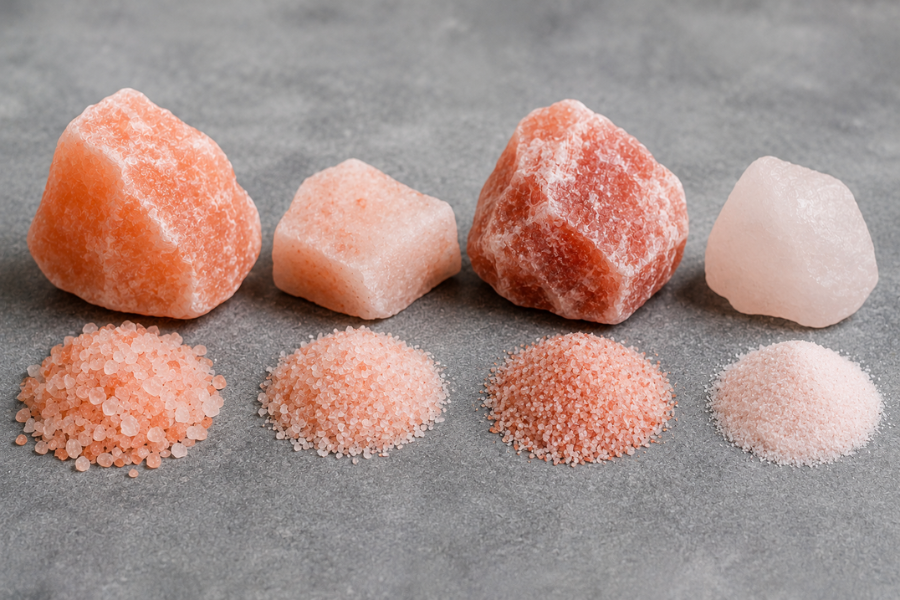
While all pink salts derive their color from minerals, the specific mineral profile varies by region. Himalayan pink salt typically contains trace amounts of iron, calcium, magnesium, and potassium, contributing to its soft pink shades. Other pink salts may contain higher concentrations of clay or iron compounds, resulting in darker or uneven coloration. These mineral differences affect not only appearance but also texture, solubility, and moisture behavior. For edible applications, consistency in mineral content is important for quality control. For wellness and decorative uses, visual uniformity may matter more. Buyers must evaluate mineral composition through lab analysis rather than relying on color alone. Accurate mineral profiling ensures the salt meets functional and regulatory requirements.
Processing and Handling Differences
Authentic Himalayan pink salt is usually processed with minimal intervention, involving washing, drying, crushing, and grading. This preserves its natural characteristics. Other pink salts may require additional processing to remove impurities or stabilize color. Processing differences affect cost, shelf life, and suitability for specific applications. Overprocessed salts may lose natural appeal, while underprocessed salts may pose quality risks. Buyers should assess processing standards carefully, especially when sourcing large volumes. Handling methods, including packaging, transport, and storage, further influence salt quality and consistency. Proper handling ensures mineral retention, prevents contamination, and maintains crystal integrity, directly impacting consumer perception and product performance across culinary, wellness, and livestock applications.
Authenticity, Certification, and Traceability
Authenticity is a major concern in the pink salt trade. Genuine Himalayan pink salt suppliers typically provide origin documentation, mine certifications, and quality testing reports. Traceability ensures that the salt can be linked back to a specific region and mining operation. Pink salts from other regions may lack standardized certification systems, making verification more difficult. For importers and distributors, documentation protects against mislabeling claims and regulatory penalties. Certifications also support trust with downstream buyers. Choosing suppliers with transparent traceability systems is essential for maintaining credibility in competitive markets. Strong documentation systems reduce sourcing risks and protect buyers from counterfeit supply issues.
Labeling and Legal Considerations
Labeling pink salt as Himalayan when it is not can lead to legal consequences in many markets. Regulatory authorities increasingly scrutinize origin claims, especially for food and wellness products. Accurate labeling protects businesses from fines, recalls, and reputational damage. Buyers must ensure that product descriptions align with verified origin. Understanding legal definitions and trade guidelines is essential when importing or distributing pink salt internationally. Clear labeling supports ethical trade practices and long-term business sustainability. Accurate labeling ensures compliance with food laws and protects brand credibility in regulated markets while strengthening consumer trust, supporting transparent sourcing, and reducing risks associated with misleading marketing claims.
Market Value and Pricing Differences
Himalayan pink salt generally commands higher prices due to its limited geographic source, mining costs, and strong global recognition. Other pink salts may be more affordable but lack the same premium positioning. Pricing differences reflect not only production costs but also perceived value. Buyers targeting premium markets often justify higher prices through origin storytelling and certification. Understanding pricing dynamics helps buyers select salt types that align with their market strategy and profit goals. Premium pricing is closely linked to verified origin, controlled supply, and established global recognition, as well as branding strength, packaging quality, regulatory compliance, and consumer trust in authenticity claims.
Applications Where Origin Truly Matters
In some applications, origin plays a critical role. Gourmet foods, wellness products, spa treatments, and branded retail items often rely on Himalayan origin as a key selling point. In other applications, such as industrial use or basic seasoning, color and mineral content may be less important. Buyers should match salt origin to application needs rather than assuming one type fits all purposes. Strategic selection improves customer satisfaction and operational efficiency. Certain premium segments rely heavily on origin authenticity to justify positioning and customer expectations. Origin verification also supports marketing credibility, regulatory compliance, brand storytelling, export acceptance, and long-term customer trust in competitive international markets.
How Buyers Can Identify Genuine Himalayan Pink Salt
Identifying authentic Himalayan pink salt requires more than visual inspection. Buyers should request origin certificates, lab reports, and supplier background information. Consistent color, crystal structure, and documentation are key indicators. Working with experienced exporters reduces risk. Understanding identification methods protects buyers from counterfeit or misrepresented products. Due diligence processes help buyers avoid misrepresentation and maintain long-term supply reliability. Buyers should also verify mine location, export records, and compliance with food safety standards. Independent laboratory testing confirms mineral composition and absence of contaminants. Traceability systems, supplier audits, and long-term sourcing relationships further enhance confidence. Reliable suppliers provide transparent documentation, stable pricing, and consistent quality, helping buyers protect brand reputation and meet regulatory and consumer expectations across global markets.
Conclusion
The simple answer is no. While Himalayan pink salt is one of the most recognized pink salts globally, not all pink salts come from the Himalayan region. Color alone does not determine origin. Understanding geological formation, mineral composition, processing, and certification allows buyers to distinguish authentic Himalayan salt from other pink varieties. For businesses, this knowledge supports accurate labeling, ethical sourcing, and informed purchasing decisions. Choosing the right pink salt ultimately depends on application, market positioning, and long-term business objectives. Informed sourcing decisions strengthen transparency, reduce risk, and support sustainable business growth across competitive global markets and evolving regulatory environments.