
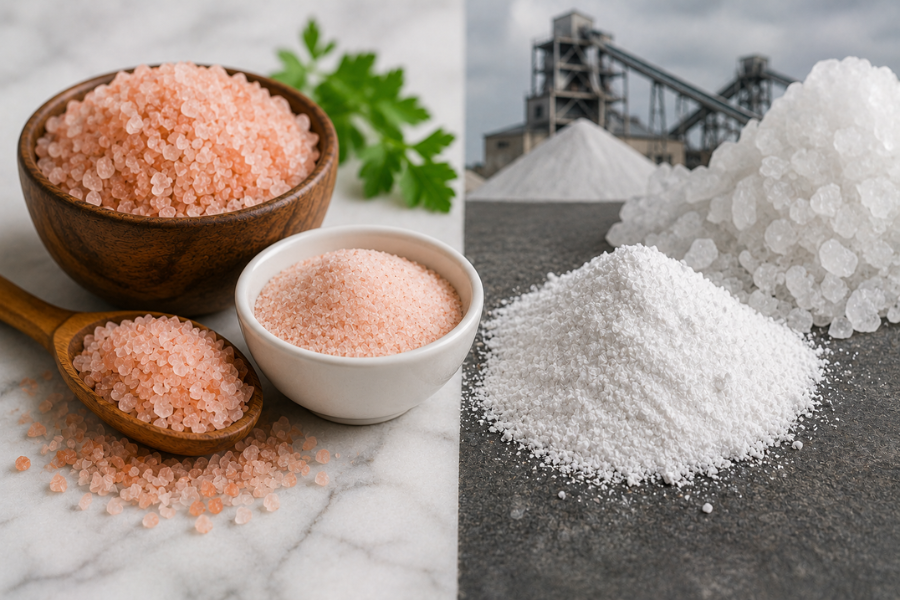
Salt is one of the most widely traded minerals in the world, yet not all salt is created for the same purpose. The distinction between edible salt and industrial salt is fundamental for buyers, importers, manufacturers, and distributors operating across food, agriculture, and industrial sectors. Confusing these categories can result in serious regulatory violations, quality issues, and reputational damage. Edible salt is produced and handled under strict food safety standards, while industrial salt is manufactured for non-food applications such as chemical processing, de-icing, textiles, and water treatment. Although both originate from similar natural sources, their processing methods, purity requirements, and intended uses differ significantly. Understanding these differences helps buyers select the right product, comply with international regulations, and protect end users. As global trade expands, regulators increasingly monitor salt classification, making accurate sourcing more important than ever. This guide explains how edible salt and industrial salt differ, why those differences matter, and how businesses can make informed decisions when sourcing salt for various applications. This distinction is increasingly critical as global regulators tighten controls on food safety and industrial material classification.
What Is Edible Salt?
Edible salt is salt that is specifically produced, processed, and certified for human consumption. It must meet strict food safety regulations established by local and international authorities. Edible salt is typically refined or minimally processed to remove impurities while ensuring it is safe to ingest. Depending on the type, edible salt may retain trace minerals, such as in Himalayan pink salt or sea salt, or it may be highly refined like table salt. What defines edible salt is not only its chemical composition but also the standards under which it is handled, packaged, and tested. Food-grade facilities, hygienic processing environments, and regular laboratory testing are mandatory for edible salt production. These controls ensure the absence of harmful contaminants such as heavy metals or insoluble matter. Edible salt is used across households, food manufacturing, restaurants, bakeries, and packaged food industries. For buyers, edible salt requires proper documentation, including food-grade certification and compliance with destination market regulations. Selecting edible salt ensures consumer safety and protects businesses from legal and reputational risks. Strict production oversight ensures edible salt meets consumption standards while supporting consistent performance across food manufacturing applications.
What Is Industrial Salt?
Industrial salt is salt intended exclusively for non-food applications. It is produced to meet functional requirements rather than food safety standards. Industrial salt is commonly used in chemical manufacturing, textile processing, water softening, de-icing, oil drilling, and other industrial processes. While it may originate from the same natural deposits as edible salt, industrial salt is not processed under hygienic food-grade conditions. It may contain higher levels of insoluble matter, trace impurities, or additives that are unsuitable for human consumption. Industrial salt production prioritizes efficiency, volume, and cost rather than purity for ingestion. As a result, industrial salt is typically less expensive and produced in larger quantities. For buyers, it is critical to understand that industrial salt is not interchangeable with edible salt. Using industrial salt in food applications can lead to severe regulatory penalties and health risks. Proper classification and labeling ensure that industrial salt is used safely and appropriately within its intended sectors. Industrial salt prioritizes functional efficiency and volume output rather than human consumption safety or sensory qualities.
Differences in Processing Standards
Processing standards represent one of the most important distinctions between edible salt and industrial salt. Edible salt is processed in controlled environments that follow food safety protocols, including sanitation, contamination prevention, and traceability systems. Equipment used for edible salt must be cleaned and maintained according to food-grade standards. Industrial salt processing, by contrast, does not require such controls. Facilities may prioritize throughput and mechanical efficiency rather than hygiene. The absence of food-grade controls makes industrial salt unsuitable for consumption. Processing standards directly affect purity, safety, and regulatory compliance. Buyers sourcing edible salt must verify that suppliers follow certified food processing practices. Understanding processing differences helps prevent cross-contamination risks and ensures compliance with international food laws. Processing controls directly influence contamination risk, traceability systems, and long-term compliance with international food regulations.
Purity Levels and Chemical Composition
Edible salt and industrial salt differ significantly in purity requirements. Edible salt must meet strict purity thresholds, often exceeding 97–99 percent sodium chloride, depending on regulations. It must also fall within permissible limits for heavy metals and contaminants. Industrial salt purity varies based on application requirements and may be significantly lower. Certain industrial uses tolerate impurities that would be unacceptable in food products. Chemical composition affects how salt behaves in different applications. For example, industrial salt used in chemical reactions may require specific impurity profiles, while edible salt must be neutral and safe. Buyers must match purity levels to intended use. Failure to do so can compromise product performance or violate safety standards. Purity specifications determine whether salt is legally acceptable for food use or restricted to industrial environments.
Food Safety and Regulatory Compliance
Regulatory compliance is a defining factor separating edible salt from industrial salt. Edible salt must comply with food safety regulations such as FDA standards, EU food laws, or equivalent authorities in importing countries. This includes labeling, traceability, and regular testing. Industrial salt is regulated under industrial or environmental guidelines rather than food laws. Attempting to repurpose industrial salt for edible use is illegal in many jurisdictions. Buyers must understand regulatory frameworks to avoid fines, recalls, or import bans. Compliance documentation protects businesses and ensures smooth customs clearance. Regulatory awareness is essential for long-term trade success. Clear regulatory separation protects public health and reduces liability exposure for importers and distributors.
Applications of Edible Salt
Edible salt is used in a wide range of food-related applications, from basic seasoning to large-scale food processing. It plays a crucial role in flavor enhancement, preservation, fermentation, and texture control. Different grain sizes and types are selected based on specific culinary or manufacturing needs. Edible salt also supports food safety by inhibiting microbial growth. Buyers in the food industry rely on consistent quality and performance. Selecting the right edible salt type ensures product integrity and consumer satisfaction. Proper sourcing supports compliance and brand trust. Reliable edible salt sourcing ensures product consistency, consumer trust, and adherence to global food industry standards.
Applications of Industrial Salt
Industrial salt serves functional roles in non-food sectors. It is used in chemical reactions, de-icing roads, treating water, and manufacturing textiles and detergents. Each application requires specific physical and chemical characteristics. Industrial salt may be coarse, untreated, or blended with additives. Buyers prioritize availability, cost efficiency, and performance. Industrial salt selection focuses on operational requirements rather than aesthetics or taste. Understanding application needs ensures efficiency and safety. Industrial salt supports infrastructure and manufacturing processes worldwide. Industrial applications rely on salt’s chemical behavior rather than taste, appearance, or nutritional considerations. Additionally, industrial salt is essential in pharmaceuticals, oil drilling, soap making, and chlorine production, highlighting its diverse industrial utility.
Packaging and Storage Differences
Packaging requirements differ substantially between edible and industrial salt. Edible salt must be packaged in food-safe materials that prevent contamination and moisture exposure. Industrial salt packaging focuses on durability and bulk handling. Storage conditions for edible salt require cleanliness and protection from foreign materials. Industrial salt storage may occur outdoors or in large silos. Buyers must implement appropriate storage practices to maintain quality and compliance. Packaging choices affect logistics, shelf life, and handling efficiency. Packaging choices significantly affect contamination prevention, handling efficiency, and storage stability across supply chains. Additionally, edible salt often requires labeling for regulatory compliance, while industrial salt emphasizes cost-effective bulk storage, moisture control, and ease of transport in high-volume operations.
Pricing and Market Positioning
Pricing reflects the level of processing, certification, and application. Edible salt commands higher prices due to food safety requirements and controlled production. Industrial salt is priced competitively to support large-scale operations. Market positioning differs accordingly. Edible salt may be branded and marketed, while industrial salt is treated as a commodity. Buyers must align pricing strategy with intended use and customer expectations. Understanding market dynamics supports profitability. Market pricing reflects certification requirements, processing complexity, and intended end-use sector expectations. Additionally, seasonal supply fluctuations, geographic origin, and brand reputation influence pricing. Buyers targeting premium markets often accept higher costs for verified authenticity and superior quality, while industrial buyers focus primarily on bulk affordability and consistent supply.
Risks of Misclassification
Misclassifying salt can lead to serious consequences. Using industrial salt in food products risks health hazards and legal action. Conversely, using edible salt in industrial applications may increase costs unnecessarily. Proper classification protects consumers and businesses. Buyers must ensure accurate documentation and supplier transparency. Risk management begins with understanding differences. Misclassification can trigger recalls, import bans, financial penalties, and long-term reputational damage. It can also disrupt supply chains, delay production schedules, and negatively impact contractual obligations. Regulatory authorities may impose stricter audits on suppliers with repeated errors. Thorough verification and clear labeling are critical to minimizing these risks and maintaining market credibility.
How Buyers Should Choose Between Edible and Industrial Salt
Choosing the right salt requires a clear understanding of application, regulatory requirements, and quality standards. Buyers should evaluate supplier certifications, testing reports, and processing methods. Strategic selection ensures safety, efficiency, and compliance. Long-term partnerships benefit from transparency and reliability. Making informed choices strengthens supply chains. Strategic sourcing decisions reduce operational risk while aligning salt specifications with application requirements. Buyers should also consider storage capabilities, transportation conditions, cost implications, and volume requirements. Understanding differences in mineral content, granule size, and moisture sensitivity helps prevent misapplication. Clear communication with suppliers further ensures the selected salt meets both operational and regulatory expectations effectively.
Conclusion
Edible salt and industrial salt serve entirely different purposes despite sharing a common origin. Understanding their differences is essential for safe, compliant, and efficient sourcing. Buyers who recognize these distinctions protect their businesses, customers, and reputations. Clear classification supports sustainable trade and long-term success. Accurate classification supports transparent trade practices and sustainable growth across food and industrial sectors. Buyers should carefully assess supplier certifications, testing reports, and processing methods to ensure correct use. Misclassification risks legal penalties, health hazards, and financial losses. Strategic sourcing, proper documentation, and ongoing supplier verification ensure reliable supply chains and strengthen trust between exporters and buyers in global markets.