
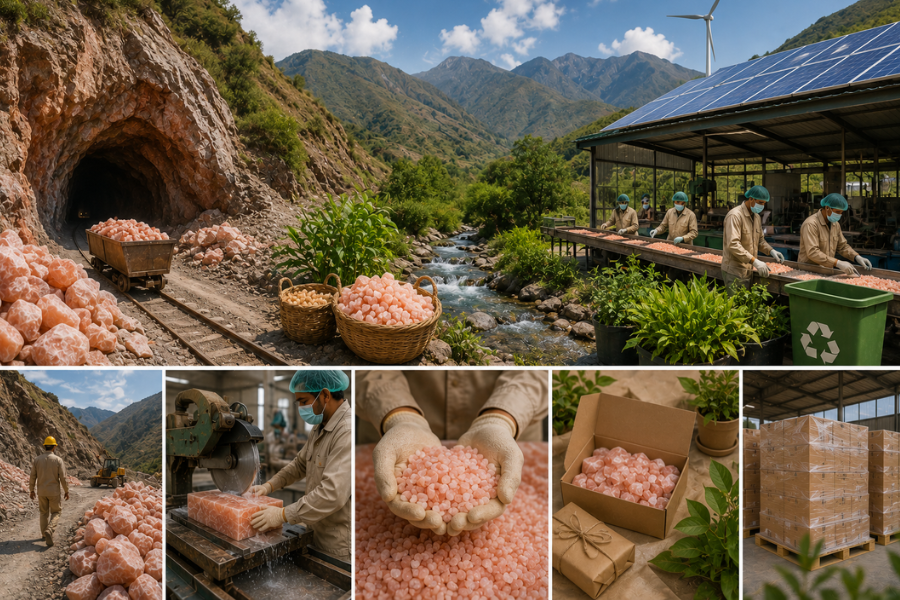
Sustainability has become one of the most important priorities for businesses and consumers across the world, influencing how natural products are sourced, manufactured, packaged, and delivered. Himalayan salt products are valued not only for their natural beauty and versatility but also for their connection to one of the world’s oldest natural mineral deposits. As international demand continues growing, responsible manufacturers understand that long-term success depends on protecting natural resources while producing premium products for global markets. Sustainable Himalayan salt production focuses on balancing environmental responsibility with product quality, efficient manufacturing, and customer satisfaction. From careful mining methods and responsible material selection to reducing production waste, improving energy efficiency, and choosing environmentally friendly packaging, sustainability influences every stage of the production process. Buyers, retailers, wholesalers, and private-label brands increasingly prefer suppliers who demonstrate responsible manufacturing practices because these efforts reflect positively on their own businesses. Understanding sustainable production helps customers appreciate the work behind authentic Himalayan salt products while encouraging responsible business practices that benefit future generations.
Why Sustainability Matters in the Himalayan Salt Industry
Natural resources are valuable, and preserving them requires thoughtful planning and responsible manufacturing practices. Although Himalayan salt deposits are extensive, manufacturers recognize the importance of managing extraction and production carefully to minimize unnecessary waste and protect the surrounding environment. Sustainability also responds to changing customer expectations, as today’s consumers increasingly support businesses that demonstrate environmental responsibility and ethical production. Companies selling Himalayan salt products often include sustainability as part of their brand identity because it builds trust and strengthens customer relationships. Responsible production not only protects natural resources but also improves manufacturing efficiency by reducing material loss and encouraging better use of available resources. Sustainable operations can also lower production costs over time by improving efficiency and reducing waste. As global markets become more environmentally conscious, businesses that invest in responsible Himalayan salt production are better positioned to meet customer expectations and remain competitive. Sustainability is no longer viewed as an optional business strategy but as an essential part of producing high-quality natural products for long-term international success.
Responsible Mining Protects Natural Salt Deposits
Sustainability begins at the source, making responsible mining one of the most important parts of Himalayan salt production. The famous Himalayan salt deposits found in Pakistan were formed millions of years ago, making them a unique natural resource that deserves careful management. Professional mining companies use controlled extraction methods designed to remove salt efficiently while preserving the structural stability of underground deposits. Instead of removing excessive material unnecessarily, miners carefully identify suitable salt blocks for different product categories. This selective approach helps reduce waste while protecting valuable mineral reserves for future production. Responsible mining also improves worker safety by maintaining stable underground conditions and following established operational procedures. Once extracted, raw salt is transported efficiently to manufacturing facilities where every usable piece is evaluated for production. Careful mining practices ensure manufacturers receive high-quality raw materials while minimizing unnecessary environmental impact. This responsible beginning supports the entire manufacturing process and helps businesses provide authentic Himalayan salt products that reflect both quality craftsmanship and respect for natural resources.
Maximizing Every Piece of Natural Himalayan Salt
One of the most effective sustainable practices in Himalayan salt manufacturing is making full use of the raw material throughout the production process. Instead of focusing only on large crystal blocks, manufacturers carefully sort salt into different grades so each piece can be used for an appropriate product. Large crystals often become Himalayan salt lamps, decorative carvings, cooking slabs, or architectural panels, while medium-sized pieces may be processed into candle holders, salt bricks, or wellness products. Smaller crystal fragments are commonly crushed into edible Himalayan pink salt, bath salts, seasoning products, or industrial applications. Even fine particles generated during production can often be incorporated into additional product categories rather than being discarded. This efficient material management significantly reduces production waste while increasing manufacturing productivity. By finding valuable uses for different crystal sizes, manufacturers maximize the natural resource without unnecessary disposal. This approach supports sustainability while also improving business efficiency, making it possible to create a diverse range of Himalayan salt products from carefully managed raw materials.
Energy-Efficient Manufacturing Practices
Modern Himalayan salt manufacturers increasingly recognize that sustainable production includes improving energy efficiency throughout manufacturing operations. Production facilities continuously evaluate their equipment, workflows, and operational procedures to reduce unnecessary energy consumption while maintaining consistent product quality. Modern cutting equipment, polishing systems, lighting, and production planning methods help manufacturers improve efficiency without compromising craftsmanship. Organizing production schedules effectively also reduces idle machinery and unnecessary energy use during manufacturing. Efficient transportation within production facilities minimizes equipment movement while improving workflow between processing stages. Many manufacturers also maintain equipment regularly because well-maintained machinery operates more efficiently and reduces unnecessary energy consumption. While Himalayan salt products continue to rely on skilled craftsmanship, combining traditional techniques with modern production technology allows manufacturers to improve sustainability without sacrificing quality. These improvements benefit both manufacturers and customers by supporting responsible production while maintaining reliable manufacturing standards. Energy-efficient operations demonstrate that sustainable manufacturing is not only environmentally responsible but also an effective strategy for long-term business success.
Eco-Friendly Packaging Solutions for Himalayan Salt Products
Sustainable production does not end when manufacturing is complete because packaging also plays an essential role in reducing environmental impact. As global buyers become more environmentally conscious, manufacturers are increasingly adopting eco-friendly packaging solutions that protect Himalayan salt products while minimizing unnecessary waste. Packaging materials are carefully selected to balance product safety with sustainability, especially for fragile products such as Himalayan salt lamps, candle holders, and decorative items. Recyclable cardboard cartons, paper-based protective materials, responsibly sourced wooden crates, and recyclable retail packaging are becoming more common across the industry. Food-grade Himalayan salt products are also being packaged in recyclable containers and lightweight pouches that reduce shipping weight without compromising product protection. Businesses choosing private-label manufacturing often request environmentally friendly packaging because it strengthens their own sustainability initiatives and appeals to eco-conscious customers. By reducing excess packaging and selecting recyclable materials whenever possible, manufacturers improve both environmental performance and customer perception. Sustainable packaging demonstrates that responsible production extends beyond manufacturing and continues until products safely reach customers around the world.
Water Conservation During Manufacturing
Water is an important natural resource, and responsible Himalayan salt manufacturers understand the value of using it efficiently throughout production. Although Himalayan salt manufacturing generally requires less water than many other industrial processes, manufacturers still implement conservation practices wherever possible. Cleaning raw salt, maintaining production equipment, and supporting certain finishing processes are carefully managed to avoid unnecessary water consumption. Production teams regularly monitor water usage and identify opportunities to improve efficiency without affecting product quality. Proper equipment maintenance also helps reduce water waste by preventing leaks and improving operational performance. Manufacturers often organize cleaning schedules strategically to maximize resource efficiency while maintaining high hygiene standards, particularly for food-grade Himalayan salt products. These conservation efforts contribute to broader sustainability goals while supporting responsible manufacturing practices. Customers increasingly appreciate businesses that actively manage natural resources because environmental responsibility has become an important factor in purchasing decisions. Water conservation may seem like a small part of production, but together with other sustainable initiatives, it helps create a more responsible and environmentally conscious Himalayan salt manufacturing process.
Reducing Waste Through Smart Production Planning
Effective production planning is one of the most practical ways manufacturers improve sustainability while maintaining efficiency. Himalayan salt manufacturers carefully organize production schedules so raw materials are processed with minimal waste and maximum productivity. Instead of producing products randomly, manufacturers group similar production runs together to reduce equipment adjustments, improve workflow, and make better use of available materials. During cutting and shaping, leftover crystal pieces are sorted according to size and redirected into suitable product categories rather than being discarded. Smaller fragments may become bath salts, edible salt, seasoning products, decorative fillers, or industrial materials depending on their characteristics. This organized production approach allows manufacturers to maximize every shipment of raw Himalayan salt while minimizing unnecessary disposal. Careful inventory management also reduces excess stock and helps manufacturers respond more efficiently to customer orders. By combining responsible planning with experienced craftsmanship, businesses can produce a wider variety of Himalayan salt products while protecting natural resources and supporting environmentally responsible manufacturing practices that benefit both customers and producers.
Sustainable Private Label Manufacturing
Private-label Himalayan salt products have become increasingly popular among businesses seeking exclusive branded collections, and sustainability now plays an important role in these partnerships. Many international retailers, wellness companies, food brands, and hospitality businesses prefer working with manufacturers that support environmentally responsible production practices because sustainability strengthens their own brand reputation. Manufacturers can assist customers by offering eco-friendly packaging options, efficient production methods, and responsible material selection throughout the customization process. Businesses can also reduce unnecessary waste by choosing practical packaging sizes, minimizing excess promotional materials, and selecting recyclable retail packaging. During product development, manufacturers often recommend solutions that improve both product presentation and environmental performance without increasing complexity. Sustainable private-label manufacturing demonstrates that customization and environmental responsibility can work together successfully. As consumer awareness continues growing, businesses that invest in environmentally responsible product development are more likely to build customer trust and long-term brand loyalty. Responsible manufacturing partnerships create value for both manufacturers and customers while supporting a healthier future for the Himalayan salt industry.
Sustainable Logistics and Global Distribution
Moving Himalayan salt products safely from manufacturing facilities to customers around the world requires careful logistics planning, and sustainability is becoming an increasingly important consideration during transportation. Manufacturers improve shipping efficiency by organizing products carefully inside cartons, pallets, and shipping containers to maximize available space and reduce unnecessary transportation requirements. Efficient container loading allows more products to be transported in each shipment, reducing the overall environmental impact associated with international logistics. Protective packaging is designed to minimize product damage during transportation because damaged goods often require replacement shipments that increase resource consumption. Manufacturers also coordinate closely with freight partners to improve shipping schedules and reduce unnecessary delays that may increase operational costs and resource use. By combining efficient packaging with organized export planning, businesses can support more sustainable international distribution while maintaining product quality. These improvements demonstrate that environmental responsibility continues throughout the supply chain and extends well beyond the manufacturing facility until Himalayan Salt Products successfully reaches wholesalers, retailers, distributors, and consumers worldwide.
Why Sustainability Matters to Global Buyers
Today’s international buyers evaluate suppliers using more than product quality and pricing because sustainability has become an increasingly important part of purchasing decisions. Retailers, wholesalers, distributors, and private-label brands recognize that responsible sourcing and environmentally conscious manufacturing strengthen their own reputation with customers. Businesses selling Himalayan salt products often promote sustainability as part of their overall brand message because consumers appreciate companies that actively reduce waste and protect natural resources. Working with manufacturers that follow responsible production practices also helps businesses meet corporate sustainability goals and respond to changing market expectations. Buyers frequently value suppliers who demonstrate efficient manufacturing, thoughtful packaging, responsible material management, and long-term environmental commitment. Sustainability also supports stronger business relationships because it reflects professionalism, planning, and forward-thinking management. As international markets continue emphasizing environmental responsibility, businesses that prioritize sustainable Himalayan salt production are likely to enjoy greater customer confidence and stronger competitive advantages. Responsible manufacturing has become an important factor in building successful long-term partnerships throughout the global Himalayan salt industry.
The Future of Sustainable Himalayan Salt Production
The future of Himalayan salt production will continue evolving as manufacturers adopt new technologies, improve production methods, and respond to growing demand for environmentally responsible products. Businesses are expected to invest further in energy-efficient equipment, smarter production planning, sustainable packaging materials, and advanced quality management systems that reduce waste while maintaining premium product quality. Customers will likely continue seeking products that combine authenticity with responsible manufacturing, encouraging businesses to strengthen sustainability throughout the entire supply chain. Private-label brands are also expected to request more environmentally friendly packaging and production solutions as sustainability becomes an increasingly important competitive advantage. Manufacturers that embrace innovation while respecting traditional craftsmanship will be well positioned for long-term success in international markets. The combination of natural Himalayan salt, responsible production, and continuous improvement creates opportunities for businesses to meet customer expectations while protecting valuable natural resources. Sustainable manufacturing is no longer simply a trend but an essential part of building a resilient and future-focused Himalayan salt industry.
Conclusion
Sustainable practices have become an essential part of modern Himalayan salt production because they help protect natural resources while supporting high-quality manufacturing for global markets. From responsible mining and efficient material selection to energy conservation, water management, waste reduction, eco-friendly packaging, and organized logistics, every stage contributes to creating a more environmentally responsible production process. These practices not only benefit the environment but also improve operational efficiency, strengthen customer confidence, and support long-term business growth. International buyers increasingly prefer suppliers who demonstrate responsible manufacturing because sustainability reflects professionalism, reliability, and commitment to continuous improvement. By investing in sustainable production methods, Himalayan salt manufacturers can preserve the natural beauty of this unique resource while delivering premium products to customers worldwide. As global demand for authentic natural products continues growing, businesses that combine quality craftsmanship with environmental responsibility will remain well positioned for future success. Sustainable Himalayan salt production represents a balanced approach that benefits manufacturers, business partners, consumers, and future generations while supporting the continued growth of the global Himalayan salt industry.