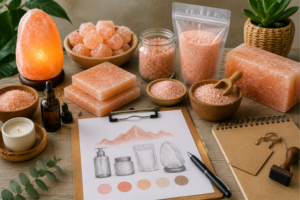
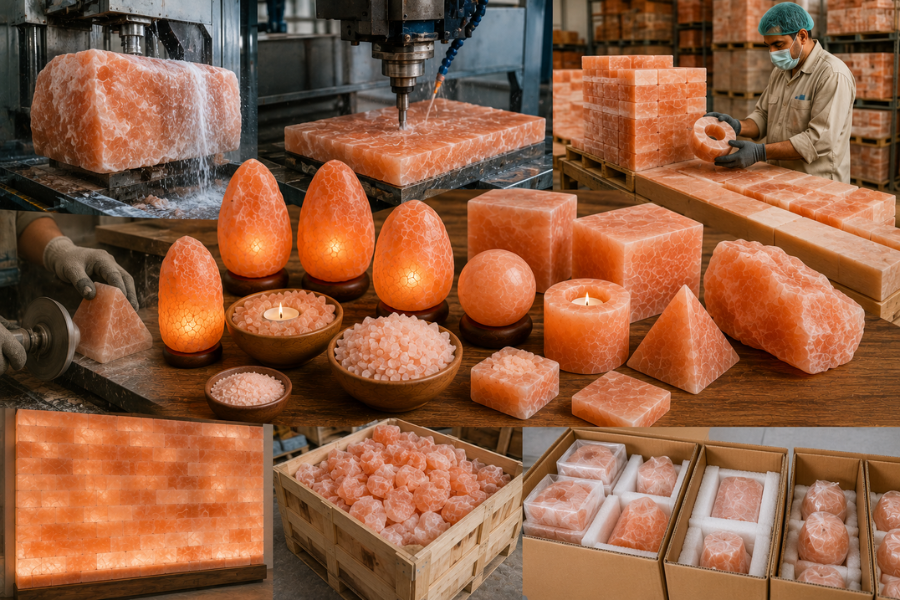
The global Himalayan salt industry has evolved far beyond supplying standard products to wholesalers and retailers. Today, businesses around the world increasingly request customized Himalayan salt products that reflect their own branding, customer preferences, and market requirements. Whether the order involves edible Himalayan Pink Salt, decorative salt lamps, architectural salt bricks, cooking slabs, bath salts, candle holders, animal salt licks, or completely unique product designs, modern manufacturers have developed production systems capable of meeting highly specific commercial requirements. Custom manufacturing allows importers, distributors, retailers, hotels, restaurants, wellness brands, and interior designers to purchase products tailored to their exact specifications instead of relying solely on standard catalog items. Every stage of production, from selecting raw salt blocks to precision cutting, finishing, packaging, branding, and export preparation, contributes to delivering products that satisfy both quality standards and customer expectations. Understanding how custom Himalayan salt manufacturing works helps businesses communicate more effectively with suppliers, reduce production delays, and build successful long-term partnerships while offering unique products that stand out within competitive international markets.
What Does Custom Himalayan Salt Manufacturing Mean?
Custom Himalayan salt manufacturing refers to the process of producing products according to a customer’s individual specifications instead of manufacturing only standard designs for general wholesale distribution. Rather than selecting products directly from existing inventories, commercial buyers work closely with manufacturers to determine dimensions, shapes, finishes, colors, packaging, branding, labeling, and production quantities before manufacturing begins. This approach allows businesses to develop exclusive product collections that align with their own marketing strategies and customer preferences. Hotels may request architectural salt panels sized specifically for reception walls, restaurants may order customized cooking slabs for professional kitchens, retailers may develop private-label bath salt collections, and gift companies may commission decorative candle holders with unique packaging. Manufacturers evaluate each project carefully to ensure production methods, material selection, and quality control procedures meet customer expectations while remaining technically practical. Custom manufacturing therefore combines professional engineering, skilled craftsmanship, and flexible production planning to create Himalayan salt products designed specifically for individual commercial applications.
Where Does the Custom Manufacturing Process Begin?
Every successful custom Himalayan salt project begins with a detailed consultation between the customer and the manufacturer. During this initial stage, businesses communicate their product objectives, target market, preferred specifications, packaging requirements, expected order quantities, and delivery schedules. Manufacturers often review technical drawings, photographs, reference samples, or conceptual sketches provided by the customer before recommending suitable production methods. Questions regarding dimensions, finishes, color preferences, surface textures, packaging materials, labeling requirements, and export destinations are usually addressed before manufacturing starts because careful planning helps avoid misunderstandings later in production. Experienced manufacturers also evaluate whether requested specifications are compatible with the natural characteristics of Himalayan salt, ensuring realistic expectations regarding color variation, crystal patterns, and material performance. This collaborative planning stage forms the foundation for efficient production because both parties establish clear manufacturing goals before raw materials are selected. Strong communication during the early stages significantly improves production efficiency while contributing to successful long-term commercial relationships between manufacturers and international buyers.
How Are Raw Himalayan Salt Blocks Selected?
The quality of every custom Himalayan salt product depends heavily upon selecting suitable raw material before production begins. Manufacturers source large Himalayan salt blocks directly from mining operations, where experienced workers carefully separate usable material according to size, structural integrity, natural color, and intended application. Different product categories require different types of raw salt. Large decorative lamps, architectural panels, sculptures, and furniture components often require substantial crystal blocks with consistent internal structure, while edible salt production begins with carefully selected food-grade material suitable for crushing and grading into different particle sizes. Manufacturers inspect raw blocks for natural cracks, mineral patterns, density, and color distribution before assigning them to specific production lines. Careful material selection helps maximize manufacturing efficiency while ensuring finished products meet customer specifications. Although every Himalayan salt block naturally displays unique geological characteristics, experienced manufacturers understand how to match different raw materials with different commercial applications, producing consistent quality while preserving the authentic beauty of genuine Himalayan salt.
How Does Precision Cutting Shape Custom Products?
After suitable raw materials have been selected, precision cutting transforms large Himalayan salt blocks into products that match customer specifications. Modern manufacturers use specialized cutting equipment capable of producing accurate dimensions for cooking slabs, architectural bricks, tiles, wall panels, decorative accessories, and numerous other commercial products. Precision cutting becomes especially important for large construction projects where hundreds or even thousands of salt bricks must fit together accurately during installation. Advanced machinery allows manufacturers to maintain dimensional consistency while minimizing unnecessary material waste throughout production. Decorative products may receive additional shaping after initial cutting, particularly when customers request customized sculptures, candle holders, serving bowls, or uniquely designed salt lamps. Skilled machine operators continuously monitor production accuracy while making adjustments according to product requirements. Although technology provides remarkable precision, manufacturers continue respecting the natural characteristics of Himalayan salt by preserving authentic crystal patterns and color variations that distinguish genuine natural products from artificially manufactured decorative materials.
Why Is Skilled Craftsmanship Still Important?
Although advanced machinery has greatly improved production efficiency, skilled craftsmanship remains an essential part of custom Himalayan salt manufacturing. Many decorative products require experienced artisans to complete detailed carving, edge finishing, surface refinement, polishing, drilling, assembly, and final inspection after machine processing has been completed. Handcrafted finishing is particularly valuable for decorative lamps, candle holders, sculptures, gift products, customized architectural features, and artistic commercial installations where visual presentation plays an important role. Skilled craftsmen understand how Himalayan salt behaves during shaping and finishing, allowing them to preserve natural crystal beauty while achieving the customer’s desired appearance. Their experience also helps identify potential material weaknesses before products advance to final production stages. This combination of modern manufacturing technology and traditional craftsmanship enables manufacturers to produce customized products that satisfy demanding commercial standards while maintaining the individuality and authenticity expected from natural Himalayan salt. The balance between precision engineering and human expertise represents one of the defining strengths of professional custom manufacturing.
How Does Quality Control Protect Custom Orders?
Quality control is one of the most important stages in custom Himalayan salt manufacturing because every order must meet the specifications agreed upon before production begins. Reputable manufacturers inspect products throughout multiple stages of the manufacturing process rather than waiting until production is complete. Raw materials are checked before cutting, dimensions are verified during shaping, and finished products undergo final inspections before packaging. Quality control teams examine size accuracy, surface finish, structural integrity, color consistency, packaging requirements, and overall workmanship according to the customer’s specifications. For edible Himalayan pink salt, additional inspections may include grain size verification, purity checks, and compliance with food-grade standards. Large architectural projects often require color sorting and dimensional consistency to ensure smooth installation after delivery. Consistent quality control helps reduce production errors, prevent costly shipment problems, and strengthen customer confidence in the manufacturer. Businesses importing Himalayan salt products should always discuss quality control procedures before placing orders because reliable inspection systems are essential for maintaining long-term commercial success and customer satisfaction.
What Surface Finishing Options Are Available for Custom Products?
One of the major advantages of custom manufacturing is the ability to select finishes that match specific market requirements and customer preferences. Himalayan salt products can be produced with natural, rough-cut, polished, honed, machine-finished, or handcrafted surfaces depending on the intended application. Decorative lamps often retain natural textures that highlight the authentic character of the salt crystal, while architectural bricks and wall panels may receive honed or machine-finished surfaces that simplify installation and create a more uniform appearance. Candle holders, sculptures, and gift products frequently incorporate polished details that enhance visual presentation, while cooking slabs require carefully finished surfaces suitable for culinary use. Manufacturers discuss these options during product development so customers can choose finishes that align with their target market and overall design objectives. Selecting the right finish is important because surface appearance influences customer perception, product functionality, and commercial appeal. Custom finishing allows businesses to create distinctive collections that differentiate their products within highly competitive international markets.
How Does Private Label and OEM Manufacturing Work?
Private label and OEM manufacturing have become some of the fastest-growing segments of the Himalayan salt industry because businesses increasingly want products sold under their own brand names. Instead of purchasing generic products that are available to every competitor, companies work with manufacturers to create customized collections featuring unique branding, packaging, labeling, and product specifications. Retailers may request private-label edible Himalayan pink salt packaged with branded labels, while wellness companies may develop customized bath salt collections using exclusive packaging designs. Hotels, gift companies, and interior décor brands often create personalized lamp collections, candle holders, or decorative accessories that reflect their brand identity. OEM manufacturing allows customers to contribute product ideas, dimensions, or completely original designs that manufacturers then produce according to agreed specifications. This approach helps businesses strengthen customer loyalty, improve brand recognition, and increase perceived value within their markets. Manufacturers capable of supporting OEM and private-label projects therefore provide significant commercial opportunities for wholesalers, distributors, retailers, and hospitality companies worldwide.
Why Is Custom Packaging Important?
Custom packaging plays a critical role in the success of Himalayan salt products because packaging influences both product protection and customer perception. Himalayan salt products often travel long distances during international export, making durable packaging essential for preventing damage during transportation and storage. Manufacturers offer a wide range of packaging solutions, including retail cartons, branded boxes, moisture-resistant bags, shrink wrapping, foam inserts, wooden crates, export pallets, and customized presentation packaging designed specifically for different products. Retail businesses frequently request attractive packaging that reflects premium branding, while wholesalers may prioritize protective bulk packaging that maximizes shipping efficiency. Private-label companies often use packaging as a powerful marketing tool because customers frequently form their first impressions based on visual presentation. Proper packaging also helps maintain product quality by reducing moisture exposure and minimizing breakage risks during handling. Businesses planning custom orders should discuss packaging requirements early in the manufacturing process because packaging specifications often influence production planning, shipping costs, and overall customer experience.
How Are Custom Products Prepared for Export?
Export preparation represents the final stage of custom Himalayan Salt manufacturing before products begin their journey to international customers. Once production and quality inspections are complete, manufacturers organize products according to shipping specifications, packaging requirements, and destination country regulations. Products are carefully packed, labeled, palletized, and prepared for container loading to minimize movement during transportation. Export teams also coordinate documentation such as commercial invoices, packing lists, certificates of origin, and any additional documents required by the importing country. Proper export preparation is particularly important for fragile decorative products, architectural materials, and large wholesale shipments where damage or documentation errors can create significant delays. Experienced manufacturers understand international logistics and container loading procedures, allowing them to maximize shipping efficiency while protecting product quality. Businesses importing Himalayan salt should always evaluate a supplier’s export experience because professional export preparation contributes significantly to timely deliveries, lower risk, and successful international trade relationships.
Why Does MOQ Matter in Custom Manufacturing?
Minimum Order Quantity, commonly referred to as MOQ, is an important factor in custom Himalayan salt manufacturing because producing customized products often requires dedicated materials, specialized tooling, custom packaging, and additional production planning. Manufacturers establish MOQs to ensure production remains economically practical while maintaining competitive pricing for customers. Smaller orders may involve higher costs because the same setup processes, design work, and production preparation are required regardless of order volume. Businesses requesting private-label packaging, custom dimensions, or exclusive designs should discuss MOQ requirements early in the negotiation process to avoid misunderstandings later. Larger production volumes often allow manufacturers to achieve better efficiency, resulting in more favorable pricing and improved consistency across the entire order. Understanding MOQ also helps importers plan inventory levels, marketing strategies, and long-term purchasing schedules more effectively. Businesses that anticipate ongoing demand often benefit from establishing long-term manufacturing partnerships that allow production planning to become increasingly efficient over time.
How Do You Choose the Right Manufacturing Partner?
Selecting the right manufacturing partner is one of the most important decisions a business will make when ordering custom Himalayan salt products. A reliable manufacturer should demonstrate experience, transparent communication, consistent quality control, export capability, customization expertise, and the ability to meet agreed production schedules. Businesses should review product samples, discuss previous projects, evaluate packaging standards, and ask detailed questions regarding production processes before placing large orders. Certifications, food safety compliance, private-label capabilities, and documentation support may also be important depending on the intended market. Strong communication is particularly valuable because custom manufacturing requires close collaboration throughout design, production, packaging, and shipping stages. Manufacturers who respond quickly, provide technical guidance, and communicate realistic timelines often contribute significantly to successful projects. Building long-term relationships with trustworthy suppliers creates additional advantages because manufacturers become familiar with customer expectations, reducing production errors while improving consistency and efficiency for future orders.
What Mistakes Should Buyers Avoid During Custom Manufacturing?
Several common mistakes can complicate custom Himalayan salt manufacturing if buyers fail to plan carefully before production begins. One frequent error is providing incomplete specifications regarding dimensions, finishes, packaging, or branding requirements. Another mistake involves assuming that natural Himalayan salt will display perfectly identical colors or crystal patterns across every product. Buyers sometimes focus exclusively on price while overlooking quality control, export experience, or supplier reliability, which can create costly problems later. Failing to request samples before large production runs is another avoidable mistake because samples help confirm expectations before full manufacturing begins. Some businesses also underestimate production timelines, especially when ordering customized packaging or private-label collections. Clear communication, realistic expectations, detailed specifications, and careful supplier evaluation significantly reduce these risks. Companies that approach custom manufacturing as a collaborative partnership rather than a simple transaction often achieve stronger results and more successful long-term business relationships.
What Is the Future of Custom Himalayan Salt Manufacturing?
The future of custom Himalayan salt manufacturing appears highly promising as businesses increasingly seek differentiated products that reflect their own brands and customer preferences. Private-label retail, luxury hospitality, customized wellness collections, architectural installations, and OEM product development continue driving demand for specialized manufacturing capabilities. Manufacturers are investing in improved cutting technology, advanced quality control systems, environmentally responsible packaging, and more efficient production methods to support these changing market expectations. Digital design tools also allow customers to collaborate more effectively with manufacturers during product development, simplifying customization and reducing production errors. International buyers increasingly value suppliers capable of flexibility, innovation, and consistent communication rather than simply offering standard products. As global competition grows, businesses that invest in unique product designs and customized branding will likely gain stronger market positions. Custom manufacturing therefore represents not only a production service but also a strategic advantage for companies seeking long-term growth within the expanding Himalayan salt industry.
Conclusion
Custom Himalayan salt manufacturing has transformed the industry by allowing businesses to move beyond standard wholesale products and create collections tailored specifically to their markets, customers, and branding strategies. From the initial consultation and raw material selection to precision cutting, skilled craftsmanship, quality control, private labeling, packaging, and export preparation, every stage of the manufacturing process contributes to delivering products that satisfy exact customer requirements. Whether producing edible Himalayan pink salt, decorative lamps, cooking slabs, architectural panels, candle holders, bath salts, or completely original OEM designs, experienced manufacturers combine technology, craftsmanship, and professional planning to achieve consistent results. Businesses that understand the manufacturing process are better prepared to communicate expectations, evaluate suppliers, avoid common mistakes, and develop successful long-term partnerships. As international demand for customized products continues expanding across hospitality, wellness, retail, architecture, and food industries, custom manufacturing will remain a vital opportunity for wholesalers, distributors, importers, and private-label brands. By partnering with experienced manufacturers and approaching customization strategically, businesses can create distinctive Himalayan salt products that strengthen brand identity, improve customer satisfaction, and support sustainable growth in competitive global markets.