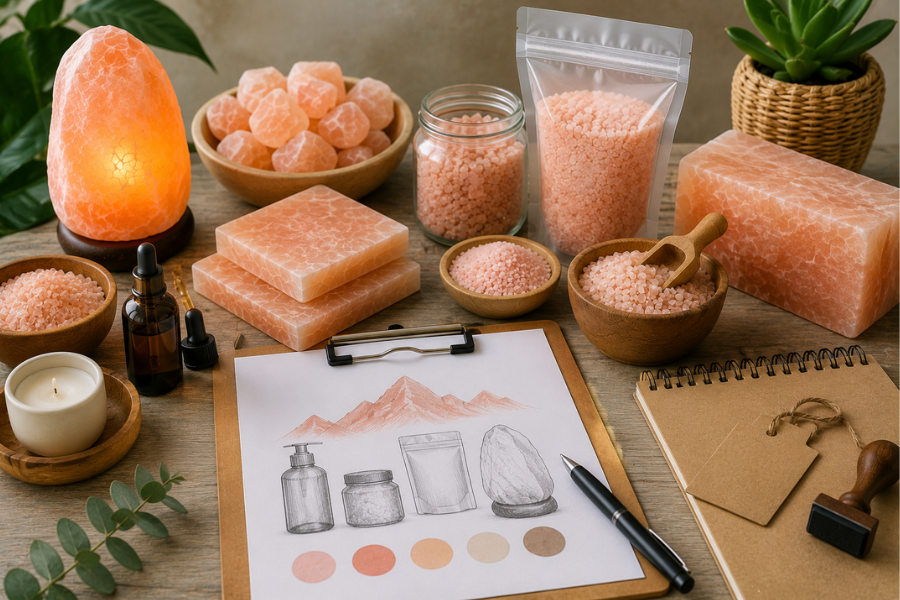
Building a successful Himalayan salt product brand involves much more than creating an attractive logo or selecting appealing packaging. A strong brand represents quality, consistency, reliability, and customer trust, all of which influence purchasing decisions in today’s competitive global marketplace. Whether your business focuses on edible Himalayan pink salt, decorative salt lamps, cooking slabs, bath salts, architectural salt bricks, animal salt licks, or a complete private-label product range, every decision contributes to how customers perceive your brand. Successful companies understand that branding begins long before products reach store shelves because it includes supplier selection, manufacturing quality, packaging, customer experience, communication, and long-term business strategy. Consumers increasingly look for brands that provide dependable products, transparent sourcing, professional presentation, and consistent service. Businesses that invest in these areas create stronger customer loyalty while differentiating themselves from competitors offering similar products. Understanding how successful Himalayan salt brands are built helps businesses establish lasting market recognition while supporting sustainable growth across domestic and international markets.
Start with a Clear Brand Identity
Every successful Himalayan Salt brand begins with a clearly defined identity that explains what the business represents and why customers should choose its products over competing alternatives. Brand identity includes the company’s mission, values, visual presentation, communication style, and overall customer experience rather than simply its name or logo. Businesses should determine whether they wish to position themselves as premium suppliers, wellness-focused brands, hospitality specialists, sustainable product providers, or comprehensive distributors serving multiple industries. A clearly defined identity creates consistency throughout packaging, marketing, product development, and customer communication. It also helps buyers understand what distinguishes the brand within an increasingly competitive marketplace. Reliable manufacturers often support private-label businesses by providing customized packaging and production capabilities that reinforce brand positioning. When every aspect of the business reflects a consistent identity, customers develop stronger confidence in the products they purchase. Establishing a well-defined brand identity provides the foundation upon which every future business decision can be built.
Choose the Right Himalayan Salt Products
Selecting the right product portfolio is one of the most important decisions when building a Himalayan Salt brand because product selection determines the customers the business will attract and the markets it can serve. Some companies focus primarily on edible Himalayan pink salt for food distributors and retailers, while others specialize in decorative salt lamps, architectural salt panels, cooking slabs, wellness products, bath salts, or animal salt licks. Businesses should evaluate customer demand, industry trends, available manufacturing capabilities, and long-term growth opportunities before deciding which products will become the core of their brand. Offering products that align with customer expectations helps strengthen market positioning while simplifying inventory planning and marketing efforts. Reliable manufacturers can often recommend product combinations that complement one another and create broader commercial opportunities. Choosing products strategically allows businesses to develop focused brand messaging while avoiding unnecessary complexity during the early stages of growth. A carefully selected product range creates a stronger foundation for long-term commercial success.
Work with a Reliable Manufacturing Partner
Behind every successful Himalayan salt brand is a dependable manufacturing partner capable of delivering consistent quality across every production cycle. Customers rarely separate the manufacturer from the brand because they judge the finished product according to the experience it provides. Businesses should therefore select manufacturers with proven production capabilities, organized quality control procedures, professional packaging standards, export experience, and strong communication practices. Reliable suppliers contribute significantly to brand reputation by producing consistent products that meet agreed specifications and arrive in excellent condition. Long-term manufacturing relationships also simplify future product development because suppliers become familiar with packaging preferences, customization requirements, and production expectations over time. Businesses that frequently change manufacturers may struggle to maintain consistent quality, which can weaken customer confidence. Choosing an experienced manufacturing partner provides stability while allowing companies to focus more effectively on branding, customer relationships, and business expansion. Consistency at the manufacturing level ultimately strengthens every other aspect of the brand.
Make Product Quality Your Biggest Competitive Advantage
Product quality is one of the strongest factors influencing whether customers purchase from a brand repeatedly or choose alternative suppliers in the future. Regardless of how attractive the packaging or marketing appears, customers ultimately evaluate Himalayan Salt products according to their quality, appearance, consistency, and overall value. Businesses should establish quality expectations from the beginning by working closely with manufacturers to define specifications, inspection procedures, packaging standards, and production consistency. Decorative products should demonstrate careful craftsmanship, edible Himalayan pink salt should meet agreed grading requirements, and customized products should consistently reflect the promised design standards. Reliable quality builds customer confidence because buyers know they can expect the same standard with every purchase. Strong quality also reduces product returns, customer complaints, and reputation-related challenges that may otherwise slow business growth. Brands recognized for dependable quality often generate positive customer recommendations, encouraging repeat purchases while strengthening long-term market credibility across domestic and international markets.
Invest in Professional Packaging and Visual Branding
Packaging is often the first physical interaction customers have with a Himalayan Salt brand, making it one of the most powerful tools for creating positive first impressions. Well-designed packaging communicates professionalism, quality, and attention to detail before customers even open the product. Businesses should develop packaging that reflects their brand identity through consistent colors, logos, typography, product information, and overall presentation. Beyond visual appeal, packaging must also protect products throughout storage and international transportation. Edible Himalayan pink salt requires moisture-resistant food-grade packaging, while decorative salt lamps, cooking slabs, and architectural bricks need durable export cartons with appropriate protective materials. Companies offering private-label collections should ensure packaging communicates a consistent message across every product category. Attractive packaging not only strengthens shelf presence but also helps customers recognize the brand quickly during repeat purchases. Investing in professional packaging demonstrates commitment to quality while increasing customer confidence and supporting stronger long-term brand recognition in competitive domestic and international markets.
Use Private Label Opportunities to Strengthen Your Brand
Private labeling has become one of the fastest-growing opportunities within the Himalayan salt industry because it allows businesses to create exclusive product collections under their own brand names. Instead of promoting another manufacturer’s identity, companies can develop packaging, labeling, and product presentations that reflect their own business values and marketing strategy. Private-label branding creates greater customer loyalty because buyers associate product quality directly with the retailer or distributor rather than the factory that manufactured the products. Businesses can customize product sizes, packaging styles, printed cartons, multilingual labels, gift sets, and promotional collections that meet the expectations of specific customer groups. Reliable manufacturers often provide flexible customization services that simplify the private-label process while maintaining consistent production quality. Developing exclusive product collections also reduces direct price competition because customers begin purchasing based on brand reputation instead of comparing identical products offered by multiple businesses. Private labeling therefore becomes an effective long-term strategy for strengthening brand identity while increasing customer retention and market recognition.
Focus on Building Customer Trust
Trust is one of the most valuable assets any Himalayan Salt brand can develop because customers who trust a business are far more likely to become repeat buyers and recommend its products to others. Building trust requires consistency in every interaction, from product quality and packaging to communication, customer service, and after-sales support. Businesses should provide accurate product information, realistic delivery expectations, transparent pricing, and responsive communication whenever customers have questions. Delivering exactly what has been promised strengthens credibility and reduces dissatisfaction. Brands should also ensure product descriptions, specifications, and marketing materials accurately represent the products being sold. Reliable manufacturing partners contribute significantly by maintaining consistent quality across every shipment, allowing businesses to meet customer expectations repeatedly. Trust develops gradually through positive experiences rather than advertising alone, making long-term consistency essential. Companies that prioritize honesty, reliability, and customer satisfaction establish stronger relationships that encourage repeat purchases while creating a positive reputation that supports sustainable business growth over time.
Develop a Strong Marketing Strategy
Even the highest-quality Himalayan salt products require effective marketing if customers are to discover and remember the brand. A successful marketing strategy should communicate not only what products are available but also why the brand deserves customer attention. Businesses should identify their target audience, understand customer needs, and create messaging that highlights product quality, authenticity, customization options, and reliable service. Educational content explaining the different uses of edible Himalayan pink salt, decorative products, cooking slabs, bath salts, and architectural materials can position the brand as a knowledgeable industry resource rather than simply another supplier. Consistent branding across websites, brochures, catalogs, trade exhibitions, and digital marketing channels strengthens recognition while creating a professional image. Marketing should remain informative rather than overly promotional because today’s buyers appreciate businesses that provide useful information alongside commercial offerings. A carefully planned marketing strategy supports customer acquisition while reinforcing the trust and credibility necessary for long-term brand development.
Build a Strong Digital Presence
Modern buyers often begin researching suppliers online, making a professional digital presence an essential component of every successful Himalayan Salt brand. A well-designed website should clearly present product categories, specifications, customization services, company information, certifications where applicable, and contact details while providing helpful educational resources for prospective customers. Businesses should regularly publish informative articles that answer common buyer questions, explain manufacturing processes, discuss packaging options, and provide guidance for international purchasing. Search engine optimization helps potential customers discover the brand when searching for Himalayan salt products or wholesale suppliers, while professional social media activity allows businesses to showcase new products, manufacturing capabilities, and completed commercial projects. Consistent digital branding across every platform reinforces recognition while demonstrating professionalism. Reliable manufacturers and exporters increasingly recognize that online visibility influences purchasing decisions just as much as traditional sales methods. A strong digital presence therefore becomes an important investment in long-term brand growth and customer engagement.
Make Sustainability Part of Your Brand Story
Sustainability has become increasingly important to businesses and consumers worldwide, making it a valuable element of modern Himalayan salt branding. Companies can strengthen their reputation by working with manufacturers that use responsible production methods, minimize unnecessary waste, and provide environmentally conscious packaging solutions whenever practical. Buyers appreciate brands that carefully consider packaging efficiency, transportation planning, and long-term product durability because these efforts demonstrate commitment to responsible business practices. Sustainability should be communicated honestly rather than through exaggerated claims, allowing customers to understand the genuine steps the company takes to improve operational responsibility. Businesses may also emphasize durable products designed for long-term use, efficient packaging that reduces shipping damage, or responsible sourcing practices that support stable supply chains. Incorporating sustainability into the brand story reflects changing customer expectations while helping companies differentiate themselves within increasingly competitive international markets. Responsible business practices strengthen customer confidence and contribute to a positive long-term brand reputation.
Continue Innovating as the Market Evolves
The Himalayan salt industry continues to evolve as customer preferences, interior design trends, wellness markets, retail expectations, and international trade opportunities change over time. Businesses seeking long-term success should remain open to innovation by introducing new product designs, improved packaging, customized collections, and expanded private-label offerings that reflect emerging customer demand. Innovation does not always require entirely new products; it may involve improving existing collections through better packaging, enhanced branding, refined product finishes, or more efficient manufacturing processes. Regular communication with customers, distributors, retailers, and manufacturing partners helps businesses identify changing market preferences before competitors respond. Reliable manufacturers often contribute valuable ideas based on their production experience and interactions with international buyers across different industries. Companies that continue adapting while maintaining consistent quality remain competitive even as market conditions evolve. Innovation therefore becomes an ongoing process that strengthens customer interest, expands commercial opportunities, and supports sustainable long-term brand development.
Think Beyond Individual Sales and Build Long-Term Relationships
The strongest Himalayan Salt brands focus on developing lasting customer relationships rather than maximizing short-term sales. Every positive customer experience contributes to repeat business, referrals, and long-term commercial stability. Businesses should maintain communication after delivery, respond promptly to customer inquiries, seek feedback, and continuously improve products and services based on customer experiences. Reliable manufacturers also play an important role by supporting consistent production quality and helping businesses maintain dependable supply throughout future orders. Strong relationships extend beyond customers to include suppliers, distributors, logistics providers, and retail partners, creating a dependable business network capable of supporting long-term growth. Companies that prioritize relationship building often experience greater customer loyalty because trust develops through repeated positive interactions over time. Rather than competing solely on price, these businesses differentiate themselves through professionalism, consistency, and service. Building meaningful long-term partnerships ultimately creates one of the strongest competitive advantages available within the global Himalayan salt industry.
Conclusion
Building a successful Himalayan salt product brand requires careful planning, consistent quality, and a long-term commitment to customer satisfaction rather than relying solely on attractive packaging or competitive pricing. Strong brands begin with a clearly defined identity, carefully selected product ranges, dependable manufacturing partners, and professional packaging that reflects consistent values across every customer interaction. Businesses that invest in private-label development, transparent communication, effective marketing, digital visibility, sustainability, innovation, and lasting customer relationships create brands that stand apart in increasingly competitive global markets. Every shipment, every product, and every customer experience contributes to the overall reputation of the business. Reliable manufacturers provide the production consistency necessary to support these branding efforts, allowing companies to focus confidently on expansion and customer engagement. Whether offering edible Himalayan pink salt, decorative salt lamps, cooking slabs, bath salts, architectural bricks, animal salt licks, or customized product collections, businesses that prioritize quality and trust will build stronger customer loyalty over time. As worldwide demand for Himalayan salt products continues growing, companies with well-developed brands will be better positioned to attract new customers, strengthen existing partnerships, and achieve sustainable long-term success in international markets.