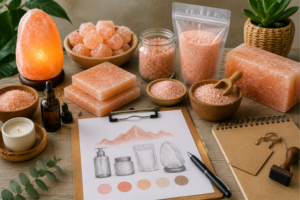
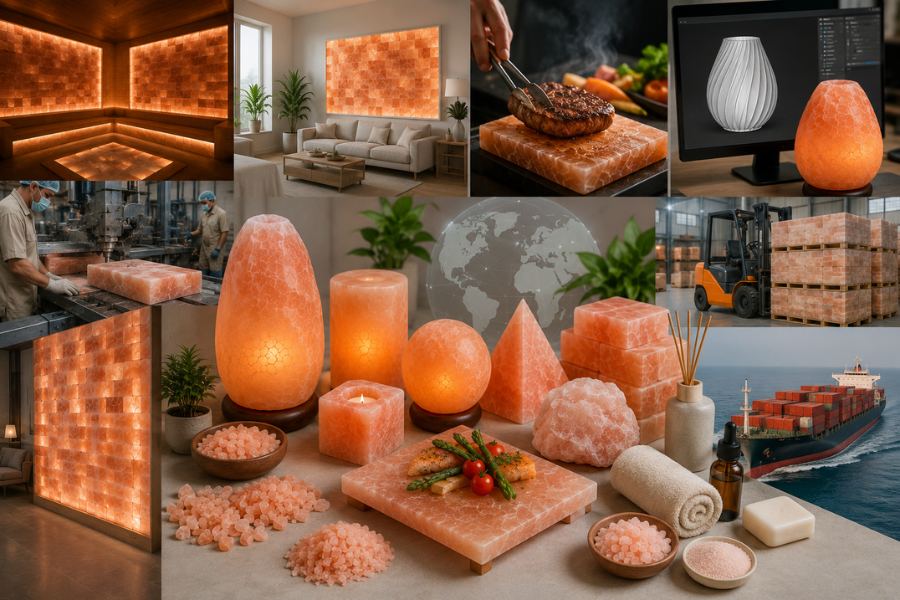
The Himalayan salt industry continues to evolve as international markets become more competitive and customer expectations continue to change. What was once a niche market focused mainly on edible Himalayan pink salt has expanded into a diverse global industry serving hospitality businesses, retailers, wellness brands, architects, and interior designers; restaurants; livestock suppliers; and private-label companies. Today, manufacturers produce hundreds of Himalayan salt products ranging from food-grade salt and cooking slabs to decorative lamps, architectural bricks, bath salts, candle holders, animal salt licks, and customized commercial solutions. As businesses prepare for 2026, understanding emerging industry trends becomes increasingly important for wholesalers, importers, distributors, and retailers seeking long-term growth. Companies that recognize changing customer preferences, improvements in manufacturing technology, evolving packaging expectations, and growing demand for customized products will be better positioned to remain competitive within international markets. This guide explores the most significant Himalayan salt industry trends expected to influence manufacturers, exporters, buyers, and commercial businesses throughout 2026 while helping companies prepare for future opportunities in the global marketplace.
Why Is Global Demand for Himalayan Salt Continuing to Grow?
One of the strongest trends expected to continue throughout 2026 is the steady expansion of global demand across multiple product categories. International buyers are no longer interested only in edible Himalayan pink salt. Instead, businesses are purchasing complete product ranges that include decorative lamps, architectural salt bricks, cooking slabs, bath salts, candle holders, animal salt licks, serving accessories, and customized gift collections. Hotels continue investing in premium interior design, restaurants seek unique serving solutions, wellness businesses expand their product offerings, and retailers develop broader Himalayan salt collections that appeal to different customer segments. This diversification creates opportunities for manufacturers capable of supplying multiple product categories while maintaining consistent quality and reliable export services. Rather than depending on a single market, exporters increasingly serve customers across hospitality, construction, agriculture, food service, retail, and wellness industries simultaneously. As commercial awareness continues increasing worldwide, diversified product portfolios are expected to remain one of the industry’s strongest drivers throughout 2026.
Private Label Manufacturing Will Continue Expanding
Private-label manufacturing has become one of the fastest-growing areas of the Himalayan salt industry, and this trend is expected to strengthen further during 2026. Retailers, supermarkets, wellness brands, gourmet food companies, hospitality businesses, and online sellers increasingly want products carrying their own company names instead of generic supplier branding. Manufacturers now provide customized packaging, branded labels, personalized gift boxes, engraved wooden bases, custom cartons, and exclusive product designs that allow businesses to differentiate themselves from competitors. Edible Himalayan pink salt, bath salts, decorative lamps, candle holders, cooking slabs, and gift collections can all be manufactured under private-label agreements tailored to individual business requirements. This approach allows companies to strengthen customer loyalty while building recognizable brands that compete successfully in both local and international markets. Manufacturers investing in flexible production systems and professional design support are expected to attract growing numbers of commercial buyers seeking customized solutions rather than standard wholesale products available to every distributor.
Sustainability Will Become an Even Greater Priority
Environmental responsibility is becoming an increasingly important consideration throughout the Himalayan salt industry, influencing both manufacturers and international buyers. During 2026, businesses are expected to place greater emphasis on responsible material utilization, efficient manufacturing practices, environmentally conscious packaging, and reduced production waste. Many manufacturers are already exploring recyclable packaging materials, stronger carton designs that minimize unnecessary material use, and improved production methods that maximize the utilization of natural Himalayan salt blocks. Even smaller crystal fragments generated during cutting can often be repurposed into crushed salt, bath salts, decorative aggregates, or industrial applications instead of being discarded. Buyers also appreciate suppliers that optimize container loading, reduce packaging waste, and implement responsible manufacturing procedures without compromising product quality. As sustainability becomes an increasingly important purchasing factor across international markets, manufacturers capable of demonstrating environmentally responsible practices will strengthen their competitive position while building greater trust with wholesale customers and commercial partners worldwide.
Technology Is Improving Manufacturing Efficiency
Modern manufacturing technology continues transforming the Himalayan salt industry by improving production accuracy, efficiency, and consistency across numerous product categories. During 2026, manufacturers are expected to invest further in precision cutting equipment, computer-assisted production planning, advanced polishing systems, improved quality inspection methods, and more efficient packaging operations. Precision machinery enables accurate production of architectural bricks, cooking slabs, decorative panels, and customized commercial products while reducing material waste throughout manufacturing. Digital production management systems also simplify order tracking, inventory planning, and production scheduling, helping manufacturers respond more effectively to international customer requirements. Despite these technological improvements, skilled craftsmanship remains essential for many decorative products where natural finishing and artistic detailing contribute significantly to overall product quality. The combination of modern machinery and experienced artisans allows manufacturers to maintain high production standards while preserving the natural individuality that distinguishes genuine Himalayan salt from synthetic decorative materials.
E-Commerce Continues Expanding the Global Himalayan Salt Market
Online commerce is expected to remain one of the most influential trends shaping the Himalayan salt industry throughout 2026. Businesses of every size now use digital marketplaces, wholesale platforms, company websites, and social media channels to reach customers across international markets without relying exclusively on traditional distribution networks. Retailers increasingly offer complete Himalayan salt collections online, including edible salt, decorative lamps, bath salts, cooking slabs, candle holders, architectural bricks, serving accessories, and customized gift products. At the same time, B2B buyers are using digital channels to compare manufacturers, evaluate certifications, request quotations, and communicate directly with suppliers before placing large wholesale orders. This growing digital presence encourages manufacturers to provide detailed product specifications, professional photography, transparent manufacturing information, and responsive customer support. Companies investing in well-organized websites, informative product pages, and digital marketing strategies are expected to strengthen their competitive position while attracting both wholesale distributors and retail customers. As online purchasing continues to become a standard business practice, digital visibility will remain a critical factor for Himalayan salt manufacturers seeking long-term international growth.
Luxury Interior Design Will Drive Decorative Salt Product Demand
Interior design continues influencing purchasing decisions across hospitality, commercial construction, and residential markets, making decorative Himalayan salt products one of the industry’s fastest-growing categories. Throughout 2026, architects and interior designers are expected to specify Himalayan salt bricks, illuminated wall panels, decorative lamps, sculptures, candle holders, and customized architectural features in an increasing number of luxury projects. Hotels continue seeking memorable guest experiences through natural design elements, while restaurants incorporate Himalayan salt into premium dining environments that combine functionality with attractive décor. Wellness centers, spas, yoga studios, and high-end residential developments also continue embracing natural materials that introduce warmth and individuality into carefully planned interiors. Because Himalayan salt complements wood, marble, glass, concrete, and modern lighting systems, designers appreciate its flexibility across many architectural styles. Manufacturers capable of producing custom dimensions, precision-cut panels, and project-specific architectural products are expected to benefit significantly from this growing trend. Decorative Himalayan salt will therefore remain an important component of luxury interior design projects during 2026 and beyond.
Premium Packaging Will Become a Stronger Competitive Advantage
Packaging has evolved far beyond its traditional protective function and now plays an important role in marketing, branding, and customer perception. During 2026, more businesses are expected to invest in premium packaging that reflects product quality while strengthening brand recognition. Retail-ready cartons, eco-friendly gift boxes, moisture-resistant packaging, customized labels, wooden presentation cases, and professionally designed product inserts all contribute to a stronger customer experience. Private-label companies particularly benefit from customized packaging because it helps distinguish their products from competing brands available in the marketplace. Manufacturers capable of offering flexible packaging solutions allow customers to develop unique product collections that align with their marketing strategies and retail positioning. At the same time, wholesale buyers continue requesting durable export packaging that protects products throughout international transportation while minimizing shipping damage. Businesses that successfully combine attractive retail presentation with reliable export protection are expected to strengthen customer satisfaction while improving long-term commercial relationships across global markets.
OEM and Customized Manufacturing Will Continue Growing
One of the most important business trends expected throughout 2026 is the continued expansion of OEM and customized Himalayan salt manufacturing. Businesses increasingly prefer exclusive product designs rather than purchasing identical products that are available to every competitor. Manufacturers are responding by offering customized dimensions, exclusive product designs, personalized packaging, engraved branding, and completely original commercial solutions tailored to specific industries. Hotels request customized architectural installations, restaurants develop branded serving collections, retailers create exclusive decorative product ranges, and wellness companies introduce private-label bath salt products designed specifically for their target markets. This growing emphasis on customization allows businesses to differentiate themselves while creating stronger brand identities and improving customer loyalty. Manufacturers investing in flexible production capabilities, product development expertise, and efficient communication systems are expected to capture a larger share of international wholesale business. Customized manufacturing will therefore continue representing one of the industry’s strongest competitive advantages throughout the coming years.
Export Markets Will Continue Diversifying
International demand for Himalayan salt products is becoming increasingly diversified as new geographic markets continue emerging alongside traditional importing countries. While established markets remain important, manufacturers are also receiving growing inquiries from developing economies where hospitality, wellness, retail, and premium food industries continue expanding. This broader customer base reduces dependence on individual markets while creating additional opportunities for exporters capable of serving different commercial sectors simultaneously. Businesses now purchase Himalayan salt products for supermarkets, luxury hotels, restaurants, architectural developments, agricultural applications, home décor retailers, and wellness centers, demonstrating the industry’s increasing diversity. Manufacturers that understand regional market preferences, packaging requirements, documentation standards, and international shipping procedures are better positioned to serve this expanding customer base efficiently. Diversification also encourages manufacturers to broaden their product portfolios rather than focusing on only one category, creating stronger resilience against changing market conditions while supporting long-term export growth.
Quality Assurance and International Certifications Will Remain Essential
As international trade continues expanding, buyers are placing greater emphasis on product quality, manufacturing consistency, and supplier credibility before making purchasing decisions. Throughout 2026, businesses are expected to request more detailed information regarding quality control procedures, food safety standards, manufacturing processes, and export documentation. Importers increasingly evaluate suppliers based not only on competitive pricing but also on their ability to provide reliable production, transparent communication, and consistent product quality across repeated orders. Food-grade Himalayan Pink Salt may require compliance with recognized food safety standards, while commercial buyers often appreciate suppliers capable of providing certifications, inspection reports, and detailed product specifications when required. Reliable quality assurance strengthens customer confidence while reducing disputes related to manufacturing consistency or shipment quality. Manufacturers investing in professional inspection systems and documented production procedures will continue building stronger long-term relationships with international distributors, wholesalers, retailers, and commercial buyers.
Artificial Intelligence and Digital Marketing Are Changing Buyer Behavior
Digital technology and artificial intelligence are significantly influencing how businesses research suppliers, compare products, and make purchasing decisions. During 2026, more buyers are expected to rely on AI-powered search tools, detailed educational content, product comparison articles, videos, and manufacturer websites before contacting suppliers directly. Companies that publish informative blogs, detailed product guides, frequently asked questions, technical specifications, and high-quality visual content improve their visibility while establishing credibility within competitive international markets. Rather than focusing exclusively on traditional advertising, manufacturers increasingly invest in content that answers customer questions while demonstrating expertise across different Himalayan salt product categories. Businesses that educate buyers through valuable information often develop stronger trust and generate higher-quality inquiries from serious commercial customers. As AI-assisted search continues growing, manufacturers with comprehensive, informative, and well-structured websites will gain important competitive advantages while improving their digital presence across global markets.
The Future of the Himalayan Salt Industry Looks Promising
Looking beyond 2026, the Himalayan salt industry is expected to continue expanding as businesses seek natural products, customized manufacturing, premium interior materials, and diversified product collections. Manufacturers that embrace innovation while preserving the authenticity of genuine Himalayan salt will remain well-positioned for sustainable long-term growth. Continued investment in precision manufacturing, environmentally responsible production, flexible customization, improved packaging, digital marketing, and export capabilities will allow suppliers to meet evolving customer expectations more effectively. Hospitality, wellness, architecture, retail, food service, and agricultural industries all present significant opportunities for future expansion, creating a broad commercial foundation that supports continued international demand. Companies willing to adapt to changing market trends while maintaining consistent quality and excellent customer service are likely to strengthen their market positions over the coming years. The industry’s future will therefore be shaped by businesses that successfully combine traditional craftsmanship with modern technology, innovation, and customer-focused manufacturing solutions.
Conclusion
The Himalayan salt industry is entering 2026 with strong momentum and a wide range of opportunities for manufacturers, exporters, wholesalers, distributors, and retailers around the world. Growing international demand, expanding product diversity, private-label manufacturing, sustainable production practices, technological improvements, premium packaging, customized manufacturing, and digital transformation are all contributing to a more competitive and innovative marketplace. Businesses are no longer competing solely on price but increasingly on product quality, customization, branding, customer service, and manufacturing expertise. Companies that understand these evolving trends will be better equipped to respond to changing customer expectations while building stronger long-term relationships with buyers across multiple industries. Whether supplying edible Himalayan pink salt, decorative lamps, architectural products, cooking slabs, bath salts, animal salt licks, or customized commercial solutions, manufacturers who invest in innovation, quality, and transparency will continue creating value for customers worldwide. By staying informed about industry developments and adapting to emerging opportunities, businesses can strengthen their competitive position and achieve sustainable growth within the global Himalayan salt market throughout 2026 and the years that follow.