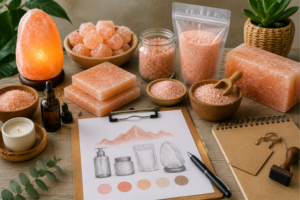
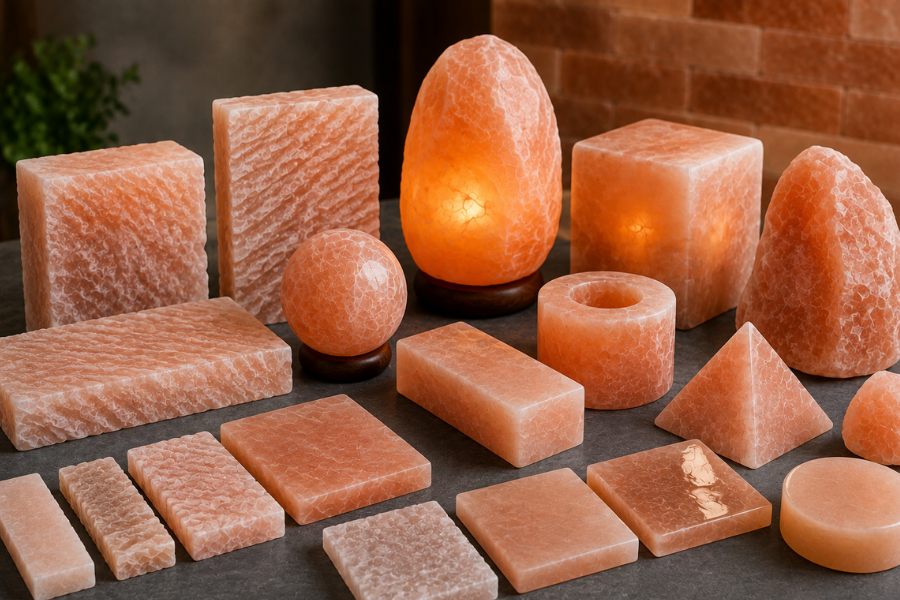
Himalayan salt products are valued not only for their natural pink color but also for the wide variety of finishes that manufacturers can create to suit different industries and customer preferences. Whether producing edible Himalayan Pink Salt packaging, decorative salt lamps, architectural salt bricks, candle holders, cooking slabs, bath salt accessories, or custom gift products, the finish applied to the final product significantly influences its appearance, functionality, and commercial appeal. Interior designers may prefer smooth, precision-finished salt bricks for luxury projects, while gift retailers often appreciate the rustic beauty of naturally shaped salt lamps. Restaurants frequently choose polished cooking slabs for elegant food presentation, whereas wellness centers may prefer textured products that emphasize their natural origin. Understanding the different finishes available allows importers, wholesalers, retailers, architects, and hospitality businesses to select products that best match their market requirements. This guide explains the most common Himalayan salt finishes and how each one serves different commercial applications.
Why Product Finish Is an Important Consideration
Many buyers focus on product size, color, or price when selecting Himalayan salt products, but the finish is equally important because it directly affects both appearance and customer perception. A carefully finished product creates a different impression than a rough-cut item, even when both are made from the same natural Himalayan salt crystal. The finish also influences how products fit within different industries. Luxury hotels often prefer smooth architectural salt panels with consistent surfaces, while rustic home décor collections may intentionally highlight natural textures and irregular edges. In retail environments, product finish contributes to visual appeal and helps businesses position items within different price categories. Manufacturers invest considerable time refining surfaces, polishing edges, and maintaining consistent production standards because finish quality reflects overall craftsmanship. Selecting the right finish therefore helps businesses align their products with customer expectations while creating stronger commercial value across international markets.
Natural Finish Preserves the Original Appearance
Natural-finished Himalayan salt products remain among the most popular options because they preserve the authentic appearance of the original salt crystal. Manufacturers perform only minimal shaping while maintaining the natural contours, textures, and color variations created by geological processes over millions of years. This finish is especially common for natural rock salt lamps, decorative carvings, candle holders, and ornamental display pieces where customers appreciate organic beauty rather than perfect symmetry. Every product retains its own unique character, making each item slightly different from the next. Retailers often promote natural-finished products because customers enjoy owning decorative pieces that cannot be exactly duplicated. Businesses serving gift shops, home décor stores, and specialty retailers frequently include natural-finished collections because they emphasize authenticity and craftsmanship. The natural finish also reduces unnecessary material removal during production, helping manufacturers preserve more of the original Himalayan salt block.
Smooth Machine-Finished Products Offer Precision
Machine-finished Himalayan Salt products are manufactured using precision cutting and finishing equipment that creates smooth surfaces, accurate dimensions, and consistent edges. This finish is commonly selected for architectural salt bricks, wall panels, cooking slabs, serving plates, decorative tiles, and commercial construction materials where dimensional accuracy is essential. Machine finishing allows manufacturers to produce large quantities of products with highly consistent specifications, making installation easier for architects, contractors, and designers working on commercial projects. Smooth surfaces also contribute to a clean, contemporary appearance that complements modern interior design styles. Businesses supplying luxury hotels, wellness centers, restaurants, and architectural firms often prioritize machine-finished products because consistent dimensions simplify installation and improve the final visual result. Precision finishing demonstrates advanced manufacturing capabilities while supporting professional commercial applications that require dependable product consistency.
Polished Finishes Create an Elegant Appearance
Polished Himalayan salt products undergo additional finishing processes that enhance surface smoothness while highlighting the natural beauty of the salt crystal. Although the material remains completely natural, polishing creates a refined appearance that reflects light more evenly and emphasizes the attractive color variations within the salt. This finish is commonly used for candle holders, decorative bowls, serving plates, gift items, sculptures, and certain premium home décor products. Polished surfaces often appeal to customers seeking elegant decorative accessories suitable for luxury interiors or upscale retail collections. Manufacturers carefully polish products without altering their essential natural characteristics, preserving the unique mineral patterns while creating a sophisticated finished appearance. Businesses serving premium gift markets, interior decoration retailers, and luxury hospitality projects frequently choose polished products because they combine natural authenticity with high-quality craftsmanship.
Rough-Cut Finishes Highlight Natural Character
Rough-cut Himalayan salt products are intentionally left with visible tool marks, uneven textures, and naturally irregular surfaces that emphasize the original character of the salt crystal. Rather than creating perfectly smooth edges, manufacturers preserve much of the stone’s natural appearance while removing only the material necessary to achieve the desired shape. This finish is particularly popular for decorative salt lamps, large salt rocks, garden décor, natural sculptures, and rustic interior design features where authenticity is an important part of the overall design concept. Many customers appreciate the uniqueness of rough-cut products because every piece displays slightly different textures, mineral patterns, and natural color variations. Businesses serving home décor retailers, rustic furniture stores, wellness centers, and specialty gift shops frequently include rough-cut collections because they complement natural wood, stone, and other organic interior materials. This finish creates products that celebrate the natural beauty of Himalayan salt while maintaining a handcrafted appearance.
Handcrafted Finishes Showcase Skilled Craftsmanship
Handcrafted Himalayan salt products demonstrate the experience and attention to detail of skilled artisans who carefully shape each piece using traditional techniques alongside modern tools. Although machinery may assist with initial cutting, many decorative details are completed by hand to achieve unique artistic results. This finish is commonly found on carved salt lamps, decorative candle holders, sculptures, ornamental gift items, customized carvings, and specialty home décor products. Because handcrafted items involve additional labor, each piece may display slight variations that add individuality and character. Retailers often promote handcrafted Himalayan salt products as premium decorative collections because customers appreciate the artistry involved in their production. Businesses targeting boutique stores, luxury gift retailers, and specialty home décor markets frequently select handcrafted products to differentiate their collections from mass-produced alternatives. Skilled craftsmanship adds commercial value while preserving the artistic traditions associated with Himalayan salt manufacturing.
Honed Finishes Provide a Soft, Refined Surface
A honed finish offers an attractive balance between natural texture and polished refinement. Instead of producing a glossy appearance, honing creates a smooth, matte surface that feels refined while maintaining a subtle natural look. This finish is particularly suitable for architectural salt tiles, wall panels, decorative bricks, serving pieces, and certain interior design applications where designers want a contemporary appearance without excessive surface shine. The matte texture complements a wide variety of design styles and works well alongside wood, marble, metal, and other construction materials commonly used in luxury commercial projects. Interior designers often specify honed Himalayan salt products because they provide consistent visual quality while preserving the organic characteristics of the natural salt crystal. Businesses supplying architectural and hospitality projects may find honed finishes especially valuable because they combine professional precision with understated elegance suitable for modern commercial environments.
Mixed Finishes Create Unique Design Possibilities
Some Himalayan salt products combine multiple finishing techniques within a single design to create distinctive decorative effects. For example, a salt lamp may feature a naturally textured exterior while the base is smoothly polished for stability and visual contrast. Decorative candle holders might include polished openings alongside rough-cut exterior surfaces, while architectural installations sometimes alternate honed and textured bricks to create interesting wall patterns. Mixed finishes allow designers and manufacturers to showcase different characteristics of Himalayan salt within the same product while offering customers more visually dynamic collections. These combinations are especially popular for custom projects, luxury hospitality installations, and premium retail collections where originality is highly valued. Businesses looking to introduce exclusive product lines often work with manufacturers capable of producing customized finish combinations according to specific design concepts. Mixed finishes demonstrate manufacturing flexibility while supporting product innovation across multiple industries.
Choosing the Right Finish for Different Product Categories
Not every finish is suitable for every Himalayan salt product, making careful product selection essential. Edible Himalayan Pink Salt naturally requires food-safe processing rather than decorative surface finishing, while cooking slabs typically benefit from smooth machine-finished surfaces that provide stable food presentation. Salt bricks and architectural panels often require precision-cut or honed finishes to simplify installation and achieve consistent wall designs. Decorative salt lamps may be available in natural, rough-cut, polished, or handcrafted finishes depending on customer preferences and target markets. Candle holders and gift products frequently use polished or handcrafted finishes to enhance retail presentation, while large decorative rocks generally retain natural textures that emphasize authenticity. Businesses should evaluate the intended application before selecting finishes because matching product design with customer expectations contributes to stronger commercial performance and improved customer satisfaction across different industries.
Different Industries Prefer Different Finishes
Customer preferences vary considerably depending on the industry being served, and understanding these preferences helps businesses choose the most appropriate Himalayan salt products. Hospitality businesses often select polished, honed, or machine-finished products that complement luxury interior designs and provide consistent presentation throughout hotels and restaurants. Wellness centers frequently combine natural-finished decorative items with precision-cut architectural salt walls to create relaxing environments. Home décor retailers generally stock a mixture of natural, handcrafted, and polished products to appeal to customers with different decorating styles. Commercial construction companies prioritize dimensional accuracy and consistent finishes for large installation projects, while gift retailers often emphasize handcrafted appearance and attractive presentation. By understanding which finishes perform best within each market segment, wholesalers and distributors can develop balanced inventories that meet customer demand while supporting long-term sales growth and stronger business relationships.
Wholesale Buyers Should Prioritize Consistent Finishing
For wholesale buyers, consistency is just as important as selecting the correct finish type. Large commercial orders require products with uniform appearance, accurate dimensions, and consistent surface quality so that every shipment meets customer expectations. Reliable manufacturers establish quality control procedures throughout production to ensure polished products maintain similar shine, honed surfaces remain evenly textured, and machine-finished products achieve precise dimensional tolerances. Color sorting may also accompany finishing processes for architectural products requiring visual consistency across large installations. Businesses importing Himalayan salt products should request production samples and clearly communicate finish specifications before manufacturing begins. Establishing long-term supplier relationships further improves consistency because manufacturers become familiar with customer preferences and quality expectations. Reliable finishing standards reduce customer complaints, simplify inventory management, and strengthen confidence in future commercial partnerships.
Common Mistakes When Selecting Product Finishes
Several common mistakes can affect the success of Himalayan salt product purchases if finish selection is overlooked. One frequent error is choosing finishes based solely on appearance without considering the intended commercial application. For example, a rough-cut architectural brick may not provide the dimensional precision required for large wall installations, while highly polished products may not match rustic interior design concepts. Another mistake involves assuming all manufacturers produce identical finishing quality, when production techniques and quality control standards often differ significantly. Buyers may also fail to communicate finish expectations clearly before manufacturing begins, leading to misunderstandings during production. Businesses can avoid these issues by reviewing product samples, discussing specifications thoroughly, and selecting experienced manufacturers capable of maintaining consistent finishing standards. Careful planning helps ensure products satisfy both aesthetic preferences and practical project requirements.
Conclusion
The finish of a Himalayan salt product plays a vital role in determining its appearance, functionality, and suitability for different commercial applications. From natural and rough-cut finishes that celebrate the organic beauty of Himalayan salt to polished, honed, handcrafted, and precision-machined surfaces designed for luxury interiors and architectural installations, each finish serves a unique purpose within the global market. Businesses selecting products for retail, hospitality, wellness, food service, construction, or private-label branding should carefully evaluate customer preferences, project requirements, and intended applications before making purchasing decisions. Working with experienced manufacturers who maintain consistent finishing standards, reliable quality control, and professional export packaging further strengthens product quality and customer satisfaction. Whether supplying decorative salt lamps, candle holders, cooking slabs, architectural salt bricks, or customized commercial projects, choosing the appropriate finish enhances both visual appeal and long-term product value. As international demand for Himalayan salt products continues to expand across diverse industries, understanding the advantages of different finishes allows wholesalers, retailers, architects, and importers to make informed decisions that support successful projects, satisfied customers, and sustainable business growth.