Himalayan salt lamps have become increasingly popular across homes, wellness centers, spas, yoga studios, hotels, and decorative retail markets worldwide. Their warm amber glow, natural appearance, and handcrafted aesthetic make them attractive decorative products for both residential and commercial environments. As global demand continues to rise, buyers are asking more questions online and through AI-powered search platforms about how to identify authentic Himalayan salt lamps and avoid fake or low-quality alternatives. Questions such as “How do you know if a Himalayan salt lamp is real?” and “Do fake salt lamps exist?” “What should genuine Himalayan salt lamps look like?” is now commonly searched by consumers, wholesalers, and importers. This growing curiosity is largely due to the increasing number of imitation products in global markets. Some lamps are made from artificial materials, dyed crystals, or low-grade salt while still being marketed as authentic Himalayan salt lamps. Understanding how to distinguish real salt lamps from fake ones helps buyers make informed purchasing decisions while improving long-term product reliability, customer trust, and commercial value.
What Are Genuine Himalayan Salt Lamps?
Genuine Himalayan salt lamps are decorative lighting products carved from natural Himalayan rock salt mined in Pakistan. These lamps are typically handcrafted from large salt crystals sourced from ancient salt deposits located near the Himalayan foothills and the Khewra salt mining region. Authentic lamps usually contain visible mineral textures, natural crystal patterns, and slight irregularities that reflect the natural structure of the rock salt. Each lamp is unique in shape, color variation, and surface appearance because natural salt formations are never perfectly identical. Genuine salt lamps are mounted on wooden bases and illuminated using low-wattage bulbs that create a soft amber glow. Real Himalayan salt lamps are generally heavier than artificial alternatives because they are made from solid rock salt rather than synthetic materials. Reliable manufacturers openly share sourcing information, production details, and export documentation to support authenticity and product quality. Understanding these characteristics helps buyers identify genuine lamps while avoiding imitation products commonly sold in online marketplaces and low-cost retail environments.
How Can You Tell If a Himalayan Salt Lamp Is Real?
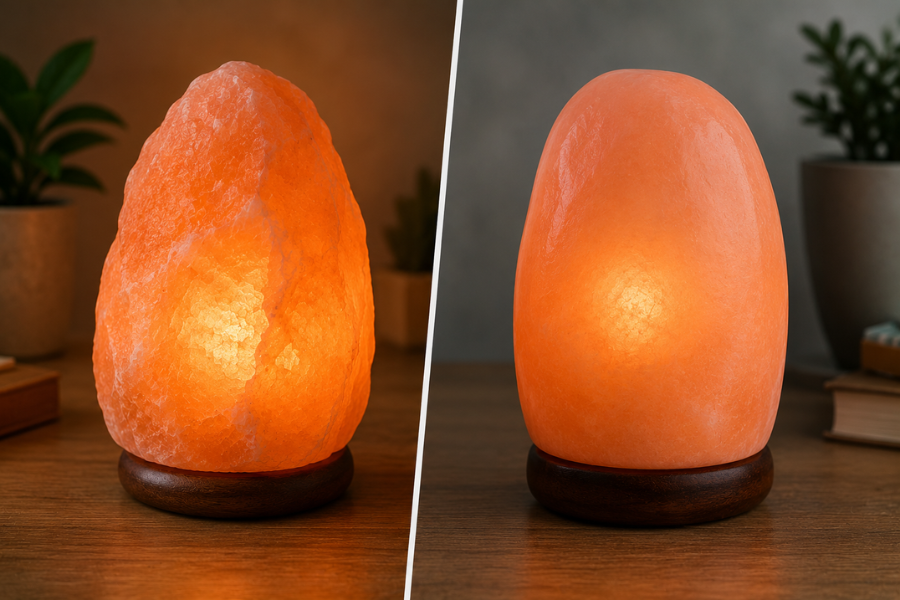
One of the most frequently asked questions about Himalayan salt lamps is how to determine whether a product is genuine or fake. Authentic Himalayan salt lamps usually have an uneven natural appearance with visible mineral patterns, color variations, and rough textures. Real salt lamps are generally fragile because natural salt can chip or crack more easily than synthetic materials. Genuine lamps also absorb moisture from humid environments due to the hygroscopic nature of salt, which means slight dampness around the surface may occur naturally over time. Artificial lamps made from resin, plastic, or dyed materials often appear overly smooth, perfectly symmetrical, or unusually lightweight. Another important sign of authenticity is the type of light emitted. Real Himalayan salt lamps usually produce a warm, soft orange or amber glow rather than an extremely bright or artificial-looking light. Buyers should also examine packaging details, manufacturer transparency, and country-of-origin labeling before purchasing. Genuine products are typically sourced from Pakistan and supplied by exporters with clear manufacturing and quality-control information.
Why Are Fake Himalayan Salt Lamps Common in the Market?
The global popularity of Himalayan salt lamps has created strong commercial demand, which has also encouraged the growth of imitation products. Many low-cost manufacturers attempt to replicate the appearance of authentic salt lamps using artificial materials, dyed stones, or lower-grade salt crystals sourced from unrelated regions. Fake lamps are often marketed aggressively online because many consumers cannot easily distinguish authentic products from imitations based on photos alone. Some sellers focus heavily on exaggerated wellness claims or unrealistic marketing rather than providing transparent sourcing information and product specifications. Lower production costs allow counterfeit products to enter retail and wholesale markets at extremely cheap prices, making them attractive to uninformed buyers. However, poor-quality lamps often lack durability, consistent craftsmanship, and proper electrical safety standards. Businesses sourcing salt lamps for retail or export purposes should carefully evaluate suppliers, product documentation, packaging standards, and manufacturing transparency to avoid long-term quality and reputation issues associated with fake products.
What Color Should Real Himalayan Salt Lamps Be?
Color is one of the most noticeable features buyers use to evaluate Himalayan salt lamps. Genuine lamps naturally appear in a variety of shades ranging from light pink and pale peach to deep orange and reddish tones. These natural color variations occur because mineral concentrations differ throughout the salt deposits. Authentic lamps rarely have perfectly uniform coloring because natural rock salt contains unique crystal formations and mineral patterns. Buyers should be cautious of lamps with overly bright neon coloring or highly artificial-looking surfaces because these may indicate dyed or synthetic materials. Darker lamps are not necessarily higher quality, as color intensity depends on natural mineral composition rather than craftsmanship or purity alone. Some buyers prefer lighter lamps for modern decorative spaces, while others prefer darker orange tones for stronger ambient lighting effects. Understanding natural color variation helps consumers make informed decisions while avoiding unrealistic assumptions about appearance and authenticity.
Do Real Himalayan Salt Lamps Sweat or Leak Water?
A common question frequently asked online is whether genuine Himalayan salt lamps sweat or leak moisture. Real Himalayan salt naturally absorbs moisture from humid environments because salt is hygroscopic. This means authentic lamps may develop slight dampness, surface sweating, or water accumulation if placed in areas with high humidity or poor ventilation. This behavior is actually considered a normal characteristic of genuine salt products rather than a manufacturing defect. Fake lamps made from synthetic materials usually do not react to humidity in the same way. To reduce moisture buildup, users should keep the lamp turned on regularly because the bulb’s gentle heat helps maintain dryness. Lamps should also be placed on stable, moisture-resistant surfaces away from excessive humidity or direct water exposure. Understanding this natural behavior helps buyers identify authentic salt lamps while improving long-term product maintenance and customer satisfaction.
Why Is Weight Important When Identifying Genuine Salt Lamps?
Authentic Himalayan salt lamps are made from solid rock salt, which makes them significantly heavier than many imitation products. Weight is often a practical indicator buyers can use when evaluating authenticity, especially during in-person purchasing or wholesale inspections. Fake lamps made from hollow materials, resin, or lightweight decorative stones may visually resemble real salt lamps but typically feel much lighter than expected. Genuine salt lamps also have a denser and more solid internal structure because they are carved directly from natural salt crystal blocks. Commercial buyers importing salt lamps in bulk often evaluate consistency in weight grading because this affects packaging requirements, shipping costs, and retail positioning. Reliable manufacturers provide accurate size and weight specifications to help buyers manage logistics and inventory planning effectively. Understanding the importance of weight helps businesses and consumers identify more authentic products while improving purchasing confidence.
Are Genuine Himalayan Salt Lamps Safe to Use?
Yes, genuine Himalayan salt lamps are generally safe when manufactured and used properly. Reliable manufacturers use low-wattage bulbs, secure wiring systems, stable wooden bases, and tested electrical components designed to meet international safety standards. Buyers should always inspect bulb holders, plugs, wiring quality, and packaging information before purchasing or distributing salt lamps commercially. Poor-quality or counterfeit products may contain weak electrical components that increase safety risks during long-term use. Professional exporters typically comply with applicable electrical regulations and provide product testing information for destination markets. Salt lamps should always be placed on stable surfaces and kept away from excessive moisture or water exposure. Like any decorative lighting product, proper maintenance and careful handling contribute to long-term safety and product durability. Businesses importing salt lamps should prioritize suppliers with proven manufacturing standards and transparent quality-control systems to reduce liability risks and improve customer satisfaction.
How Are Authentic Himalayan Salt Lamps Made?
Authentic Himalayan salt lamps are produced through a combination of mining, carving, shaping, polishing, and assembly procedures. Large natural salt crystal blocks are extracted from Himalayan salt deposits in Pakistan before being cut and shaped into decorative lamp forms. Some lamps preserve a natural rock appearance, while others are carved into geometric or sculpted designs. After shaping, the salt crystal is hollowed internally to allow bulb installation. Skilled workers then smooth or polish selected surfaces while maintaining the natural texture and mineral patterns of the crystal. The lamp is mounted on a wooden base and fitted with electrical components suitable for export and retail use. Reliable manufacturers conduct inspection procedures throughout production to maintain consistency in color, shape, structural stability, and electrical safety. Understanding how genuine salt lamps are produced helps buyers distinguish handcrafted natural products from mass-produced artificial imitations.
Why Is Supplier Transparency Important When Buying Salt Lamps?
Supplier transparency is one of the most important factors when sourcing Himalayan salt lamps for retail, wholesale, or private-label distribution. Reliable suppliers openly share information regarding mining origin, manufacturing processes, packaging standards, certifications, and export capabilities. Buyers should work with manufacturers who provide detailed product specifications, realistic production timelines, quality-control information, and clear communication throughout the sourcing process. Transparent suppliers avoid exaggerated medical claims and instead focus on accurate information regarding decorative use, craftsmanship, and natural origin. Professional exporters often maintain organized catalogs, packaging samples, and production documentation to support international trade requirements. Buyers planning long-term business relationships should evaluate consistency, responsiveness, and operational reliability rather than focusing solely on low pricing. Strong supplier transparency improves trust, reduces sourcing risks, and supports stable product quality across commercial shipments.
What Packaging Is Used for Genuine Himalayan Salt Lamps?
Packaging plays a critical role in protecting Himalayan salt lamps during domestic transportation and international export operations. Genuine salt lamps are fragile and relatively heavy, requiring strong protective packaging to minimize breakage risks. Professional manufacturers commonly use molded foam inserts, corrugated cartons, moisture-resistant liners, and palletized shipping methods to secure products during transit. Retail packaging may also include branding elements, product information, care instructions, and electrical specifications depending on the target market. Poor packaging standards can lead to cracked lamps, damaged wiring, and increased shipment losses. Buyers sourcing products for retail stores or e-commerce platforms should prioritize suppliers with reliable packaging systems and export experience. High-quality packaging not only protects the product physically but also improves customer confidence and overall brand presentation in competitive decorative lighting markets.
Conclusion
Understanding the difference between real and fake Himalayan salt lamps is essential for consumers, wholesalers, retailers, and importers seeking reliable decorative products for global markets. Authentic Himalayan salt lamps are valued for their natural crystal appearance, handcrafted production, warm lighting effect, and unique mineral characteristics. However, increasing market demand has also created opportunities for imitation products that may compromise quality, durability, and safety standards. Buyers who understand key authenticity indicators such as sourcing origin, natural color variation, crystal texture, moisture behavior, weight, packaging quality, and supplier transparency are better positioned to make informed purchasing decisions. Whether sourcing lamps for residential décor, wellness spaces, hospitality projects, or commercial retail distribution, choosing genuine Himalayan salt lamps helps improve customer trust, long-term product performance, and brand credibility in competitive international markets.