Natural mineral products have become increasingly important across global industries as businesses and consumers continue seeking authentic, naturally sourced materials for commercial, decorative, industrial, agricultural, and food-related applications. From Himalayan salt and natural stone to clay minerals, decorative rocks, and other naturally occurring resources, mineral-based products are now used in hospitality, architecture, wellness, interior design, food processing, agriculture, manufacturing, and retail markets around the world. Unlike synthetic alternatives produced through complex industrial processes, natural mineral products offer distinctive colors, textures, structural characteristics, and geological authenticity that cannot be perfectly replicated by artificial materials. As international markets become more quality-conscious, businesses increasingly recognize that natural materials help strengthen product value, improve customer perception, and support premium brand positioning. Manufacturers are responding by expanding product innovation, improving production technology, and offering customized solutions that meet changing commercial requirements. Understanding why demand for natural mineral products continues to grow helps wholesalers, importers, retailers, architects, manufacturers, and distributors prepare for future market opportunities while making informed sourcing and investment decisions in an increasingly competitive global marketplace.
Why Are Consumers Choosing Natural Materials Over Synthetic Alternatives?
One of the primary reasons natural mineral products continue gaining popularity is the growing preference for authentic materials that offer individuality and long-term value. Modern consumers increasingly appreciate products that originate from natural geological formations rather than being manufactured entirely from synthetic compounds. Natural mineral products display genuine textures, unique color variations, and distinctive structural characteristics that cannot be duplicated through mass production. These qualities appeal to customers who value originality, craftsmanship, and materials shaped by nature over millions of years. Businesses also recognize that authentic products help differentiate their offerings in competitive markets where customers have many purchasing options. Hotels, restaurants, retailers, wellness companies, and interior designers frequently select natural materials because they create memorable customer experiences while supporting premium brand positioning. As buyers become more informed about product origins and manufacturing methods, natural mineral products continue gaining trust and appreciation across multiple industries. This shift toward authenticity is expected to remain one of the strongest drivers of future market growth.
How Has Sustainability Increased Interest in Natural Mineral Products?
Environmental awareness has become a major influence on purchasing decisions, encouraging businesses and consumers to evaluate how products are sourced, manufactured, packaged, and transported. Natural mineral products often align well with sustainability goals because they require relatively limited chemical processing compared with many synthetic alternatives. Manufacturers across numerous industries are improving production efficiency, reducing unnecessary waste, increasing material utilization, and adopting environmentally responsible packaging to meet evolving customer expectations. Many natural minerals can also be processed into multiple product categories, allowing manufacturers to maximize resource utilization while minimizing production waste. Buyers increasingly appreciate suppliers that combine responsible manufacturing practices with transparent communication regarding sourcing and production methods. As governments, businesses, and consumers continue emphasizing environmental responsibility, demand for naturally sourced materials is expected to increase across architecture, construction, hospitality, agriculture, retail, and manufacturing sectors. Companies capable of balancing commercial quality with sustainable production practices will likely strengthen their competitive position while building lasting relationships with environmentally conscious customers.
Why Are Premium Brands Investing More in Natural Mineral Products?
Premium brands continually search for ways to distinguish themselves through quality, authenticity, and customer experience, making natural mineral products increasingly valuable across many commercial sectors. Luxury hotels incorporate natural stone and Himalayan salt into interior design, gourmet food companies highlight naturally sourced ingredients, wellness brands develop mineral-based product collections, and home décor retailers emphasize authentic materials that enhance residential interiors. Consumers often associate natural materials with craftsmanship, durability, exclusivity, and higher perceived value, allowing businesses to position their products within premium market segments. Unlike identical synthetic products manufactured in large quantities, naturally occurring materials display subtle differences that reinforce their authenticity and uniqueness. Premium brands recognize that these characteristics contribute to stronger customer engagement and improved brand recognition. As global competition continues intensifying, businesses increasingly understand that product quality alone is no longer sufficient. Combining quality with authentic, natural materials provides an additional competitive advantage that strengthens customer trust while supporting long-term business growth across international markets.
How Is Product Innovation Expanding Market Opportunities?
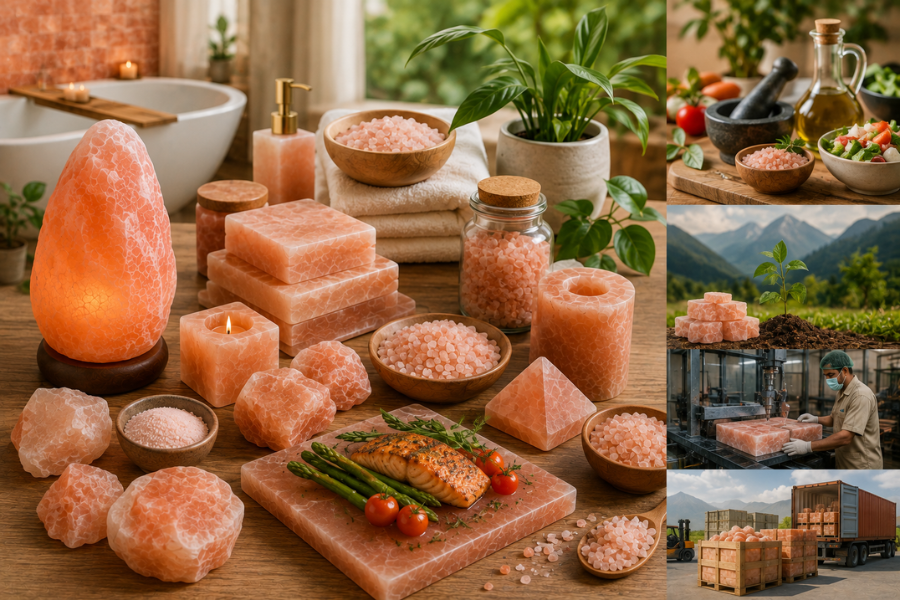
Innovation has significantly broadened the commercial applications of natural mineral products during recent years, creating opportunities far beyond traditional industrial uses. Manufacturers now produce customized decorative items, architectural components, premium packaging materials, food-grade mineral products, wellness collections, agricultural solutions, and specialized commercial products designed for diverse industries. Himalayan salt, for example, is no longer limited to edible applications but is also manufactured into lamps, architectural bricks, cooking slabs, bath salts, candle holders, decorative accessories, and customized private-label collections. Similar innovation is occurring across many natural mineral industries as manufacturers invest in precision production, advanced finishing techniques, and customized manufacturing capabilities. Businesses appreciate suppliers capable of developing unique products tailored to their own branding and customer requirements rather than simply offering standardized inventory. Continuous innovation encourages market expansion because it introduces natural mineral products into industries that previously relied almost exclusively on synthetic alternatives. As research, design, and manufacturing technology continue advancing, innovation will remain a major driver of future industry growth.
How Are Natural Mineral Products Transforming Interior Design?
Interior design has become one of the fastest-growing markets for natural mineral products because architects and designers increasingly prioritize authentic materials that add depth, texture, and individuality to commercial and residential spaces. Hotels, restaurants, luxury homes, wellness centers, corporate offices, and retail stores frequently incorporate natural stone, Himalayan salt, marble, granite, and other mineral-based materials to create visually distinctive environments that remain attractive for many years. Unlike artificial decorative products that often appear repetitive, natural minerals display unique colors, crystal formations, and textures that ensure every installation possesses its own character. Designers appreciate this individuality because it allows them to create feature walls, reception areas, decorative lighting installations, flooring, countertops, and architectural details that stand apart from mass-produced alternatives. Natural mineral products also complement wood, glass, concrete, and metal, making them suitable for both traditional and contemporary design concepts. As premium interior design continues expanding worldwide, demand for authentic mineral materials is expected to increase steadily across hospitality, commercial construction, and luxury residential development.
Why Are Industrial Applications Expanding So Quickly?
The growth of natural mineral products is not limited to decorative or consumer markets, as industrial applications continue expanding across manufacturing, agriculture, food production, construction, and infrastructure sectors. Businesses increasingly recognize that naturally occurring minerals provide reliable raw materials for a wide variety of commercial processes while supporting consistent product quality. Food manufacturers use naturally sourced minerals in specialized applications, agricultural businesses rely on mineral products for livestock nutrition and farming operations, while construction companies utilize mineral-based materials for architectural projects and infrastructure development. Manufacturers also appreciate the flexibility of natural minerals because they can often be processed into multiple product categories depending on customer requirements. This versatility creates opportunities for suppliers to serve diverse industries simultaneously while maximizing resource utilization. As global industrial production continues growing and businesses seek dependable raw materials from trusted suppliers, demand for natural mineral products will likely continue expanding across numerous commercial sectors, creating long-term opportunities for manufacturers and exporters.
How Is International Trade Supporting Industry Growth?
International trade has played a major role in increasing demand for natural mineral products by connecting manufacturers with customers across every region of the world. Improvements in global logistics, container shipping, international documentation, and supply chain management allow businesses to source high-quality mineral products from specialized producing regions more efficiently than ever before. Wholesalers, distributors, retailers, hospitality companies, architects, and manufacturers increasingly purchase natural mineral products through long-term international partnerships that ensure consistent quality and reliable supply. Export-oriented manufacturers have also improved packaging methods, quality control systems, and production planning to meet the expectations of overseas buyers. As more countries invest in hospitality, infrastructure, retail, wellness, and premium construction projects, international demand for authentic mineral products continues diversifying beyond traditional markets. Companies that understand export regulations, shipping requirements, and international customer expectations are well positioned to benefit from this ongoing expansion while building sustainable relationships with commercial buyers throughout the global marketplace.
How Has Digital Marketing Increased Consumer Awareness?
Digital technology has transformed the way businesses and consumers discover, evaluate, and purchase natural mineral products. Company websites, educational blogs, product videos, online catalogs, social media platforms, and AI-powered search tools provide buyers with far more information than was available only a few years ago. Before making purchasing decisions, many customers now compare suppliers, review manufacturing processes, examine product specifications, and research material origins through digital channels. This increased access to information has strengthened appreciation for authentic natural products because buyers better understand the differences between genuine mineral materials and synthetic alternatives. Manufacturers that publish educational content explaining sourcing, production methods, customization options, and product applications often establish stronger credibility while attracting more qualified inquiries from commercial buyers. As artificial intelligence and digital search continue evolving, businesses investing in informative, high-quality online content will further strengthen their visibility and reputation. Greater consumer awareness therefore continues supporting long-term growth across the entire natural mineral products industry.
Why Are Private Label and Customized Products Becoming More Popular?
Another important trend driving demand for natural mineral products is the increasing popularity of private-label manufacturing and customized commercial solutions. Businesses no longer want to compete solely with identical products available to every distributor or retailer. Instead, they seek exclusive collections that reflect their own branding, packaging, and market positioning. Manufacturers now collaborate closely with customers to develop personalized products, custom dimensions, branded packaging, private-label collections, and unique product designs that strengthen competitive advantages. This approach benefits retailers, hospitality businesses, wellness companies, gourmet food brands, and architectural firms seeking differentiated product offerings that appeal to their target audiences. Customized manufacturing also encourages long-term partnerships because suppliers become familiar with customer preferences and production requirements over time. As branding continues becoming increasingly important across international markets, demand for customized natural mineral products will likely expand further, creating valuable opportunities for manufacturers capable of offering flexible production, reliable quality, and professional product development services.
Why Do Businesses Prefer Long-Term Mineral Suppliers?
Reliable supply chains have become essential for businesses operating within competitive international markets, making long-term supplier relationships increasingly valuable. Companies purchasing natural mineral products often require consistent quality, dependable production schedules, transparent communication, and reliable export support over many years rather than occasional transactions. Experienced manufacturers who understand customer specifications, packaging requirements, documentation needs, and production expectations can deliver greater efficiency while reducing the likelihood of costly delays or quality issues. Long-term partnerships also encourage collaborative product development, allowing manufacturers and buyers to introduce new products, improve packaging, and respond more effectively to changing market conditions. Businesses benefit from stable pricing discussions, predictable lead times, and greater confidence when planning inventory and future expansion. Suppliers likewise gain a better understanding of customer priorities, enabling continuous improvements in manufacturing and service. As international trade continues growing, trusted supplier relationships will remain one of the strongest foundations for sustainable success within the natural mineral products industry.
What Does the Future Hold for the Natural Mineral Products Market?
The outlook for natural mineral products remains highly positive as industries continue embracing authenticity, sustainability, customization, and premium materials across global markets. Manufacturers are expected to invest further in advanced production technology, environmentally responsible manufacturing, improved packaging, digital marketing, and innovative product development to meet changing customer expectations. Hospitality, architecture, food production, wellness, retail, agriculture, and commercial construction all present expanding opportunities for suppliers capable of delivering consistent quality and customized solutions. Growing interest in premium interior design, environmentally conscious sourcing, and naturally occurring materials will continue strengthening demand for authentic mineral products over synthetic alternatives. Businesses that combine technical expertise with flexible manufacturing and responsive customer service will be well positioned to succeed in this evolving marketplace. As global awareness continues increasing and international trade networks become even more efficient, natural mineral products are expected to play an increasingly important role across numerous industries, supporting sustainable business growth and long-term commercial opportunities.
Conclusion
The increasing demand for natural mineral products reflects a broader global shift toward authenticity, quality, sustainability, and long-term value across both consumer and commercial markets. Businesses and customers alike are recognizing that naturally occurring materials offer distinctive characteristics that cannot be duplicated through synthetic manufacturing, making them highly desirable across industries including hospitality, architecture, construction, food production, wellness, agriculture, retail, and manufacturing. Factors such as environmental awareness, premium branding, product innovation, digital education, customized manufacturing, and expanding international trade continue driving strong market growth. At the same time, manufacturers are investing in improved technology, quality control, responsible production practices, and flexible customization to meet the evolving needs of global buyers. Companies that understand these changing market dynamics and build strong partnerships with experienced suppliers will be better positioned to capitalize on future opportunities while delivering exceptional value to their customers. As demand for authentic materials continues rising throughout the coming years, natural mineral products will remain an essential part of modern industry, supporting innovation, premium product development, and sustainable growth across international markets.