
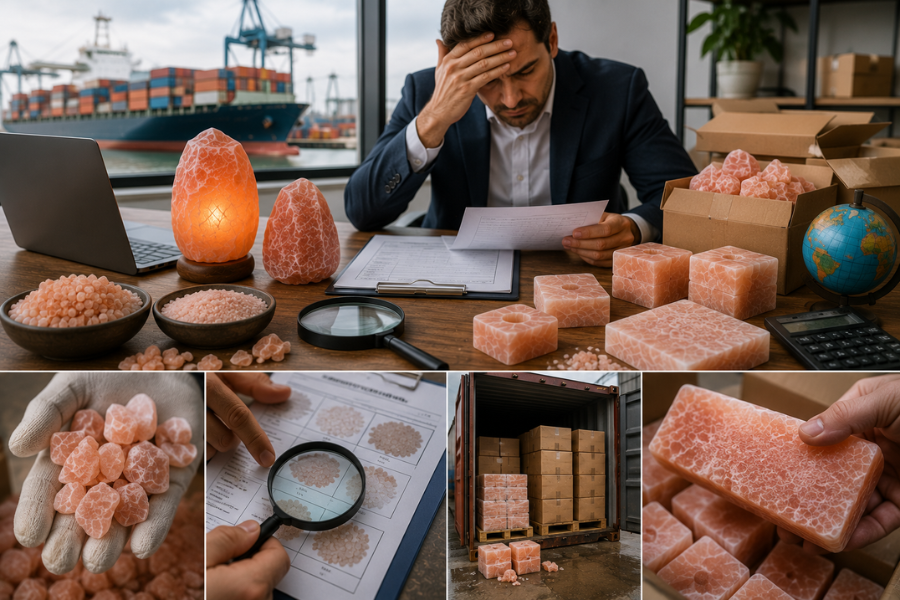
Importing Himalayan salt can be a profitable business opportunity, but achieving long-term success requires much more than finding a supplier and placing an order. Himalayan salt products are available in many forms, including edible salt, bath salts, salt lamps, cooking slabs, animal salt licks, decorative items, and architectural materials. Each product category has different manufacturing methods, quality requirements, packaging standards, and shipping considerations that importers should understand before making purchasing decisions. Many businesses entering the Himalayan salt market make avoidable mistakes that lead to unnecessary expenses, delayed shipments, inconsistent product quality, or dissatisfied customers. Fortunately, most of these challenges can be prevented through proper planning, supplier evaluation, and clear communication. Whether you are importing for wholesale distribution, retail sales, hospitality projects, or private-label branding, understanding the most common mistakes helps you make informed decisions and build stronger business relationships. This guide explains the errors many importers make and how to avoid them when purchasing Himalayan salt products from international suppliers.
Mistake One: Choosing a Supplier Based Only on Price
One of the most common mistakes new importers make is selecting a supplier solely because they offer the lowest price. Although competitive pricing is important, it should never be the only factor influencing a purchasing decision. Lower prices sometimes reflect inconsistent product quality, limited manufacturing experience, inadequate quality control, or poor export support. Choosing a supplier without evaluating their production capabilities can result in damaged products, shipment delays, or customer complaints that cost far more than the initial savings. Reliable manufacturers invest in skilled workers, quality inspection systems, proper packaging, and modern production equipment, all of which contribute to producing consistent Himalayan salt products suitable for international markets. Importers should compare suppliers based on experience, communication, certifications where applicable, product range, production capacity, and customer service in addition to pricing. A supplier offering slightly higher prices but consistently delivering reliable products and dependable service often provides greater long-term value. Successful importing depends on balancing quality, reliability, and cost rather than focusing exclusively on the lowest quotation.
Mistake Two: Not Requesting Product Samples
Many importers make the mistake of placing large commercial orders without first requesting product samples. Although product photographs and catalogs provide useful information, they cannot fully demonstrate the appearance, finish, color, craftsmanship, packaging quality, or overall consistency of Himalayan Salt products. Samples allow buyers to evaluate whether products meet their quality expectations before committing to larger purchases. They also provide an opportunity to examine dimensions, workmanship, grain size, packaging materials, labeling, and overall presentation. Businesses selling premium Himalayan salt products should ensure that samples accurately represent future production quality. Sampling also encourages meaningful discussions with suppliers about product specifications, customization options, and quality improvements before mass production begins. Taking time to inspect samples helps reduce misunderstandings while strengthening communication between buyers and manufacturers. Although requesting samples may require additional time and expense, this small investment often prevents much larger financial losses associated with receiving products that fail to meet customer expectations or market requirements.
Mistake Three: Ignoring Product Specifications
Every Himalayan salt product has specific technical characteristics that should be clearly understood before production begins. Unfortunately, some importers place orders without confirming detailed product specifications, leading to confusion and costly corrections later. Product specifications may include dimensions, weight, grain size, color grade, packaging type, moisture protection, finish quality, labeling requirements, and customization details depending on the product category. For example, restaurants purchasing cooking slabs often require exact dimensions, while architectural projects depend on precisely sized salt tiles and bricks for successful installation. Edible Himalayan salt requires clearly defined grain sizes and food-grade packaging, whereas decorative salt lamps may include electrical specifications for different international markets. Confirming every product specification before manufacturing begins helps eliminate misunderstandings while ensuring suppliers clearly understand customer expectations. Written product specifications also simplify quality inspections because both parties work according to the same agreed standards. Careful planning at the beginning of production reduces unnecessary delays, additional expenses, and customer dissatisfaction after products arrive.
Mistake Four: Overlooking Quality Control Procedures
Quality control is often underestimated by new importers, yet it remains one of the most important factors influencing long-term business success. Some buyers assume that every shipment will automatically meet their expectations without asking suppliers about their inspection procedures. Reliable Himalayan salt manufacturers perform quality inspections throughout production, checking raw materials, dimensions, workmanship, structural integrity, packaging quality, and final presentation before shipment. Importers should understand how these inspections are conducted and whether additional third-party inspections are appropriate for large commercial orders. Quality control becomes particularly important when purchasing customized products or private-label collections because every detail influences customer satisfaction. Consistent inspections help identify problems before products leave the factory, reducing the likelihood of receiving damaged or inconsistent goods. Importers who actively discuss quality control with suppliers establish clearer expectations while strengthening confidence in future business relationships. Investing attention in quality assurance ultimately protects both the importer’s reputation and long-term profitability.
Mistake Five: Ignoring Packaging Quality
Packaging plays a much bigger role in Himalayan salt imports than many new buyers realize. Some importers focus entirely on the product itself while overlooking the importance of strong export packaging. Himalayan salt is a natural mineral that should be protected from moisture, rough handling, and impact during transportation, especially when shipments travel long distances by sea. Decorative products such as salt lamps, candle holders, cooking slabs, tiles, and bricks require protective foam, reinforced cartons, and secure palletizing to reduce the risk of breakage. Food-grade Himalayan salt should be packed in moisture-resistant, food-safe packaging that preserves product quality throughout storage and distribution. Poor packaging may result in damaged goods, customer complaints, higher replacement costs, and unnecessary financial losses. Importers should discuss packaging materials, carton strength, pallet arrangements, labeling, and moisture protection with suppliers before production begins. Investing in professional packaging helps products arrive safely while demonstrating quality and professionalism to distributors, retailers, wholesalers, and end customers.
Mistake Six: Not Understanding Shipping Terms
Another common mistake is placing orders without fully understanding international shipping terms and responsibilities. Many first-time importers are unfamiliar with trade terms such as FOB, CIF, or other Incoterms, leading to confusion about who is responsible for freight costs, insurance, customs procedures, and transportation arrangements. Misunderstanding these terms may result in unexpected expenses after production has already been completed. Before confirming an order, buyers should discuss shipping methods, estimated transit times, freight costs, insurance coverage, and delivery responsibilities with both the supplier and freight forwarder. Sea freight is generally the most economical option for bulk Himalayan salt shipments, while air freight is better suited for urgent or smaller orders. Understanding container loading methods and shipping schedules also helps businesses plan inventory more effectively. Clear communication regarding shipping arrangements prevents delays and unexpected costs while ensuring products move efficiently from the manufacturing facility to the destination country. Knowledge of logistics is an essential part of becoming a successful Himalayan salt importer.
Mistake Seven: Failing to Prepare Import Documentation
Accurate documentation is essential for smooth international trade, yet many new importers underestimate its importance. Missing or incorrect paperwork can delay customs clearance, increase storage charges, or even prevent products from entering the destination country. Depending on local regulations, Himalayan salt shipments may require commercial invoices, packing lists, certificates of origin, bills of lading, import permits, and other supporting documents. Food-grade Himalayan salt may also require additional documentation to satisfy national food import regulations. Importers should confirm documentation requirements with customs authorities or experienced customs brokers before goods are shipped. Reliable suppliers prepare export documents carefully and coordinate with logistics providers to minimize delays. Reviewing documents before shipment leaves the factory and gives buyers an opportunity to correct any errors while avoiding unnecessary complications later. Proper documentation protects both the exporter and importer while supporting efficient customs clearance and professional international business operations. Good preparation significantly reduces the likelihood of unexpected delays after products arrive.
Mistake Eight: Poor Communication with the Supplier
Strong communication is one of the most valuable tools for preventing problems throughout the importing process. Some importers assume that suppliers automatically understand every requirement without providing detailed instructions or asking important questions. Miscommunication can lead to incorrect product sizes, packaging differences, labeling errors, production delays, or shipping misunderstandings. Successful importers communicate clearly regarding product specifications, delivery schedules, packaging requirements, quality expectations, and payment terms before production begins. Maintaining regular contact during manufacturing also allows buyers to receive progress updates and resolve any issues before they become larger problems. Reliable suppliers appreciate detailed communication because it helps them produce products that fully satisfy customer expectations. Professional relationships built on openness and transparency often lead to smoother transactions, better service, and stronger long-term partnerships. Businesses that communicate effectively generally experience fewer production problems and greater confidence throughout every stage of the importing process. Good communication benefits both the supplier and the importer equally.
Mistake Nine: Not Researching the Local Market
Some importers purchase large quantities of Himalayan salt without first understanding customer demand within their local market. While Himalayan salt enjoys worldwide popularity, demand for specific products varies between countries and industries. For example, one market may have strong demand for edible Himalayan pink salt, while another may experience greater interest in decorative salt lamps, cooking slabs, bath salts, or architectural products. Importers who fail to research customer preferences may invest heavily in products that sell slowly or require additional marketing efforts. Market research helps businesses identify which products, packaging sizes, pricing levels, and branding strategies best suit local buyers. It also provides valuable insights into competitors, seasonal trends, and emerging opportunities. Importers who understand their customers can plan inventory more effectively while reducing unnecessary stock and improving profitability. Careful market research creates a stronger business strategy and allows companies to introduce Himalayan salt products that genuinely meet the needs of retailers, distributors, hospitality businesses, and consumers.
Mistake Ten: Focusing Only on the First Order
Many new importers concentrate entirely on completing their first purchase without considering the long-term relationship they hope to build with their supplier. Successful importing is rarely based on a single transaction. Instead, it develops through consistent cooperation, mutual trust, and ongoing communication between buyers and manufacturers. Reliable suppliers often provide better production planning, improved pricing, priority scheduling, and greater customization opportunities to customers who maintain long-term partnerships. Importers who communicate regularly, provide constructive feedback, and honor agreed payment terms build stronger business relationships over time. These partnerships become especially valuable when expanding product ranges, introducing private-label collections, or managing larger commercial orders. Viewing suppliers as long-term business partners rather than temporary vendors encourages collaboration that benefits both companies. Strong relationships improve consistency, reduce misunderstandings, and create opportunities for future growth as international demand for Himalayan salt products continues expanding across multiple industries and markets.
Building a Successful Import Business Through Better Decisions
Avoiding common mistakes gives importers a significant advantage when entering the Himalayan salt industry. Businesses that carefully evaluate suppliers, inspect product samples, define clear specifications, prioritize quality control, and understand shipping procedures are better prepared to manage international trade successfully. Strong communication, accurate documentation, professional packaging, and careful market research further reduce unnecessary risks while improving customer satisfaction. Importers should also recognize that long-term success depends on continuous learning because global markets, customer preferences, and international trade requirements continue evolving. Working with experienced Himalayan salt manufacturers provides valuable guidance throughout the importing process while supporting reliable product quality and efficient export operations. Every well-informed decision strengthens the business and builds greater confidence among distributors, retailers, and end customers. By focusing on preparation rather than shortcuts, importers create a stable foundation for sustainable growth while establishing a trusted reputation within the competitive Himalayan salt marketplace.
Conclusion
Importing Himalayan salt can become a rewarding and profitable business when buyers approach the process with careful planning and informed decision-making. Most challenges experienced by new importers are not caused by the products themselves but by avoidable mistakes such as selecting suppliers based only on price, overlooking quality control, ignoring packaging requirements, misunderstanding shipping terms, or failing to research the market thoroughly. Taking time to evaluate suppliers, request samples, confirm specifications, prepare documentation, and maintain open communication helps prevent costly problems before they occur. Building strong partnerships with experienced manufacturers also creates opportunities for consistent product quality, better service, and long-term business growth. As worldwide demand for Himalayan salt products continues increasing across food, wellness, hospitality, agriculture, and interior design industries, importers who prioritize professionalism and quality will be well-positioned for lasting success. Careful preparation, reliable suppliers, and customer-focused business practices remain the key ingredients for building a successful Himalayan salt import business that continues growing year after year.