
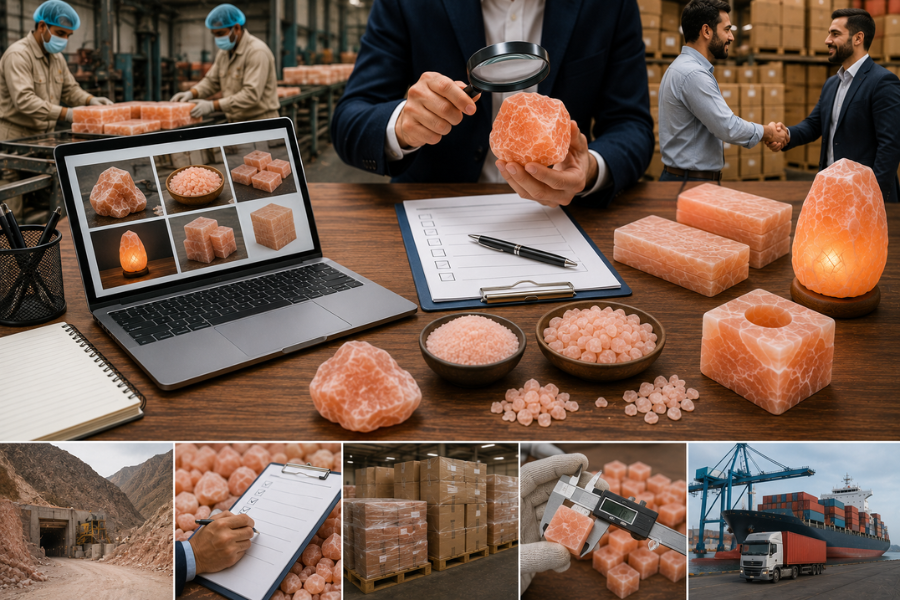
Choosing the right Himalayan salt supplier is one of the most important decisions an importer, wholesaler, distributor, or retailer can make. No matter how strong the market demand is, your business success depends heavily on working with a manufacturer that consistently delivers high-quality products, reliable service, and professional export support. Today, there are many companies offering Himalayan salt products, but not every supplier operates with the same level of experience, production capacity, or quality control. A careful evaluation before placing an order helps reduce business risks while building long-term partnerships that support future growth. Whether you plan to import edible Himalayan pink salt, salt lamps, cooking slabs, bath salts, salt tiles, decorative products, or animal salt licks, understanding how to assess a supplier is essential. This guide explains the key factors every buyer should evaluate before making a purchasing decision, helping businesses avoid common mistakes and establish successful relationships with dependable Himalayan salt manufacturers.
Start by Understanding the Supplier’s Experience
One of the first things to evaluate is the supplier’s experience in the Himalayan salt industry. Companies that have been manufacturing and exporting Himalayan salt products for many years generally have a deeper understanding of production processes, international quality standards, and customer expectations. Experienced manufacturers are usually better prepared to handle large commercial orders, customized products, private-label projects, and changing market demands. They have refined their production systems through years of practical experience and often maintain well-organized quality control procedures. Buyers should ask how long the supplier has been manufacturing Himalayan salt products, which countries they currently export to, and which industries they regularly serve. A supplier with proven experience working with international customers is often more familiar with documentation requirements, packaging standards, shipping procedures, and communication practices. Choosing an experienced manufacturer reduces uncertainty while increasing confidence that products will be produced professionally and delivered according to agreed schedules.
Evaluate the Product Range
A reliable Himalayan salt supplier should offer a diverse product portfolio that demonstrates manufacturing capability and production flexibility. Even if your business initially plans to import only one product category, working with a supplier that manufactures multiple Himalayan salt products creates opportunities for future business expansion. Many experienced manufacturers produce edible Himalayan pink salt, bath salts, cooking slabs, decorative lamps, candle holders, salt tiles, architectural bricks, animal salt licks, crushed salt, and customized products for private-label customers. A broad product range also indicates that the manufacturer has invested in specialized production equipment and skilled workers capable of handling different manufacturing processes. Buyers should review the supplier’s catalog carefully to understand available sizes, shapes, packaging options, and customization services. A supplier offering multiple product categories allows businesses to introduce new products as market demand grows without searching for additional manufacturing partners. This flexibility supports long-term business development while simplifying purchasing and supplier management.
Request Product Samples Before Ordering
One of the most effective ways to evaluate a Himalayan salt supplier is by requesting product samples before placing a commercial order. Product photographs and online catalogs provide useful information, but they cannot fully represent actual quality, craftsmanship, color consistency, packaging, or finishing standards. Samples allow buyers to inspect dimensions, surface quality, material strength, grain size, labeling, and overall presentation before committing to larger purchases. Businesses importing decorative products such as salt lamps, cooking slabs, candle holders, or architectural tiles should pay close attention to craftsmanship and structural quality. Importers of edible Himalayan salt should evaluate grain consistency, packaging quality, and product cleanliness. Sample evaluation also provides an opportunity to compare multiple suppliers using the same quality standards before making a final decision. Although requesting samples requires additional time, it significantly reduces the risk of receiving products that do not meet expectations. Reliable manufacturers usually welcome sample requests because they understand their importance in establishing customer confidence.
Review Quality Control Procedures
Quality control should be one of the most important topics discussed before placing an order because consistent product quality directly influences customer satisfaction and business reputation. Buyers should ask suppliers how products are inspected during manufacturing and whether quality checks occur throughout production or only after completion. Reliable Himalayan salt manufacturers normally inspect raw materials, monitor precision cutting and shaping, examine finished products, and verify packaging quality before shipment. Decorative products should be checked for cracks, chips, surface finish, accurate dimensions, and overall appearance. Food-grade Himalayan salt should be inspected for cleanliness, grain size consistency, moisture control, and hygienic packaging. Understanding the supplier’s inspection procedures helps buyers determine how seriously the company approaches quality assurance. Businesses placing large commercial orders may also request third-party inspections before shipment for additional confidence. Strong quality control systems reduce customer complaints, minimize returns, and demonstrate that the manufacturer is committed to producing reliable Himalayan salt products for international markets.
Check Certifications and Compliance
Before placing an order, buyers should ask whether the supplier can provide the certifications or supporting documents required for their target market. Different Himalayan salt products may require different documentation depending on their intended use and destination country. Food-grade Himalayan Pink Salt is often supplied with laboratory reports, food safety documentation, or certifications such as ISO, Halal, or FDA-related support when requested by buyers. Decorative products may require quality inspection reports or product specifications for commercial projects. Although not every customer requires the same documents, a professional manufacturer should clearly explain which certifications are available and provide accurate documentation when needed. Buyers should also verify that all certificates are current and issued by recognized organizations where applicable. A supplier that understands international compliance requirements is generally better prepared to support smooth export operations. Reviewing certifications before production begins helps reduce delays, satisfy customer expectations, and strengthen confidence in the supplier’s professionalism and commitment to quality.
Evaluate the Manufacturing Facility
A supplier’s manufacturing facility provides valuable insight into their production capabilities and overall professionalism. Whenever possible, buyers should request photographs, videos, virtual factory tours, or even arrange an on-site visit if they plan to establish a long-term business relationship. Observing the production environment helps buyers understand how Himalayan salt is processed, stored, inspected, and packaged before shipment. A well-organized factory typically reflects strong production planning, skilled workmanship, and consistent quality standards. Buyers should pay attention to cleanliness, equipment condition, storage methods, production organization, and employee safety practices. Facilities with modern cutting machines, polishing equipment, packaging systems, and quality control departments generally demonstrate greater manufacturing efficiency. Even if visiting the factory is not practical, discussing production processes and requesting manufacturing information provides useful insight into the supplier’s capabilities. Understanding where and how products are manufactured helps businesses make informed purchasing decisions while reducing uncertainty before placing large commercial orders.
Review Export Experience and Logistics Support
Export experience is another important factor that should never be overlooked. Manufacturing high-quality Himalayan salt products is only part of the process because successful international trade also depends on efficient shipping, documentation, and logistics management. Buyers should ask suppliers about the countries they currently export to, shipping methods they regularly use, and whether they assist with customs documentation, packaging, and freight coordination. Experienced exporters understand international shipping procedures, Incoterms such as FOB and CIF, commercial invoices, packing lists, certificates of origin, and other essential export documents. Their familiarity with global logistics helps reduce shipment delays while ensuring products arrive safely at their destination. Suppliers with established export systems often maintain strong relationships with freight forwarders and shipping companies, making international deliveries more efficient. Working with an exporter that understands international trade requirements provides valuable support, particularly for businesses importing Himalayan salt for the first time or expanding into new international markets.
Assess Communication and Customer Service
Good communication is one of the strongest indicators of a reliable Himalayan salt supplier. Throughout the purchasing process, buyers should evaluate how quickly the supplier responds to inquiries, answers technical questions, provides quotations, and updates production progress. Clear communication reduces misunderstandings regarding product specifications, packaging requirements, delivery schedules, and payment terms. Reliable manufacturers communicate professionally, provide detailed information, and keep customers informed throughout production and shipping. They also respond constructively when buyers request product modifications or additional information. Poor communication before an order is placed often becomes an even greater challenge after production begins. Businesses planning long-term partnerships should therefore choose suppliers who demonstrate transparency, honesty, and responsiveness from the very first conversation. Strong communication not only improves order management but also builds trust, making future transactions smoother and more efficient. Professional customer service reflects the supplier’s commitment to maintaining positive business relationships with international buyers.
Review Packaging Standards
Packaging quality is an important part of supplier evaluation because it directly affects product protection during transportation. Himalayan salt products vary greatly in size, weight, and fragility, meaning different packaging methods are required for different product categories. Food-grade Himalayan salt should be packed in moisture-resistant, food-safe materials, while decorative products such as salt lamps, candle holders, cooking slabs, and architectural bricks require strong cartons, protective cushioning, and secure palletizing for export. Buyers should ask suppliers about packaging materials, cartomisture-resistant configurations, labeling options, and moisture protection systems before production begins. Reliable manufacturers invest in professional export packaging that minimizes damage during international shipping while maintaining product quality. Businesses planning to build their own brands should also discuss customized packaging and private-label options if required. High-quality packaging reflects a manufacturer’s attention to detail and helps importers reduce product damage, customer complaints, and unnecessary replacement costs after shipments arrive.
Confirm Production Capacity and Delivery Times
A supplier may produce excellent products, but buyers should also confirm whether the company has sufficient production capacity to meet future business requirements. Businesses planning to import regularly need confidence that the manufacturer can consistently deliver products within agreed timelines, especially during periods of increased demand. Buyers should discuss average production times, monthly manufacturing capacity, order scheduling procedures, and seasonal workload before placing large orders. Reliable suppliers provide realistic production estimates rather than making unrealistic delivery promises that may later result in delays. Understanding production capacity also helps businesses plan inventory more effectively and maintain consistent product availability for their own customers. Companies offering customized Himalayan salt products should discuss additional lead times required for private-label packaging or special manufacturing requests. Choosing a supplier with dependable production planning supports long-term business growth while reducing the risk of delayed shipments that may affect customer satisfaction or retail sales.
Read Customer Reviews and Request References
One of the best ways to evaluate a Himalayan salt supplier is by learning about the experiences of previous customers. Buyers should review testimonials, case studies, or customer feedback available on the supplier’s website or professional business platforms whenever possible. Established manufacturers often have long-term relationships with wholesalers, distributors, retailers, and international importers who can confirm their reliability and product quality. Some suppliers may also provide business references upon request, allowing potential customers to verify their export performance and customer service. While reviews should always be considered carefully, consistent positive feedback regarding communication, product quality, packaging, and delivery reliability usually indicates a trustworthy manufacturer. Buyers should also pay attention to how suppliers respond to customer concerns because professional problem-solving reflects a commitment to maintaining long-term business relationships. Researching customer experiences provides valuable information that supports confident purchasing decisions before placing significant commercial orders.
Look Beyond Price When Comparing Suppliers
Although pricing is an important consideration, successful importers understand that choosing a supplier based only on the lowest quotation often creates larger problems later. Buyers should compare overall value rather than focusing exclusively on product cost. Factors such as manufacturing quality, packaging standards, communication, export experience, and production capacity, certifications, and after-sales support all contribute to the total value a supplier provides. A manufacturer offering slightly higher prices may deliver stronger quality control, safer packaging, better customer service, and more reliable delivery schedules that ultimately reduce long-term business costs. Low prices may appear attractive initially, but poor workmanship, shipment delays, or damaged products can quickly eliminate any short-term savings. Evaluating suppliers from a broader business perspective helps importers build stable supply chains while protecting their reputation among customers. Choosing value over price creates stronger business relationships and supports sustainable growth within the competitive Himalayan salt industry.
Conclusion
Evaluating a Himalayan salt supplier before placing an order is one of the most important investments a business can make. Careful assessment of manufacturing experience, product quality, certifications, production facilities, export capabilities, communication, packaging standards, production capacity, and customer feedback helps buyers identify suppliers capable of supporting long-term success. Rather than focusing only on pricing, businesses should consider the supplier’s overall reliability, professionalism, and ability to consistently meet customer expectations. Requesting samples, reviewing documentation, discussing quality control procedures, and maintaining clear communication throughout the evaluation process significantly reduce business risks while strengthening confidence in future transactions. Reliable suppliers become valuable long-term partners who contribute to consistent product quality, efficient shipping, and continued business growth. As global demand for Himalayan salt products continues expanding across food, wellness, hospitality, agriculture, and interior design industries, businesses that invest time in selecting the right manufacturing partner will be better positioned to build strong customer relationships and achieve sustainable success in the international marketplace.