Himalayan salt lamps are more than decorative lighting; they are a fusion of natural mineral beauty and artisanal craftsmanship. Each lamp starts as a raw salt crystal mined from the Himalayan mountains in Pakistan, renowned for their pink, orange, and reddish hues resulting from trace minerals. These crystals are carefully selected for structural integrity, color, and purity. From the moment the salt leaves the mine to the finished lamp, the process requires meticulous attention to detail to ensure the natural beauty and therapeutic appeal of the final product. The process is both scientific and artistic. Artisans must balance maintaining the natural characteristics of the salt with shaping it for functionality and aesthetic appeal. Each lamp is unique, reflecting the distinct variations in crystal formation. For B2B buyers and distributors, understanding this process is crucial for evaluating quality, authenticity, and value. It ensures that spas, wellness centers, and retailers receive lamps that meet safety standards, visual expectations, and therapeutic claims. Proper knowledge also helps brands educate their clients, positioning the product as a premium wellness and decorative item.
Mining Himalayan Salt Crystals
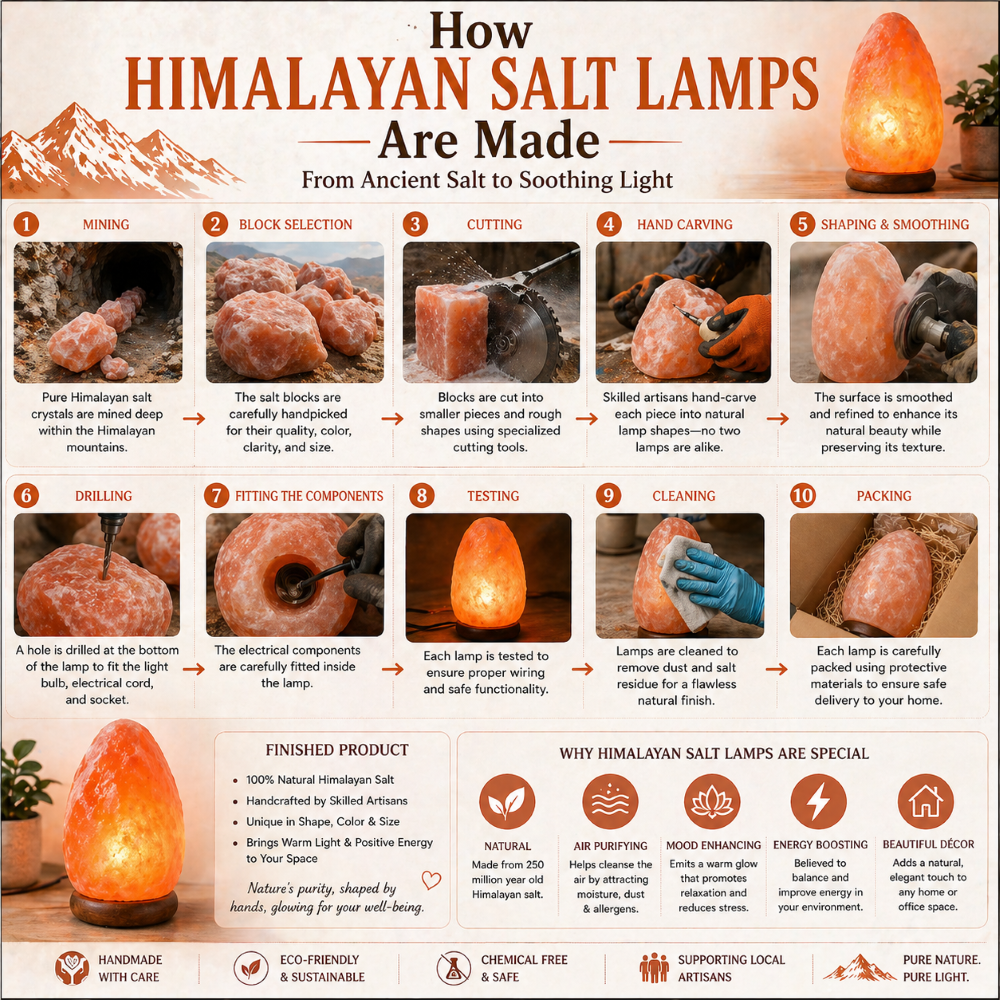
The journey of a Himalayan salt lamp begins in the Khewra Salt Mines of Pakistan, one of the oldest and largest salt mines in the world. Salt deposits here are millions of years old, naturally formed under extreme geological conditions, and enriched with trace minerals that give the characteristic pink, orange, and red colors. Miners extract large chunks of rock salt using manual and mechanical techniques, ensuring that the crystals remain intact and free from fractures. Once extracted, the raw salt is sorted by color, size, and quality. Only the most structurally sound pieces are selected for lamp production. Smaller or fractured crystals may be used for bath salts or other products. The mining process emphasizes careful handling to avoid contamination, preserve mineral composition, and maintain the natural crystalline structure. The mining process also involves environmental considerations. Responsible operators ensure minimal disruption to surrounding landscapes and adhere to safety standards for workers. B2B buyers increasingly value suppliers who follow sustainable mining practices, as this reflects positively on their own brand’s reputation and eco-conscious positioning. By understanding where and how the raw salt is sourced, distributors and wellness brands can confidently promote the authenticity and high quality of Himalayan salt lamps to end clients.
Selecting and Preparing Raw Crystals
After mining, the next step involves selecting the best raw crystals for lamp production. Not all salt crystals are suitable; artisans carefully examine each piece for color intensity, texture, and internal stability. Large, unfractured crystals with vibrant pink or reddish hues are prioritized, as these characteristics directly impact the lamp’s appearance and perceived value. Preparation includes cleaning and lightly trimming the crystals to remove excess rock or impurities. This is done without compromising the natural shape of the salt, preserving its organic aesthetic. Some manufacturers sort the crystals by size to produce lamps of different dimensions and weights, catering to various markets from small decorative lamps for homes to large statement pieces for wellness centers and spas. This selection and preparation process also ensures consistency for B2B buyers ordering in bulk. By standardizing color, size, and shape ranges, suppliers can provide products that meet client expectations for retail display, spa décor, or gift sets. Preparing the crystals meticulously minimizes production errors, reduces waste, and ensures a premium product that maintains its mineral integrity, visual appeal, and brand credibility throughout the supply chain.
Carving and Shaping the Lamps
Carving Himalayan salt lamps is an artisanal process that requires skill and precision. Using chisels, saws, and specialized tools, artisans shape the crystals into desired forms, ranging from natural, rugged designs to smooth, sculpted shapes. During this stage, care is taken to maintain the salt’s structural integrity, as improper carving can cause cracking or splitting. The hollowing process is next, where the interior cavity is carefully drilled to fit a light bulb. The cavity must be precise, ensuring the bulb fits securely while allowing adequate airflow to prevent overheating. Artisans may also polish or lightly sand the exterior to enhance visual appeal, though some lamps retain a raw, natural texture. Each lamp is inspected to ensure symmetry, stability, and aesthetic quality.
Installing Electrical Components
Once the lamp is carved and hollowed, the electrical components are installed. This typically includes a bulb holder, wiring, and a switch, all designed to meet safety standards. The size and wattage of the bulb are carefully selected to produce optimal warmth, which not only illuminates the lamp but also keeps the salt dry, preventing moisture accumulation. Testing is critical at this stage. Each lamp is checked to ensure that the bulb functions correctly, the wiring is secure, and there is no risk of overheating or electrical hazards. For international distribution, lamps must comply with local electrical regulations and certifications. Proper installation enhances product longevity, client satisfaction, and safety, making it a crucial step for manufacturers supplying spas, wellness centers, or retail markets.
Finishing Touches and Quality Control
After electrical installation, lamps undergo a final quality control process. Artisans inspect each lamp for structural integrity, color consistency, and surface finishing. Any minor imperfections are corrected to ensure the lamp meets premium standards. Packaging is carefully considered, with moisture-proof and impact-resistant materials used to protect the lamp during shipping. Quality control extends to verifying that labeling and certification details are accurate, including weight, origin, and safety compliance. For B2B clients, this transparency ensures confidence in the authenticity and reliability of the lamps. Effective finishing and quality assurance elevate the product, transforming raw Himalayan salt crystals into high-value wellness and decorative items.
Packaging for Shipping
Packaging is a crucial step in ensuring that Himalayan salt lamps reach clients without damage. Lamps are wrapped in protective materials, including foam, bubble wrap, and moisture-proof liners. Boxes are reinforced to withstand handling, shipping, and international transport. Palletized shipments are often used for bulk orders to enhance stability during transit. Labels indicating fragility, handling instructions, and electrical specifications are included to ensure that distributors and end-users handle the lamps correctly. For international B2B clients, packaging must comply with customs and shipping regulations, which may vary by country. Proper packaging not only protects the product but also reinforces the premium image of Himalayan salt lamps, contributing to customer satisfaction and brand reputation.
Applications and Uses of Himalayan Salt Lamps
Himalayan salt lamps are popular in homes, spas, wellness centers, and corporate environments. In wellness settings, they create a calming ambiance and complement meditation, yoga, or spa treatments. In homes, they enhance interior décor while providing a soothing glow. Lamps are also used as gifts or decorative items for high-end clients. B2B buyers, including spa owners, wellness centers, and luxury hotels, value lamps for both functional and aesthetic benefits. Educating clients about applications helps maximize value, ensuring lamps are placed where they deliver both visual appeal and a calming atmosphere. Proper positioning also maintains the lamp’s integrity and enhances the perceived benefits, supporting repeat purchases and long-term business relationships.
Popular Sizes and Shapes of Himalayan Salt Lamps
Himalayan salt lamps come in sizes, ranging from small 1–2 kg tabletop lamps to large 15–20 kg floor-standing versions. Small lamps are perfect for desks, nightstands, or office spaces, while medium-sized lamps are ideal for living rooms, bedrooms, or treatment rooms in spas. Large lamps are often used as statement pieces in lobbies, meditation centers, or luxury interiors. The shape also varies, with natural crystals retaining their rugged form, while sculpted shapes include spheres, pyramids, hearts, or intricate artistic designs. Understanding size and shape options allows B2B buyers to select lamps that suit their space, client needs, or interior design goals. Proper sizing enhances both visual appeal and functional benefits, ensuring a balanced and calming ambiance. Offering variety in size and shape also allows distributors to target multiple market segments, from small wellness boutiques to large spas or hotel chains. Highlighting the uniqueness of each lamp reinforces the premium positioning and increases customer satisfaction across different sales channels.
Conclusion
Understanding how Himalayan salt lamps are made is essential for manufacturers, distributors, and B2B clients. From mining natural crystals to carving, hollowing, installing electrical components, finishing, and packaging, each step contributes to the lamp’s quality, authenticity, and value. Knowledge of this process allows buyers to assess the product’s integrity and communicate benefits to end customers effectively. High-quality Himalayan salt lamps combine natural mineral beauty with skilled craftsmanship, offering both aesthetic and wellness benefits. For B2B clients, investing in authentic lamps ensures premium customer experiences, strengthens brand credibility, and supports sustainable business practices. By appreciating the production process, businesses can educate clients, justify pricing, and create a loyal customer base for these unique wellness and decorative products. A well-informed buyer understands the value of authenticity, quality, and craftsmanship, which ultimately leads to stronger client trust, better sales conversion, and long-term loyalty. This knowledge also helps suppliers differentiate their lamps in competitive markets, reinforcing the premium nature of Himalayan salt lamps.